Artful, the third of the Astute class of nuclear attack submarines, has been launched and is expected to be commissioned in 2015. The previous two submarines, Astute and Ambush, were commissioned in 2010 and 2013 respectively.
The Royal Navy will have a total of seven Astute class submarines. The remaining four, Audacious, Anson, Agamemnon and Ajax, are expected to be commissioned between 2018 and 2024.
The Astute class submarines will join the Trafalgar class submarines, seven of which were commissioned between 1983 and 1991. Of these two have already been decommissioned, with one more expected this year in 2014.
Showing posts with label Submarines. Show all posts
Showing posts with label Submarines. Show all posts
Saturday, May 31, 2014

Wednesday, January 8, 2014
Russia Commissions First Project 885 Yasen Class Nuclear Submarine
The first Project 885 Yasen class (or Graney class) nuclear submarine has finally been commissioned in the Russian Navy, long after it was originally planned to enter service during the nineties. The Severodvinsk was laid down in 1993 with work continuing on and off over the next two decades.
The nineties saw the Russian Navy experience hard times due to financial difficulties which effected the building of new warships, including the Project 885 submarines. However, the improving Russian economy in recent years has allowed Russia to spend more on defense that wasn't possible before.
A total of eight ships are to be build and the next seven will be modified to the improved Project 885M Yasen-M standard. The submarines will be armed among others with the 3M-54 Kalibr and 3M-55 Onyx (Oniks) missile systems.
The P-800 Onyx is finally starting to enter Russian service after export versions of the missile have already done so in other countries years before. The Yakhont has been exported to Syria, Indonesia and Vietnam and the Brahmos is in service in India.
The nineties saw the Russian Navy experience hard times due to financial difficulties which effected the building of new warships, including the Project 885 submarines. However, the improving Russian economy in recent years has allowed Russia to spend more on defense that wasn't possible before.
A total of eight ships are to be build and the next seven will be modified to the improved Project 885M Yasen-M standard. The submarines will be armed among others with the 3M-54 Kalibr and 3M-55 Onyx (Oniks) missile systems.
The P-800 Onyx is finally starting to enter Russian service after export versions of the missile have already done so in other countries years before. The Yakhont has been exported to Syria, Indonesia and Vietnam and the Brahmos is in service in India.
Tuesday, December 31, 2013
Type 032 Diesel-Electric Submarine in Chinese Service
The Type 032 class diesel-electric submarine has succeeded the Type 031 (Golf) class submarine as a test platform for weapons and other submarine technology in the Chinese Navy. A single unit with pennant number 201 was launched in 2010 and commissioned into service in 2012.
This makes it the largest conventionally powered submarine in naval service today with its maximum submerged displacement of around 6600 t and a length of 92.6 m. The hull can withstand pressure up to a depth of 200 m. The submarine has an endurance of 30 days with a standard complement of 85. The endurance is reduced when the crew needs to be enlarged to conduct tests and other experiments.
The Type 032 includes an escape pod for the crew similar to certain Russian nuclear attack submarine (SSN) such as the Sierra class. The submarine can carry a Chinese version of a Deep Submergence Rescue Vehicle (DSRV) externally on the hull, which can hold a crew for special operations and for rescue operations of submarines in need.
The Type 032 is compatible with a wide range of weapons such as vertically launched ballistic missiles, cruise and other types of missiles that can strike at targets on land, on the surface and even against airborne aircraft in a manner somewhat similar to the IDAS missile in development for the German Type 212 submarine.
This makes it the largest conventionally powered submarine in naval service today with its maximum submerged displacement of around 6600 t and a length of 92.6 m. The hull can withstand pressure up to a depth of 200 m. The submarine has an endurance of 30 days with a standard complement of 85. The endurance is reduced when the crew needs to be enlarged to conduct tests and other experiments.
The Type 032 includes an escape pod for the crew similar to certain Russian nuclear attack submarine (SSN) such as the Sierra class. The submarine can carry a Chinese version of a Deep Submergence Rescue Vehicle (DSRV) externally on the hull, which can hold a crew for special operations and for rescue operations of submarines in need.
The Type 032 is compatible with a wide range of weapons such as vertically launched ballistic missiles, cruise and other types of missiles that can strike at targets on land, on the surface and even against airborne aircraft in a manner somewhat similar to the IDAS missile in development for the German Type 212 submarine.
Monday, August 19, 2013
South Korea Launches Fourth Type 214 Diesel-Electric Submarine
South Korea has launched the fourth Type 214 Howaldtswerke-Deutsche Werft (HDW) diesel-electric submarine, which is expected to be commissioned in 2014. The submarine is the first of the second batch of six Type 214 submarines ordered in 2008.
The South Korean Navy already has the first batch of three type 214 submarines ordered in 2000 and commissioned between 2007 and 2009. South Korea also maintains a fleet of nine Type 209 submarines under the first phase of its submarine program.
The Type 214 submarine was developed by Germany for export on the basis of the Type 209 submarine and the Type 212A submarine, which is in service with the Germany Navy. The Type 214 can be distinguished by its lack of the Type 212A's x-shaped rudders.
While the Type 214 is larger, it has also been downgraded compared to the Type 212A. Like the Type 212A, the Type 214 features an Air-Independent Propulsion (AIP) based on fuel cells to remain submerged for an extended period.
The Type 214 has been designed to perform a number of roles, including:
Another proposed variant is the even larger Type 216 submarine with extended endurance. It may have a length of about 90 m, a pressure hull of 8.1 m and a displacement of roughly 4000 t. The Type 216 submarine features the HABETaS rescue system and flexible payload options using a Vertical Multi-Purpose Lock.
South Korea expects all Type 214 submarines to be in service by 2020, which will conclude the second phase of its submarine program. After that, South Korea plans to implement the third phase of its submarine program with the induction of nine 3000 ton submarines.
http://english.yonhapnews.co.kr/national/2013/08/13/64/0301000000AEN20130813002800315F.html
_&_ROKS_Son_Won-il_%28SS_072%29_in_Busan,_ROK.jpg)
The South Korean Navy already has the first batch of three type 214 submarines ordered in 2000 and commissioned between 2007 and 2009. South Korea also maintains a fleet of nine Type 209 submarines under the first phase of its submarine program.
The Type 214 submarine was developed by Germany for export on the basis of the Type 209 submarine and the Type 212A submarine, which is in service with the Germany Navy. The Type 214 can be distinguished by its lack of the Type 212A's x-shaped rudders.
While the Type 214 is larger, it has also been downgraded compared to the Type 212A. Like the Type 212A, the Type 214 features an Air-Independent Propulsion (AIP) based on fuel cells to remain submerged for an extended period.
The Type 214 has been designed to perform a number of roles, including:
- anti-surface ship and anti-submarine warfare
- intelligence, surveillance and reconnaissance
- special forces operations
- Length of 65 m
- Pressure hull of 6.5 m
- Height with sail of 13 m
- Surface displacement of 1700 t
- Crew of 27
Another proposed variant is the even larger Type 216 submarine with extended endurance. It may have a length of about 90 m, a pressure hull of 8.1 m and a displacement of roughly 4000 t. The Type 216 submarine features the HABETaS rescue system and flexible payload options using a Vertical Multi-Purpose Lock.
South Korea expects all Type 214 submarines to be in service by 2020, which will conclude the second phase of its submarine program. After that, South Korea plans to implement the third phase of its submarine program with the induction of nine 3000 ton submarines.
http://english.yonhapnews.co.kr/national/2013/08/13/64/0301000000AEN20130813002800315F.html
_&_ROKS_Son_Won-il_%28SS_072%29_in_Busan,_ROK.jpg)
Thursday, May 30, 2013
Russia Will Scrap 2 More Project 941 / Typhoon Class Nuclear Ballistic Submarines
Russia will decommission and scrap two of the last three remaining Project 941 Akula class (NATO: Typhoon class) nuclear ballistic submarines. The submarines will be withdrawn at the end of this year to begin the dismantling process, whch should be complete sometime between 2018 and 2020.
The Severstal and the Arkhangelsk will join the the three other ships of the class that have already been scrapped. All six submarines were commissioned between 1981 and 1989.
Due to their high cost, Russia decided to replace them with the newer and smaller Project 955 Borey class submarines. Reportedly, modernizing a single Project 941 cost as much as building 2 new Project 955 Borey submarines.
The sixth Project 941 submarine, the Dmitry Donskoy was modernized and serves as a launch platform to test the latest submarine-launched nuclear ballistic missiles such as the Bulava.
The Project 941 submarines are noted for being the largest submarines ever build. The Project 841 specifications are:
In many navies, submariners in general enjoy better amenities than the average sailor, but the Typhoon class went much further with facilities that most submarines could only dream of.
http://en.ria.ru/military_news/20130521/181272846/Russia-to-Scrap-Worlds-Biggest-Nuclear-Subs.html

The Severstal and the Arkhangelsk will join the the three other ships of the class that have already been scrapped. All six submarines were commissioned between 1981 and 1989.
Due to their high cost, Russia decided to replace them with the newer and smaller Project 955 Borey class submarines. Reportedly, modernizing a single Project 941 cost as much as building 2 new Project 955 Borey submarines.
The sixth Project 941 submarine, the Dmitry Donskoy was modernized and serves as a launch platform to test the latest submarine-launched nuclear ballistic missiles such as the Bulava.
The Project 941 submarines are noted for being the largest submarines ever build. The Project 841 specifications are:
- Length: 175 m
- Beam: 23 m
- Draught: 12 m
- Displacement: 24500 tonnes (surfaced), 48000 tonnes (submerged)
- 20 RSM-52 / R-39 Rif (NATO: SS-N-20 Sturgeon) with 10 MIRV warheads each
In many navies, submariners in general enjoy better amenities than the average sailor, but the Typhoon class went much further with facilities that most submarines could only dream of.
http://en.ria.ru/military_news/20130521/181272846/Russia-to-Scrap-Worlds-Biggest-Nuclear-Subs.html

Monday, May 6, 2013
Second Archer Class Submarine Commissioned By Singapore
The RSS Swordsman, the second Archer class diesel-electric submarine has been commissioned in Singapore, where it will join the RSS Archer, which was commissioned in 2011.
The two submarines are the former Västergötland class submarines from the Swedish Navy. They were commissioned in the late eighties and sold to Singapore in 2005.
They have been adopted to local conditions, refurbished and upgraded by Sweden's Kockums before being delivered to Singapore. The Archer class specifications are:
The hull has also been extended to accommodate a Swedish Stirling Air Independent Propulsion module to allow the submarines to stay submerged for extended periods of time.
Besides the Archer class, Singapore also has four Challenger class diesel-electric submarines in service since the late nineties. The Challenger class specifications are:
http://www.mindef.gov.sg/imindef/press_room/official_releases/nr/2013/apr/30apr13_nr.html

The two submarines are the former Västergötland class submarines from the Swedish Navy. They were commissioned in the late eighties and sold to Singapore in 2005.
They have been adopted to local conditions, refurbished and upgraded by Sweden's Kockums before being delivered to Singapore. The Archer class specifications are:
- A crew of 28
- A length of 60.5 m
- A beam of 6.1 m
- A speed of 8 kn surfaced and 15 kn submerged
- A displacement of 1400 tonnes surfaced and 1500 tonnes submerged
The hull has also been extended to accommodate a Swedish Stirling Air Independent Propulsion module to allow the submarines to stay submerged for extended periods of time.
Besides the Archer class, Singapore also has four Challenger class diesel-electric submarines in service since the late nineties. The Challenger class specifications are:
- A crew of 28
- A length of 51 m
- A beam of 6.1 m
- A speed of 10 kn surfaced and 16 kn submerged
- A displacement of 1130 tonnes surfaced and 1200 tonnes submerged
http://www.mindef.gov.sg/imindef/press_room/official_releases/nr/2013/apr/30apr13_nr.html

Saturday, May 4, 2013
Australia Intends to Acquire F-35 and EA-18G in 2013 Defense White Paper
Australia is still committed to the F-35 Lightning II in the 2013 Defense White Paper just released. The White Paper details the outlook in defense matters from Australia's point of view.
Australia does not rule out the possibility of still acquiring up to 100 F-35 fighter aircraft as originally intended, although this number may be reduced to just three fourth with an option for the remaining one fourth.
Australia's commitment to the Lockheed Martin F-35 had been in doubt, especially after the acquisition of 24 F/A-18E/F Super Hornet and the possibility of another 12 F/A-18E/F and 12 EA-18G Growler aircraft.
These purchases make it unlikely Australia will still acquire all of the 100 F-35 fighters. However, in the White Paper, only the purchase of 12 EA-18G electronic warfare aircraft from Boeing is confirmed.
Australia would become the only country outside of the United States to operate the Growler. The cost of these aircraft is estimated at $1.5 billion and would take 4 years to complete.
These 12 together with the 24 F/A-18E/F already in service would be joined by the F-35, which is scheduled to enter squadron service in 2020. By 2030, the Super Hornet could be replaced by exercising the option for the remaining F-35 jets.
Other notable highlights of the White Paper include:
It's important to note that the policy laid out in a White Paper is not set in stone. A new government could opt for a new strategy, which will be laid out in a new White Paper.
http://www.defence.gov.au/whitepaper2013/

Australia does not rule out the possibility of still acquiring up to 100 F-35 fighter aircraft as originally intended, although this number may be reduced to just three fourth with an option for the remaining one fourth.
Australia's commitment to the Lockheed Martin F-35 had been in doubt, especially after the acquisition of 24 F/A-18E/F Super Hornet and the possibility of another 12 F/A-18E/F and 12 EA-18G Growler aircraft.
These purchases make it unlikely Australia will still acquire all of the 100 F-35 fighters. However, in the White Paper, only the purchase of 12 EA-18G electronic warfare aircraft from Boeing is confirmed.
Australia would become the only country outside of the United States to operate the Growler. The cost of these aircraft is estimated at $1.5 billion and would take 4 years to complete.
These 12 together with the 24 F/A-18E/F already in service would be joined by the F-35, which is scheduled to enter squadron service in 2020. By 2030, the Super Hornet could be replaced by exercising the option for the remaining F-35 jets.
Other notable highlights of the White Paper include:
- Australia still seeks to build up to 12 diesel-electric submarines. These will either be derived from the Collins class or an entirely new submarine design. Australia will not consider existing submarine designs currently available as none of them fits Australia's needs.
- The acquisition of a fourth Air Warfare Destroyer will not be considered at this point. Australia is acquiring 3 Hobart class Air Warfare Destroyers, equipped with the Aegis system, with the first to be commissioned in 2016.
- Australia intends to buy around 7 maritime versions of the Northrop Grumman RQ-4 Global Hawk / MQ-4C Triton for long-range surveillance to protect offshore resources.
- Australia will replace both the HMAS Sirius and HMAS Success with new supply ships.
- Australia will look for a replacement for the Armidale class patrol boats.
It's important to note that the policy laid out in a White Paper is not set in stone. A new government could opt for a new strategy, which will be laid out in a new White Paper.
http://www.defence.gov.au/whitepaper2013/

Wednesday, May 1, 2013
Second Dolphin II Class Submarine Inaugurated by Israel in Germany
The INS Rahav, the second of the Dolphin II class diesel-powered submarines was handed over in Germany to the Israeli Navy. Some equipment still needs to be installed, but it is expected to arrive in Israel sometime in late 2013 or early 2014.
Similar to its predecessors, the Dolphin II class submarines were designed specifically for Israel and are loosely based on the German Type 212 submarines. However, the Dolphin II submarines are much larger with many modifications.
The three earlier Dolphin I class submarines were also based on the Type 209 submarines but larger. Israel only had to pay for half on the third Dolphin I submarine, while the rest and the first two submarines were granted free of charge to Israel by Germany during the nineties.
Israel order two Dolphin II submarines in 2006 and ordered another one in 2011. The total cost is estimated at over $2 billion of which Israel will pay about three fourth and the rest by Germany. Israel received the first Dolphin II class submarine, the Tannin, in 2012.
The Dolphin class submarines are build by Howaldtswerke-Deutsche Werft AG (HDW) for Israel. No other country operates either the Dolphin I or Dolphin II class submarines.
The Dolphin II class submarines are equipped with Air Independent Propulsion (AIP) similar to those on the Type 212 to remain submerged for longer periods of time. The German version of AIP relies on fuel cells, unlike those of some other countries that use a different method.
The Dolphin class submarines are rare in that they are equipped with 650 mm torpedo tubes in addition to the 533 mm torpedo tubes. Normally, 650 mm torpedo tubes are only found on some Russian nuclear attack submarines and can fire much larger weapons with longer range.
It is thought that the primary use of the Dolphin submarines to Israel is to house their nuclear deterrent using long-range cruise missiles fired from under water using the larger torpedo tubes.
Israel being a relatively small country that is surrounded by hostile states at very close range makes it vulnerable to a surprise attack. The Dolphin submarines are believed to be less vulnerable and hence take a prominent role in ensuring the security of Israel.
http://rt.com/news/israel-dolphin-submarine-nuclear-598/
Similar to its predecessors, the Dolphin II class submarines were designed specifically for Israel and are loosely based on the German Type 212 submarines. However, the Dolphin II submarines are much larger with many modifications.
The three earlier Dolphin I class submarines were also based on the Type 209 submarines but larger. Israel only had to pay for half on the third Dolphin I submarine, while the rest and the first two submarines were granted free of charge to Israel by Germany during the nineties.
Israel order two Dolphin II submarines in 2006 and ordered another one in 2011. The total cost is estimated at over $2 billion of which Israel will pay about three fourth and the rest by Germany. Israel received the first Dolphin II class submarine, the Tannin, in 2012.
The Dolphin class submarines are build by Howaldtswerke-Deutsche Werft AG (HDW) for Israel. No other country operates either the Dolphin I or Dolphin II class submarines.
The Dolphin II class submarines are equipped with Air Independent Propulsion (AIP) similar to those on the Type 212 to remain submerged for longer periods of time. The German version of AIP relies on fuel cells, unlike those of some other countries that use a different method.
The Dolphin class submarines are rare in that they are equipped with 650 mm torpedo tubes in addition to the 533 mm torpedo tubes. Normally, 650 mm torpedo tubes are only found on some Russian nuclear attack submarines and can fire much larger weapons with longer range.
It is thought that the primary use of the Dolphin submarines to Israel is to house their nuclear deterrent using long-range cruise missiles fired from under water using the larger torpedo tubes.
Israel being a relatively small country that is surrounded by hostile states at very close range makes it vulnerable to a surprise attack. The Dolphin submarines are believed to be less vulnerable and hence take a prominent role in ensuring the security of Israel.
http://rt.com/news/israel-dolphin-submarine-nuclear-598/
Monday, April 1, 2013
Vietnam to Receive its First Project 636M / Kilo Class Submarine in 2013
According to Igor Vilnit, the general director of the Rubin design bureau, Vietnam will receive its first Project 636M / Kilo class diesel-electric submarine in 2013 as scheduled.
The submarine is currently undergoing sea trials. Russia and Vietnam had signed a $2 billion contract for the delivery of 6 Project 636M submarines. All 6 are to be delivered by 2016.
The Project 636M submarine is the latest export version of the Project 636 / Varshavyanka class submarine, which in turn is an improved version of the Project 877 class.
Compared to the Project 877 class, the Project 636 class is slightly larger and longer. It features several improvements, such as lower acoustic signature with noise reduction, 7-bladed skewed propeller and a new sonar.
In addition to laying mines and firing torpedoes from its six 533 mm topedo tubes, the Project 636M can fire the 3M-54 Klub missiles to engage targets on land, under water and on the surface.
The first country to purchase the Project 636M submarine was China, which ordered 8 submarines in a $1.6 billion contract. This raises the possibility that Project 636M submarines would face off against each other in a conflict between Vietnam and China.
Algeria is the only other user of the Project 636 class with 2 Project 636M units. Other prominent users of the older Project 877 class submarines are India and Iran.
Due to problems with the Project 677 / Lada class submarines, which was to replace the Project 636, Russia placed an interim order for 6 domestic versions of the Project 636 submarine.
The Russian versions of the Kilo class are thought to be superior to the export versions. All 6 Russian Project 636 submarines are scheduled to serve in the Black Sea Fleet of the Russian Navy starting in 2014.
http://en.rian.ru/military_news/20130329/180332942/Russia-to-Deliver-First-Kilo-Class-Sub-to-Vietnam-in-2013.html

The submarine is currently undergoing sea trials. Russia and Vietnam had signed a $2 billion contract for the delivery of 6 Project 636M submarines. All 6 are to be delivered by 2016.
The Project 636M submarine is the latest export version of the Project 636 / Varshavyanka class submarine, which in turn is an improved version of the Project 877 class.
Compared to the Project 877 class, the Project 636 class is slightly larger and longer. It features several improvements, such as lower acoustic signature with noise reduction, 7-bladed skewed propeller and a new sonar.
In addition to laying mines and firing torpedoes from its six 533 mm topedo tubes, the Project 636M can fire the 3M-54 Klub missiles to engage targets on land, under water and on the surface.
The first country to purchase the Project 636M submarine was China, which ordered 8 submarines in a $1.6 billion contract. This raises the possibility that Project 636M submarines would face off against each other in a conflict between Vietnam and China.
Algeria is the only other user of the Project 636 class with 2 Project 636M units. Other prominent users of the older Project 877 class submarines are India and Iran.
Due to problems with the Project 677 / Lada class submarines, which was to replace the Project 636, Russia placed an interim order for 6 domestic versions of the Project 636 submarine.
The Russian versions of the Kilo class are thought to be superior to the export versions. All 6 Russian Project 636 submarines are scheduled to serve in the Black Sea Fleet of the Russian Navy starting in 2014.
http://en.rian.ru/military_news/20130329/180332942/Russia-to-Deliver-First-Kilo-Class-Sub-to-Vietnam-in-2013.html

Friday, March 22, 2013
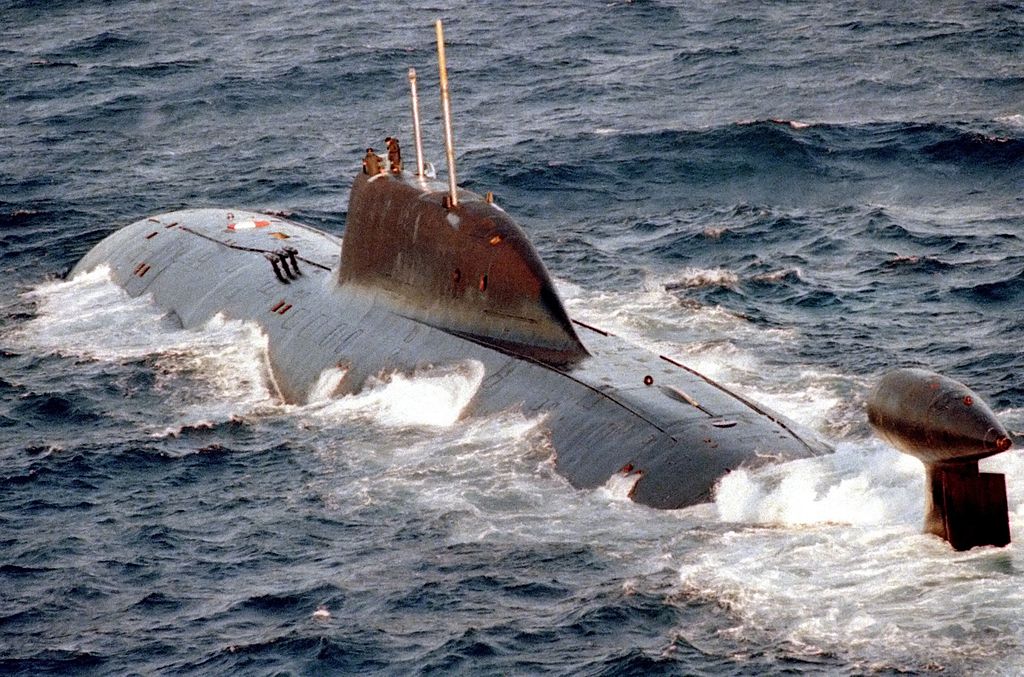
Project 971 / Akula class submarines to be upgraded by Russia
According to the head of the Malakhit Design Bureau, Vladimir Dorofeyev, Russia will modernize all third generation nuclear attack submarines, including the Project 971 / Akula class submarines.
The first Project 971 is already being upgraded at the Zvezdochka shipyard. The overhaul of the submarine must be complete in 2 years before it will rejoin the Russian Navy. The upgraded submarines will have a reduced signature to make them harder to detect and improved electronics.
The Project 971 submarines were developed by the Malakhit Design Bureau as a cheaper alternative to the more expensive titanium-hulled Project 945 / Sierra class submarines, which are also to be upgraded and returned to service.
These submarines will be joined by new Project 885 Yasen or Graney class submarines that are now under construction to form the backbone of Russia's nuclear attack submarine fleet.
A total of 15 Project 971 submarines have been build and are subdivided into 4 different subclasses:
Some of the 15 Project 971 submarines are out of service and may not be bought back. One of the them, the Nerpa, has been leased to India for 10 years, starting in 2012, and where it is known as the INS Chakra.
The INS Chakra is known to be different from its counterparts in the Russian Navy. Among others, it lacks many of the sensors that are present on the Russian units. Equipment installed may not be identical to Russian ones.
The 650 mm torpedo tubes have also been removed and it is not compatible with the more advanced weapons available. The INS Chakra is therefore not as capable a submarine as those in Russian service.
Before handover to the Indian Navy, the Nerpa suffered an accident in 2008 that killed 20 people. This accident was said to have been caused by gas released by the fire extinguishing system.
http://en.rian.ru/military_news/20130320/180124266/Russia-to-Modernize-Akula-Class-Attack-Submarines.html

The first Project 971 is already being upgraded at the Zvezdochka shipyard. The overhaul of the submarine must be complete in 2 years before it will rejoin the Russian Navy. The upgraded submarines will have a reduced signature to make them harder to detect and improved electronics.
The Project 971 submarines were developed by the Malakhit Design Bureau as a cheaper alternative to the more expensive titanium-hulled Project 945 / Sierra class submarines, which are also to be upgraded and returned to service.
These submarines will be joined by new Project 885 Yasen or Graney class submarines that are now under construction to form the backbone of Russia's nuclear attack submarine fleet.
A total of 15 Project 971 submarines have been build and are subdivided into 4 different subclasses:
- the project 971 or Akula-I class
- the Project 971I or Akula-I class
- the Project 971U or Akula-II class
- the Project 971M
- their length varies between 110 to 113 m
- their submerged displacement varies from 12700 tons to 13800 tons
- later units have a reduced complement
- later units can dive deeper
- the sail has been enlarged on later units
Some of the 15 Project 971 submarines are out of service and may not be bought back. One of the them, the Nerpa, has been leased to India for 10 years, starting in 2012, and where it is known as the INS Chakra.
The INS Chakra is known to be different from its counterparts in the Russian Navy. Among others, it lacks many of the sensors that are present on the Russian units. Equipment installed may not be identical to Russian ones.
The 650 mm torpedo tubes have also been removed and it is not compatible with the more advanced weapons available. The INS Chakra is therefore not as capable a submarine as those in Russian service.
Before handover to the Indian Navy, the Nerpa suffered an accident in 2008 that killed 20 people. This accident was said to have been caused by gas released by the fire extinguishing system.
http://en.rian.ru/military_news/20130320/180124266/Russia-to-Modernize-Akula-Class-Attack-Submarines.html
Friday, March 15, 2013
Russia Will Receive 24 Submarines and 54 Warships by 2020
Last year, President Vladimir Putin said the naval procurement of submarines and surface ships would be a priority in the coming decade as part of a major military rearmament program.
Around 5 trillion Russian Rubles or $166 billion has been set aside for the modernization and rearmament of the Russian Navy by 2020.
According to the Russian Defense Minister Sergei Shoigu, the Russian Navy will receive 24 submarines and 54 surface warships by 2020. These include:
The Russian Navy is currently just a shadow of it once was during Soviet times. Only a fraction of its surface ships and submarines remain operational, with the majority having been decommissioned since the end of the Cold War and the absence of sufficient financial resources.
The Russian program is just part of a global trend towards increased naval power that can be observed throughout the world:
http://en.rian.ru/military_news/20130311/179945052/Russian-Navy-to-Receive-24-Subs-54-Warships-by-2020.html

Around 5 trillion Russian Rubles or $166 billion has been set aside for the modernization and rearmament of the Russian Navy by 2020.
According to the Russian Defense Minister Sergei Shoigu, the Russian Navy will receive 24 submarines and 54 surface warships by 2020. These include:
- 3 Project 955 / Borey class and 5 Project 955A / Improved Borey-A nuclear class ballistic missile submarines
- 8 Project 885 / Yasen class / Graney class nuclear attack submarines
- Project 636M / Improved Kilo class diesel submarines
- Project 677 / Lada class diesel submarines
- Project 22350 / Admiral Gorshkov class frigates
- Project 20380 / Steregushchy class corvettes
- Project 21630 / Buyan class corvettes
- Project 11711 / Ivan Gren Class large landing ships
The Russian Navy is currently just a shadow of it once was during Soviet times. Only a fraction of its surface ships and submarines remain operational, with the majority having been decommissioned since the end of the Cold War and the absence of sufficient financial resources.
The Russian program is just part of a global trend towards increased naval power that can be observed throughout the world:
- the United States continues to spent record amounts despite its budget deficits
- China has embarked on a comprehensive naval expansion and modernization
- European countries such as the United Kingdom, France and Italy continue to allocate resources for modernization despite fiscal problems
- Japan is steadily improving its Navy
- India has ambitious plans for an increased Navy
- Even countries such as Brazil that didn't place much importance in the past now want to acquire more naval power
http://en.rian.ru/military_news/20130311/179945052/Russian-Navy-to-Receive-24-Subs-54-Warships-by-2020.html
Sunday, March 10, 2013
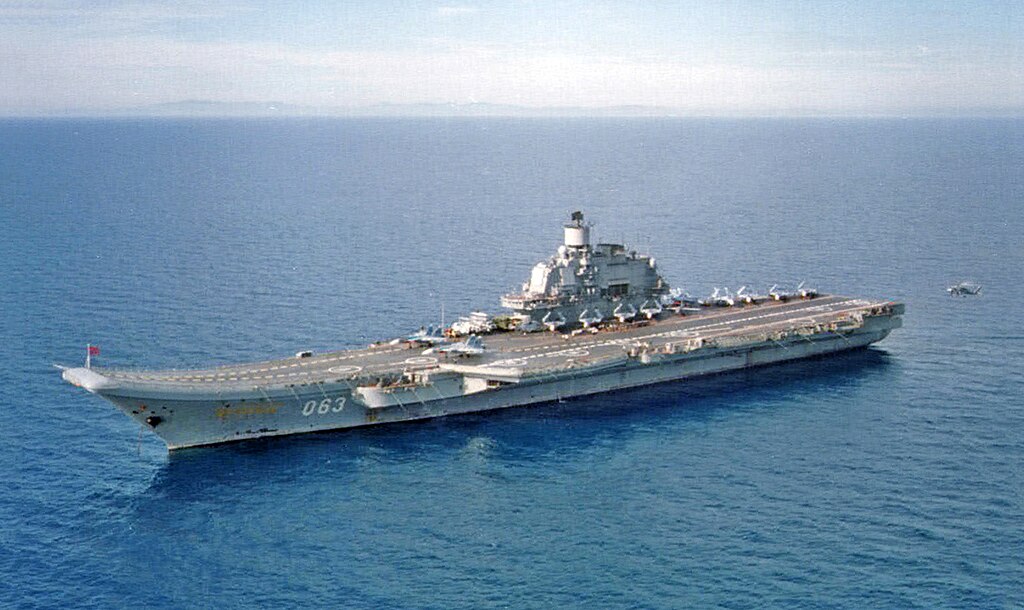
Two Project 945 Barrakuda / Sierra class submarines will be recommissioned by Russia
According to the Zvezdochka shipyard, after many years the Russian Navy will recommission the two Project 945 Barrakuda / Sierra I class nuclear-powered attack submarines by 2017. The shipyard signed the contract with the Defense Ministry in December 2012.
Prior to commissioning, the two submarines will undergo a comprehensive refit and modernization program that includes replacement of the submarines sonar and navigation systems and refuelling of their nuclear reactors.
The two Project 945 Barrakuda submarines are the only members of its class:
There are also two improved Project 945A Kondor / Sierra II class submarines, which are currently in service with the Russian Northern Fleet. They are the Nizhny Novgorod and the Pskov and can be easily distinguished by their larger sail.
The submarines have a releasable escape pod on the sail for the crew. Unlike most steel submarines, the four submarines feature a titanium pressure hull, which is both lighter and stronger than steel.
This enables them to withstand depths of up to 550 meters, while also increasing their survivability and makes them harder to detect with their low magnetic signature.
However, despite their benefits, the titanium hull also made them much more expensive to build, which limited their numbers. The cheaper Project 971 Schuka / Akula class submarines with their steel hull was preferred and build in much greater numbers.
http://en.rian.ru/military_news/20130305/179831565/Russia-to-Resurrect-Titanium-Submarines.html


Prior to commissioning, the two submarines will undergo a comprehensive refit and modernization program that includes replacement of the submarines sonar and navigation systems and refuelling of their nuclear reactors.
The two Project 945 Barrakuda submarines are the only members of its class:
- the K-239 Karp was commissioned in 1984
- the K-276 Kostroma / Karb was commissioned in 1986
There are also two improved Project 945A Kondor / Sierra II class submarines, which are currently in service with the Russian Northern Fleet. They are the Nizhny Novgorod and the Pskov and can be easily distinguished by their larger sail.
The submarines have a releasable escape pod on the sail for the crew. Unlike most steel submarines, the four submarines feature a titanium pressure hull, which is both lighter and stronger than steel.
This enables them to withstand depths of up to 550 meters, while also increasing their survivability and makes them harder to detect with their low magnetic signature.
However, despite their benefits, the titanium hull also made them much more expensive to build, which limited their numbers. The cheaper Project 971 Schuka / Akula class submarines with their steel hull was preferred and build in much greater numbers.
http://en.rian.ru/military_news/20130305/179831565/Russia-to-Resurrect-Titanium-Submarines.html


Friday, February 22, 2013
Project 955A / Borey-A SSBN submarines will only have 16 Bulava ballistic missiles
Previous media reports had put the number of ballistic missiles to be carried on the improved Project 955A / Borey-A class submarines at 20 or 4 more than the 16 carried on the original Borey class submarines.
According to a Russian Defense official, this number is incorrect. The number of Bulava missiles will remain at 16 on the Project 955A submarines as in the previous submarines.
The first of the upgraded Borey-A class, the Knyaz Vladimir, was laid down in July 2012. The second, the Alexander Suvorov, will be laid down during Navy Day celebrations in July this year and the third, the Mikhail Kutuzov, will be laid down in November this year.
The first Borey class submarine, the Yury Dolgoruky, officially entered service last month on January 10 with the 31st submarine division of Russia's Northern Fleet.
The Borey submarines are to replace all previous Project 941 and Project 667 class submarines. The Russian Navy expects to have 3 Borey class and 5 Borey-A class submarines by 2020.
http://en.rian.ru/military_news/20130220/179588098/Later-Borey-Class-Subs-to-Carry-Only-16-Missiles--Source.html
According to a Russian Defense official, this number is incorrect. The number of Bulava missiles will remain at 16 on the Project 955A submarines as in the previous submarines.
The first of the upgraded Borey-A class, the Knyaz Vladimir, was laid down in July 2012. The second, the Alexander Suvorov, will be laid down during Navy Day celebrations in July this year and the third, the Mikhail Kutuzov, will be laid down in November this year.
The first Borey class submarine, the Yury Dolgoruky, officially entered service last month on January 10 with the 31st submarine division of Russia's Northern Fleet.
The Borey submarines are to replace all previous Project 941 and Project 667 class submarines. The Russian Navy expects to have 3 Borey class and 5 Borey-A class submarines by 2020.
http://en.rian.ru/military_news/20130220/179588098/Later-Borey-Class-Subs-to-Carry-Only-16-Missiles--Source.html
Wednesday, January 30, 2013
Russia Hands Over Upgraded Kilo Class Submarine to India
Russia has handed over the INS Sindhurakshak (S63), a Project 877 EKM / Kilo class to the Indian Navy as parrt of a contract signed in June 2010 for the refit and upgrade of the diesel-electric submarine at the Zvezdochka shipyard.
The shipyard has previously refitted 4 Indian submarines:
In all, India has a total of 10 Project 877 EKM submarines, 8 of which were delivered by Russia between 1985 and 1990 and another 2 in 1997 and 2000.
Besides India and Russia, the Kilo class is in service with the navies of China, Algeria, Iran and has been ordered by Vietnam. Other variants of the Kilo class include the more modern Project 636 and Project 636M class submarine.
Specifications
Displacement: 2300 tons (surfaced)
Length: 70.0 m
Beam: 9.9 m
Draft: 6.5 m
Maxium Depth: 300 m
Propulsion: Diesel-electric
Maximum Speed: 12 knots (surfaced), 25 knots (submerged)
Maximum Range: 7500 miles (snorkel at 7 kn), 400 miles (submerged at 3 kn)
Endurance: 45 days
Complement: 52
Armament: six 533 mm torpedo tubes
http://en.rian.ru/military_news/20130126/179045141/Russia-Hands-Over-Refitted-Indian-Sub.html


The shipyard has previously refitted 4 Indian submarines:
- INS Sindhuvir (S58)
- INS Sinduratna (S59)
- INS Sindhugosh (S55)
- INS Sindhudvhaj (S56)
- integration of the Klub-S missile complex
- upgrading the onboard sonar system
- upgrading the communications suite
- modifing the cooling system
In all, India has a total of 10 Project 877 EKM submarines, 8 of which were delivered by Russia between 1985 and 1990 and another 2 in 1997 and 2000.
Besides India and Russia, the Kilo class is in service with the navies of China, Algeria, Iran and has been ordered by Vietnam. Other variants of the Kilo class include the more modern Project 636 and Project 636M class submarine.
Specifications
Displacement: 2300 tons (surfaced)
Length: 70.0 m
Beam: 9.9 m
Draft: 6.5 m
Maxium Depth: 300 m
Propulsion: Diesel-electric
Maximum Speed: 12 knots (surfaced), 25 knots (submerged)
Maximum Range: 7500 miles (snorkel at 7 kn), 400 miles (submerged at 3 kn)
Endurance: 45 days
Complement: 52
Armament: six 533 mm torpedo tubes
http://en.rian.ru/military_news/20130126/179045141/Russia-Hands-Over-Refitted-Indian-Sub.html

Friday, January 18, 2013
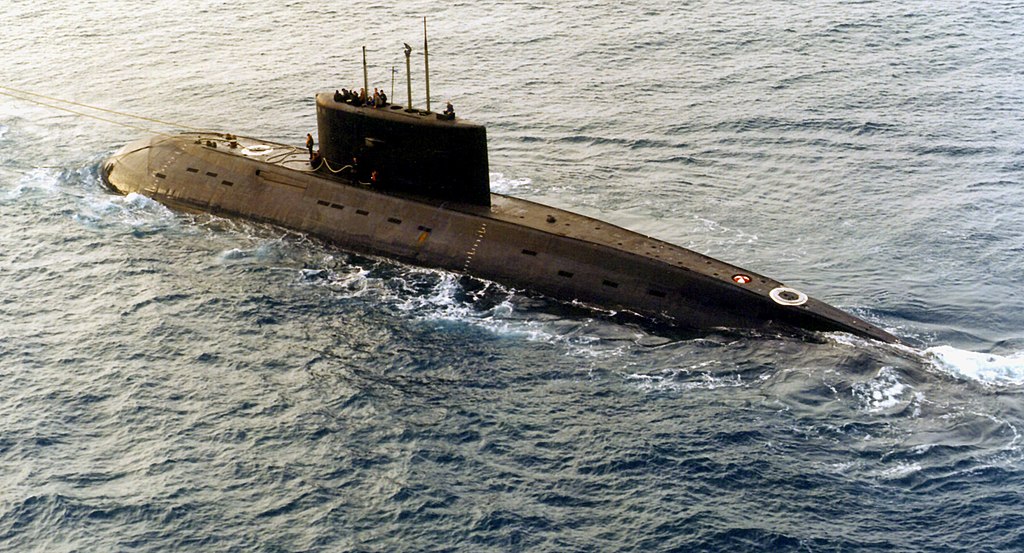
Russia will lay down another 2 upgraded Borey-A class SSBN submarines in 2013
This year, Russia will lay down another 2 upgraded Borey-A class / Project 955A submarines, which can carry 4 more Bulava ballistic missiles than the 16 of the previous Borey class submarines.
The first of the Borey class submarines, the Yury Dolgoruky, officially entered service with Russia's Northern Fleet on January 10. The second, the Alexander Nevsky, is undergoing sea trials and the third, the Vladimir Monomakh, was floated out on December 30.
The first of the upgraded Borey-A class, the Knyaz Vladimir, was laid down on July 2012. The second, the Alexander Suvorov, will be laid down during Navy Day celebrations on July 28 this year and the third, the Mikhail Kutuzov, will be laid down in November 2013.
The submarines are to replace all previous Project 941 and Project 667 class submarines. The Russian Navy plans to have 3 Borey class and 5 Borey-A class submarines by 2020.
http://en.rian.ru/military_news/20130114/178766923/Russia_to_Lay_Down_Two_Improved_Borey_Class_Subs_in_2013.html

The first of the Borey class submarines, the Yury Dolgoruky, officially entered service with Russia's Northern Fleet on January 10. The second, the Alexander Nevsky, is undergoing sea trials and the third, the Vladimir Monomakh, was floated out on December 30.
The first of the upgraded Borey-A class, the Knyaz Vladimir, was laid down on July 2012. The second, the Alexander Suvorov, will be laid down during Navy Day celebrations on July 28 this year and the third, the Mikhail Kutuzov, will be laid down in November 2013.
The submarines are to replace all previous Project 941 and Project 667 class submarines. The Russian Navy plans to have 3 Borey class and 5 Borey-A class submarines by 2020.
http://en.rian.ru/military_news/20130114/178766923/Russia_to_Lay_Down_Two_Improved_Borey_Class_Subs_in_2013.html
Tuesday, January 1, 2013
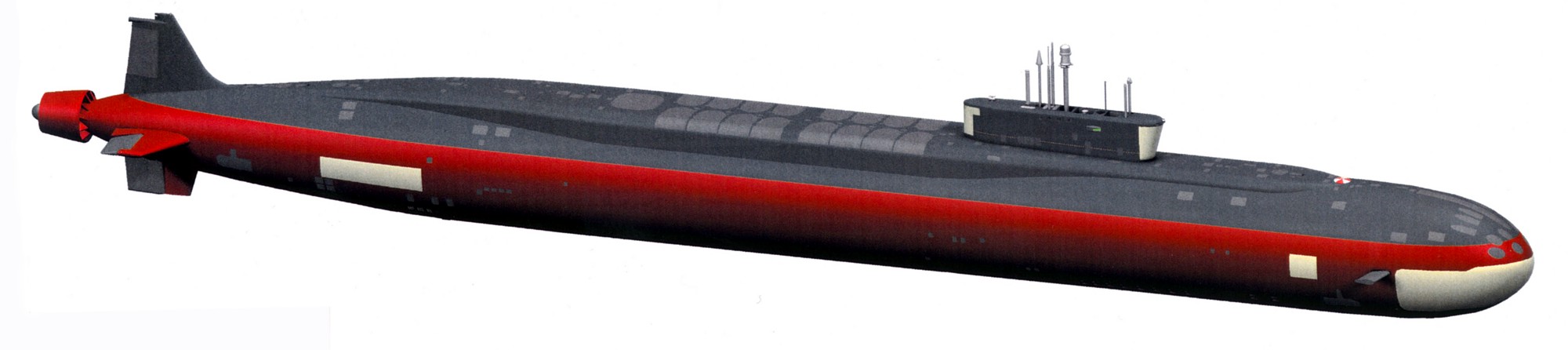
Russia commissions first Borey class SSBN submarine, the Yury Dolgoruky
The Yury Dolgoruky, Russia's first Borey class ballistic missile nuclear submarine, has officially been commissioned into service. The second Borey class submarine, the Alexander Nevsky, is currently undergoing trials and is expected to join the Russian Navy in 2014. A third submarine, the Vladimir Monomakh, is also scheduled to be launched.
Each Borey class:
http://en.rian.ru/military_news/20121230/178488437/First_Borey_Class_Nuclear_Sub_to_Join.html

Each Borey class:
- is 170 meters long,
- has a hull diameter of 13.5 m,
- an average draught of 10 m,
- comes with a crew of 107, including 55 officers,
- can dive up to maximum depth of 450 m,
- has a submerged speed of about 29 knots,
- a surfaced speed of 15 knots,
- has a surfaced displacement of 14700 tonnes,
- a submerged displacement of 24000 tonnes,
- will carry up to 16 Bulava ballistic missiles (SLBM) with multiple warheads.
http://en.rian.ru/military_news/20121230/178488437/First_Borey_Class_Nuclear_Sub_to_Join.html

Saturday, December 29, 2012
US Navy orders 2 Virginia class submarines and starts work on Ohio class SSBN replacement
The Unites States Navy awarded a 5 year contract worth up to $1.99 billion for research and development work on a new submarine class to succeed the current Ohio class. The Navy plans to purchase 12 new submarines from 2021 on to replace the
current fleet of Ohio-class submarines.
The Pentagon said the contract includes:
Length: 377 ft / 115 m
Beam: 34 ft / 10.4 m
Displacement: 7800 long tons / 7900 ton
Payload: 40 weapons, special operations forces, unmanned undersea vehicles, Advanced SEAL Delivery System (ASDS)
Propulsion: S9G nuclear reactor
Maximum diving depth: greater than 800 ft / 240 m
Speed: greater than 25 knots (46 km/h or 29 mph)
Crew: 120 enlisted and 14 officers
Armament: 12-cell Vertical Launch System and four torpedo tubes, capable of launching Mark 48 torpedoes, UGM-109 Tactical Tomahawks and Harpoon missiles
http://finance.yahoo.com/news/general-dynamics-huntington-ingalls-win-212721612.html


The Pentagon said the contract includes:
- design work on the new submarine class
- continued work on a new common missile compartment being developed by the US Navy and the United Kingdom
- cost reduction initiatives
- full scale prototype manufacturing and assembly
Specifications Virginia class
Type: Attack Submarine, Nulclear-powered (SSN)Length: 377 ft / 115 m
Beam: 34 ft / 10.4 m
Displacement: 7800 long tons / 7900 ton
Payload: 40 weapons, special operations forces, unmanned undersea vehicles, Advanced SEAL Delivery System (ASDS)
Propulsion: S9G nuclear reactor
Maximum diving depth: greater than 800 ft / 240 m
Speed: greater than 25 knots (46 km/h or 29 mph)
Crew: 120 enlisted and 14 officers
Armament: 12-cell Vertical Launch System and four torpedo tubes, capable of launching Mark 48 torpedoes, UGM-109 Tactical Tomahawks and Harpoon missiles
http://finance.yahoo.com/news/general-dynamics-huntington-ingalls-win-212721612.html


Friday, December 14, 2012
UK awards £1.2 billion contract for HMS Audacious, fourth Astute class submarine
The United Kingdom has awarded a £1.2 billion contract to BAE Systems for the fourth Astute class nuclear attack submarine, the Audacious. She is preceded by the Astute and Ambush, which are currently undergoing trials and Artful, which is currently under construction at Barrow shipyard.
In addition, another £1.5 billion has been committed to the next 3 Astute class submarines, which has allowed early build work to start on the next submarine to be named Anson.
The Astute has successfully conducted deep dive trials and launched Tomahawk land attack cruise missiles and Spearfish torpedoes.
All 7 Astute class submarine for the Royal Navy are 97 m in length, have a beam of 11.2 m and have a displacement of 7400 ton. The Astute class will not need refueling during her entire 25 service life.
http://www.baesystems.com/article/BAES_155041/12bn-contract-for-audacious-submarine

In addition, another £1.5 billion has been committed to the next 3 Astute class submarines, which has allowed early build work to start on the next submarine to be named Anson.
The Astute has successfully conducted deep dive trials and launched Tomahawk land attack cruise missiles and Spearfish torpedoes.
All 7 Astute class submarine for the Royal Navy are 97 m in length, have a beam of 11.2 m and have a displacement of 7400 ton. The Astute class will not need refueling during her entire 25 service life.
http://www.baesystems.com/article/BAES_155041/12bn-contract-for-audacious-submarine

Wednesday, November 28, 2012
Yasen class nuclear submarine Severodvinsk fires first cruise missile
According to the United
Shipbuilding Corporation (UAC), the Severodvinsk, the first of the Project 855 Yasen class multi-purpose nuclear submarines, has fired its first cruise missile during trials in the White Sea.
The Yasen class submarine has a submerged displacement of 13,800 tons and a length of 119 m. Speed is 31 kn and it can dive up to 600 m. The crew consists of 90 of which 32 are officers.
The Russian Navy so far intends to acquire 8 Yasen class submarines. Armament includes torpedoes, rocket-torpedoes, mines and cruise missiles, such as 3M55 Oniks (SS-N-26) and 3M54 Kalibr (SS-N-27).
http://en.rian.ru/military_news/20121126/177740207.html
The Yasen class submarine has a submerged displacement of 13,800 tons and a length of 119 m. Speed is 31 kn and it can dive up to 600 m. The crew consists of 90 of which 32 are officers.
The Russian Navy so far intends to acquire 8 Yasen class submarines. Armament includes torpedoes, rocket-torpedoes, mines and cruise missiles, such as 3M55 Oniks (SS-N-26) and 3M54 Kalibr (SS-N-27).
http://en.rian.ru/military_news/20121126/177740207.html
Subscribe to:
Posts (Atom)