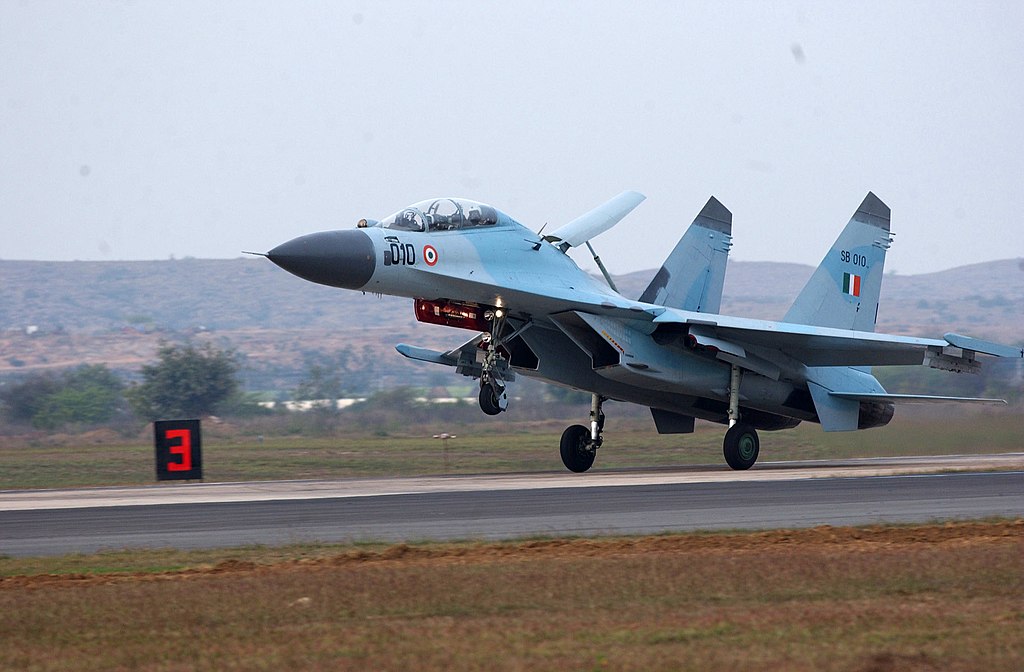
As previously anticipated, India has decided to go in another direction with regards to the acquisition of Rafale fighter aircraft from France. It was originally planned to acquire 126 Rafale, 18 delivered straight from France and the remaining aircraft were to be produced locally under license in India.
Negotiations since 2012 have failed to produce an agreement and India now plans to purchase 36 aircraft directly from France. Assuming this goes through, India would follow Egypt as the second buyer of the Rafale outside of France.
This would mark a sharp turnaround for France which for a long time did not have any export customer for the Rafale. Meanwhile, other European aircraft such as the Typhoon and the Gripen have been able to secure contracts some time ago.
Two contracts for the Rafale in 2015 in just a few months would be quite an accomplishment. The number of aircraft sold may not be as high for France with 36 instead of 126, but more would be produced in France than was originally planned. It ties up India as a long-term customer and it's possible than India may purchase more in the future.
While a Rafale acquisition is a clear win for France, it's a different story for India. No aircraft are to be manufactured in India. Purchasing limited numbers of a new type of aircraft further aggravates the problem of India having too many types of aircraft in limited numbers making logistics more difficult.
A straight-up purchase of 36 aircraft is a compromise for India between the original plan and walking away. The latter option would be very hard to do after so much has been invested in the MMRCA project, which dates as far back as the late nineties.
However, in the long run India might be better off by not pursuing the original plan. That would have cost too much hard currency, which India has in short supply. By going for a smaller purchase, India frees up most of what would have been taken up by the Rafale leaving not much room for anything else. It may not be the ideal move for India, but it's better than what they were doing before.
Showing posts with label India. Show all posts
Thursday, April 30, 2015
Wednesday, December 31, 2014
India Opts For Western Suppliers When It Comes To Anti-Submarine Warfare
The Indian Navy has selected the S-70B SeaHawk over the NH Industries NH90 NFH. India will start negotiations to purchase 16
multi-role S-70B helicopters with an option for eight more, including logistics support and training.
A final contract has yet to be agreed upon, but is estimated to be worth around $1 billion. Once completed, the acquisition will fix a significant weakness in the Indian Navy with a number of ships not having the helicopters they're supposed to be equipped with.
The Indian Navy is currently short on naval helicopters. The existing Kamov Ka-28 and Sea King are both few in numbers and outdated. The new S-70B are expected to serve on both old and new ships, including the recently commissioned Kolkata class destroyers which can carry two helicopters.
The Sikorsky S-70B SeaHawk helicopter can perform a variety of missions, including:
A final contract has yet to be agreed upon, but is estimated to be worth around $1 billion. Once completed, the acquisition will fix a significant weakness in the Indian Navy with a number of ships not having the helicopters they're supposed to be equipped with.
The Indian Navy is currently short on naval helicopters. The existing Kamov Ka-28 and Sea King are both few in numbers and outdated. The new S-70B are expected to serve on both old and new ships, including the recently commissioned Kolkata class destroyers which can carry two helicopters.
The Sikorsky S-70B SeaHawk helicopter can perform a variety of missions, including:
- Anti-Submarine Warfare (ASW)
- Anti-Surface Warfare (ASuW)
- Search and Rescue (SAR)
- Medical Evacuation (MEDEVAC)
- Vertical Replenishment (VERTREP)
Sunday, August 31, 2014
First P-15A / Kolkata Class Destroyer Commissioned in India
The Indian Navy has commissioned the first of its latest P-15A class destroyer, the INS Kolkata. Two more, the INS Kochi and INS Chennai, have been launched to make a total of three units for the P-15A class, with the P-15B class in the works.
The P-15A class has been plagued by numerous delays and cost overruns. The Kolkata itself was laid down back in 2003 and launched in 2006. This gives the P-15A class the distinction of having one of the most drawn out development ever witnessed for a surface warship.
Further more, despite being formally commissioned into service, the ship still has yet to be fully fitted. Among other things, it still lacks the Barak 8 surface-to-air-missile that is being jointly developed by Indian and Israel and which also has seen extensive delays during development.
Even so, the introduction of the P-15A class marks a major milestone for the Indian Navy as it gives it capabilities that it did not possess before. This is sorely needed as India comes up short in terms of warships, both in terms of quantity and quality.
The P-15A class has been plagued by numerous delays and cost overruns. The Kolkata itself was laid down back in 2003 and launched in 2006. This gives the P-15A class the distinction of having one of the most drawn out development ever witnessed for a surface warship.
Further more, despite being formally commissioned into service, the ship still has yet to be fully fitted. Among other things, it still lacks the Barak 8 surface-to-air-missile that is being jointly developed by Indian and Israel and which also has seen extensive delays during development.
Even so, the introduction of the P-15A class marks a major milestone for the Indian Navy as it gives it capabilities that it did not possess before. This is sorely needed as India comes up short in terms of warships, both in terms of quantity and quality.
Wednesday, November 20, 2013
India Receives the Former Admiral Gorshkov Aircraft Carrier INS Vikramaditya From Russia
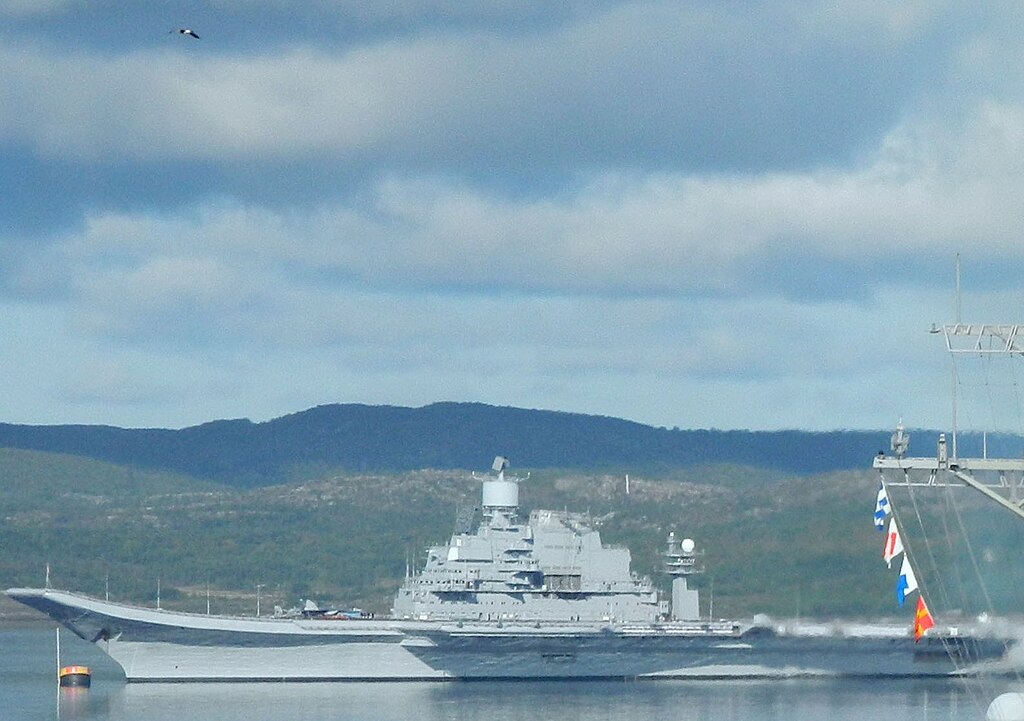
After several years of protracted delay and development, Russia has now handed over the aircraft carrier INS Vikramaditya to India. The INS Vikramaditya was formerly known as the Baku in the Soviet Union and later renamed as the Admiral Gorshkov.
The Admiral Gorshkov was the fourth and last member of the Project 1143.4 or (Modified) Kiev class of heavy aviation cruisers that carried fixed-wing aircraft such as the Yak 38. Specifications of the Baku included:
- Length 273 m
- Beam 32 m
- Draught 9.4 m
- Maximum displacement 44500 tons
- Replacing the 4K60 Shtorm (SA-N-3 Goblet) and 9K33 Osa (SA-N-4 Gecko) with the 3K95 Kinzhal (SA-N-9 Gauntlet) surface-to-air missiles.
- Four additional P-500 Bazalt (SS-N-12 Sandbox) long-range supersonic anti-ship missiles for a total of 12 missiles.
- Replacing the 76 mm guns with 100 mm guns.
- Installation of the latest electronics and other systems.
Sunday, May 12, 2013
India Commissions First MiG-29K Squadron
India has commissioned its first MiG-29K/KUB squadron, the Black Panthers. The squadron consists of 12 single-seat MiG-29K and 4 dual-seat MiG-29KUB, which were ordered in 2004 and delivered between 2010 and 2011.
The MiG-29K from the MiG Corporation is based on the MiG-29M, but with extensive modifications, including:
India placed a second order for 29 MiG-29K/KUB aircraft in 2011 with the first four delivered in December 2012. It is scheduled to receive at least four more MiG-29K in 2013.
The MiG-29K were originally supposed to be stationed aboard the aircraft carrier INS Vikramaditya, formerly the Admiral Gorshkov, whose delivery has been delayed by several years.
Necessary modifications to the ship have proven to be troublesome with the latest problems due to its boilers. The ship is now scheduled to be handed over to India in late 2013.
The MiG Corporation is also tasked with modernizing India's older MiG-29 combat aircraft acquired during the eighties. Around 69 aircraft are to be upgraded in all.
India received the first 3 upgraded MiG-29UPG in 2012. Another three will be upgraded in Russia before delivery to India. The remaining aircraft will be upgraded in India itself.
The Russian Navy also ordered 20 MiG-29K and 4 MiG-29KUB in 2012 for the Admiral Kuznetsov. Russia will begin receiving the first MiG-29K in 2013 and deliveries are to be complete in 2015.
According to the MiG Corporation, the Russian units will be different, but exact changes have not been revealed. In general, the domestic versions of Russian fighter aircraft tend to be superior to the export versions.
http://en.ria.ru/world/20130511/181089289.html
The MiG-29K from the MiG Corporation is based on the MiG-29M, but with extensive modifications, including:
- folding wings
- an arrester tail-hook
- strengthened airframe
- multi-role capability
- compatibility with various air-to-air and air-to-surface weapons
India placed a second order for 29 MiG-29K/KUB aircraft in 2011 with the first four delivered in December 2012. It is scheduled to receive at least four more MiG-29K in 2013.
The MiG-29K were originally supposed to be stationed aboard the aircraft carrier INS Vikramaditya, formerly the Admiral Gorshkov, whose delivery has been delayed by several years.
Necessary modifications to the ship have proven to be troublesome with the latest problems due to its boilers. The ship is now scheduled to be handed over to India in late 2013.
The MiG Corporation is also tasked with modernizing India's older MiG-29 combat aircraft acquired during the eighties. Around 69 aircraft are to be upgraded in all.
India received the first 3 upgraded MiG-29UPG in 2012. Another three will be upgraded in Russia before delivery to India. The remaining aircraft will be upgraded in India itself.
The Russian Navy also ordered 20 MiG-29K and 4 MiG-29KUB in 2012 for the Admiral Kuznetsov. Russia will begin receiving the first MiG-29K in 2013 and deliveries are to be complete in 2015.
According to the MiG Corporation, the Russian units will be different, but exact changes have not been revealed. In general, the domestic versions of Russian fighter aircraft tend to be superior to the export versions.
http://en.ria.ru/world/20130511/181089289.html
Saturday, March 23, 2013
Brahmos missile for submarines tested for the first time
A submarine-launched version of the Brahmos missile has been successfully tested for the fist time by Brahmos Aerospace, a joint venture between India and Russia.
According to the chief executive of Brahmos Aerospace, Sivathanu Pillai, the missile was launched vertically from a submerged platform in the Bay of Bengal and reached its maximum range of 290 km.
The submarine-launched version joins the already existing versions launched from ships or on land. An air-launched version is also being developed, although that version is 3 years behind schedule.
The Indian Air Force will have 40 of its Su-30MKI fighters modified to carry the air-launched version. Meanwhile, the Brahmos missile continues to be improved, most recently with the addition of satellite navigation.
India and Russia have agreed to develop the Brahmos II to succeed the supersonic Brahmos missile. The Brahmos II will be capable of reaching hypersonic speeds of between Mach 5 and Mach 7.
The Brahmos missile is a variant of the Yakhont (SS-N-26) missile, which itself is an export version of the P-800 / 3M-55 Onyx (Oniks) missile developed by NPO Mashinostroyeniya. Its specifications are:
India is the only country to use the Brahmos missile. Despite repeated urging by India, Russia has so far not inducted the Brahmos missile and is highly unlikely to do so in the future.
For Russia, there is no need for the Brahmos missile when it can use the 3M55 Onyx missile, which offers superior performance. The performance of the Brahmos missile, such as range, will always be constrained by the limits set by the Missile Technology Control Regime (MTCR).
In general, Russia tends to favor products that are completely owned by its own companies. In the few instances where it did acquire foreign products, such as the purchase of French Mistral ships, it was because there were no suitable Russian alternatives available. That is not the case with Brahmos.
There is also no incentive for Russia to export the Brahmos missile to other countries, when it can sell the Yakhont missile instead. Unlike the Brahmos missile, Russia retains full rights over the Yakhont missile and doesn't have to share anything with India.
While India would very much like to export the Brahmos missile, Russia does not feel the same way. There isn't much India can do about it. India requires Russian consent and it cannot build the Brahmos missile by itself.
It is not surprising therefore that the Brahmos missile has not been exported. On the other hand, the Yakhont missile has already been exported by Russia to Syria, Vietnam and Indonesia.
http://en.rian.ru/world/20130320/180142434/India-Tests-Submarine-Launched-Supersonic-Missile.html
According to the chief executive of Brahmos Aerospace, Sivathanu Pillai, the missile was launched vertically from a submerged platform in the Bay of Bengal and reached its maximum range of 290 km.
The submarine-launched version joins the already existing versions launched from ships or on land. An air-launched version is also being developed, although that version is 3 years behind schedule.
The Indian Air Force will have 40 of its Su-30MKI fighters modified to carry the air-launched version. Meanwhile, the Brahmos missile continues to be improved, most recently with the addition of satellite navigation.
India and Russia have agreed to develop the Brahmos II to succeed the supersonic Brahmos missile. The Brahmos II will be capable of reaching hypersonic speeds of between Mach 5 and Mach 7.
The Brahmos missile is a variant of the Yakhont (SS-N-26) missile, which itself is an export version of the P-800 / 3M-55 Onyx (Oniks) missile developed by NPO Mashinostroyeniya. Its specifications are:
- a length of 8.4 m
- a diameter of 0.7 m
- a wingspan of 1.7 m
- a maximum speed of Mach 2.8
- a cruise altitude of between 5 m to 14000 m
- a warhead of 300 kg
- a weight: of 3000 kg for the surface-launched version
- a weight of 2500 kg for the air-launched version
- a range of 290 km with a Hi-Lo flight profile
- a range of 120 km with a Lo-Lo flight profile
India is the only country to use the Brahmos missile. Despite repeated urging by India, Russia has so far not inducted the Brahmos missile and is highly unlikely to do so in the future.
For Russia, there is no need for the Brahmos missile when it can use the 3M55 Onyx missile, which offers superior performance. The performance of the Brahmos missile, such as range, will always be constrained by the limits set by the Missile Technology Control Regime (MTCR).
In general, Russia tends to favor products that are completely owned by its own companies. In the few instances where it did acquire foreign products, such as the purchase of French Mistral ships, it was because there were no suitable Russian alternatives available. That is not the case with Brahmos.
There is also no incentive for Russia to export the Brahmos missile to other countries, when it can sell the Yakhont missile instead. Unlike the Brahmos missile, Russia retains full rights over the Yakhont missile and doesn't have to share anything with India.
While India would very much like to export the Brahmos missile, Russia does not feel the same way. There isn't much India can do about it. India requires Russian consent and it cannot build the Brahmos missile by itself.
It is not surprising therefore that the Brahmos missile has not been exported. On the other hand, the Yakhont missile has already been exported by Russia to Syria, Vietnam and Indonesia.
http://en.rian.ru/world/20130320/180142434/India-Tests-Submarine-Launched-Supersonic-Missile.html
Sunday, March 17, 2013
Another Talwar Class Frigate to be Delivered to India in 2013
India is scheduled to received its sixth Talwar class frigate in the summer of 2013 after completion of contractor trials by the INS Trikand. The ship was build at the Yantar Shipyard in Kaliningrad, Russia and will now prepare for state sea trials.
The INS Trikand is the third and last of the second batch of 3 frigates ordered from Russia by India in a 2006 contract worth $1.6 billion. The other two, the INS Teg and INS Tarkash were both delivered to the Indian Navy in 2012.
The second batch of the Talwar class differ from the first batch in the following:
There have been negotiations with Russia concerning a third batch of 3 Talwar class frigates to India despite the fact that some issues had to be resolved regarding the second batch. However, no final contract has so far been signed.
http://en.rian.ru/military_news/20130315/180042579/Russian-Frigate-Built-for-India-Completes-Sea-Trials.html
The INS Trikand is the third and last of the second batch of 3 frigates ordered from Russia by India in a 2006 contract worth $1.6 billion. The other two, the INS Teg and INS Tarkash were both delivered to the Indian Navy in 2012.
The second batch of the Talwar class differ from the first batch in the following:
- The second batch are armed with 8 Brahmos supersonic cruise missile instead of the 3M-54 Klub missile.
- The second batch lacks the Kashtan Close-In Weapon System (CIWS) and is only fitted with 2 AK-630M guns. Presumably, the Israeli Barak-1 will be added to the ships in the future similar to the Shivalik class.
- one 100 mm A-190 dual purpose gun
- the Shtil system with 24 9M317 surface-to-air missiles
- two dual 533 mm torpedo launchers
There have been negotiations with Russia concerning a third batch of 3 Talwar class frigates to India despite the fact that some issues had to be resolved regarding the second batch. However, no final contract has so far been signed.
http://en.rian.ru/military_news/20130315/180042579/Russian-Frigate-Built-for-India-Completes-Sea-Trials.html
Thursday, February 14, 2013
Indian purchase of 12 AgustaWestland AW101 helicopters under scrutiny
India has instructed the country's Central Bureau of Investigation (CBI) to investigate the purchase of 12 AW101 helicopters from the Anglo-Italian AgustaWestland. The $752 million contract was signed in 2010 and the aircraft involved are the Very Very Important Person (VVIP) variant of the AW101.
The Italian police have arrested Giuseppe Orsi, the chairman and chief executive of Finmeccanica, on February 12. Bruno Spagnolini, the chief executive of AgustaWestland, which is a subsidiary of Finmeccanica, has also been placed under house arrest.
Both cases are thought to be related to allegations of bribery connected to the purchase of the 12 AW101 by India, which is now under investigation. The Indian Defense Ministry has stated that the contract may be cancelled if corruption and illegal payments are involved.
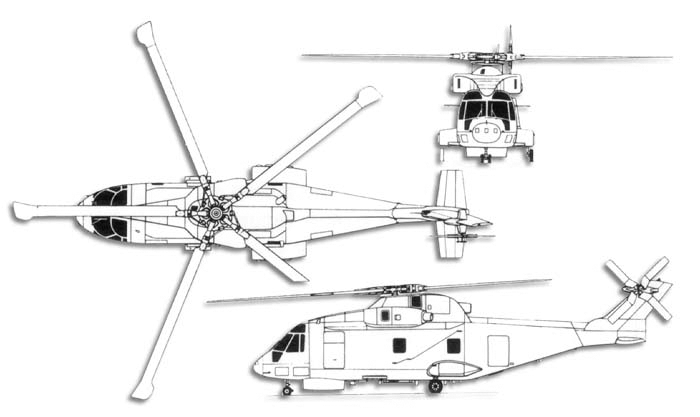
The AW101 or Merlin in some countries, was formerly known as the EH101 and in addition to the VVIP variant comes in a military transport and Anti-Submarine Warfare (ASW) variant.
Specifications
Crew: 2
Length: 22.83 m
Height: 6.66 m
Rotor diameter: 18.60 m
Max cruise speed: 278 km/hr
Max takeoff weight: 15600 kg
Max range: 1058 km (VVIP)
Max endurance: 5 hours and 10 minutes (VVIP)
Powerplant: 3 Rolls-Royce Turbomeca RTM322-01 turboshafts, 1566 kW / 2100 shp each
http://www.bbc.co.uk/news/world-asia-india-21438275
The Italian police have arrested Giuseppe Orsi, the chairman and chief executive of Finmeccanica, on February 12. Bruno Spagnolini, the chief executive of AgustaWestland, which is a subsidiary of Finmeccanica, has also been placed under house arrest.
Both cases are thought to be related to allegations of bribery connected to the purchase of the 12 AW101 by India, which is now under investigation. The Indian Defense Ministry has stated that the contract may be cancelled if corruption and illegal payments are involved.
The AW101 or Merlin in some countries, was formerly known as the EH101 and in addition to the VVIP variant comes in a military transport and Anti-Submarine Warfare (ASW) variant.
Specifications
Crew: 2
Length: 22.83 m
Height: 6.66 m
Rotor diameter: 18.60 m
Max cruise speed: 278 km/hr
Max takeoff weight: 15600 kg
Max range: 1058 km (VVIP)
Max endurance: 5 hours and 10 minutes (VVIP)
Powerplant: 3 Rolls-Royce Turbomeca RTM322-01 turboshafts, 1566 kW / 2100 shp each
http://www.bbc.co.uk/news/world-asia-india-21438275
Wednesday, January 30, 2013
Russia Hands Over Upgraded Kilo Class Submarine to India
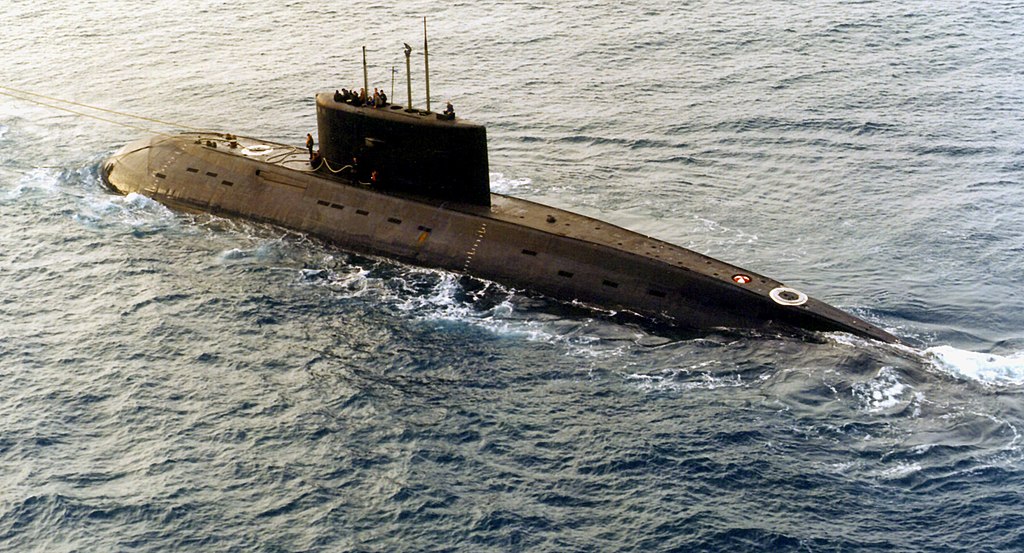
Russia has handed over the INS Sindhurakshak (S63), a Project 877 EKM / Kilo class to the Indian Navy as parrt of a contract signed in June 2010 for the refit and upgrade of the diesel-electric submarine at the Zvezdochka shipyard.
The shipyard has previously refitted 4 Indian submarines:
In all, India has a total of 10 Project 877 EKM submarines, 8 of which were delivered by Russia between 1985 and 1990 and another 2 in 1997 and 2000.
Besides India and Russia, the Kilo class is in service with the navies of China, Algeria, Iran and has been ordered by Vietnam. Other variants of the Kilo class include the more modern Project 636 and Project 636M class submarine.
Specifications
Displacement: 2300 tons (surfaced)
Length: 70.0 m
Beam: 9.9 m
Draft: 6.5 m
Maxium Depth: 300 m
Propulsion: Diesel-electric
Maximum Speed: 12 knots (surfaced), 25 knots (submerged)
Maximum Range: 7500 miles (snorkel at 7 kn), 400 miles (submerged at 3 kn)
Endurance: 45 days
Complement: 52
Armament: six 533 mm torpedo tubes
http://en.rian.ru/military_news/20130126/179045141/Russia-Hands-Over-Refitted-Indian-Sub.html
The shipyard has previously refitted 4 Indian submarines:
- INS Sindhuvir (S58)
- INS Sinduratna (S59)
- INS Sindhugosh (S55)
- INS Sindhudvhaj (S56)
- integration of the Klub-S missile complex
- upgrading the onboard sonar system
- upgrading the communications suite
- modifing the cooling system
In all, India has a total of 10 Project 877 EKM submarines, 8 of which were delivered by Russia between 1985 and 1990 and another 2 in 1997 and 2000.
Besides India and Russia, the Kilo class is in service with the navies of China, Algeria, Iran and has been ordered by Vietnam. Other variants of the Kilo class include the more modern Project 636 and Project 636M class submarine.
Specifications
Displacement: 2300 tons (surfaced)
Length: 70.0 m
Beam: 9.9 m
Draft: 6.5 m
Maxium Depth: 300 m
Propulsion: Diesel-electric
Maximum Speed: 12 knots (surfaced), 25 knots (submerged)
Maximum Range: 7500 miles (snorkel at 7 kn), 400 miles (submerged at 3 kn)
Endurance: 45 days
Complement: 52
Armament: six 533 mm torpedo tubes
http://en.rian.ru/military_news/20130126/179045141/Russia-Hands-Over-Refitted-Indian-Sub.html
Friday, January 25, 2013
First Indian C-17 transport aircraft delivered for flight testing
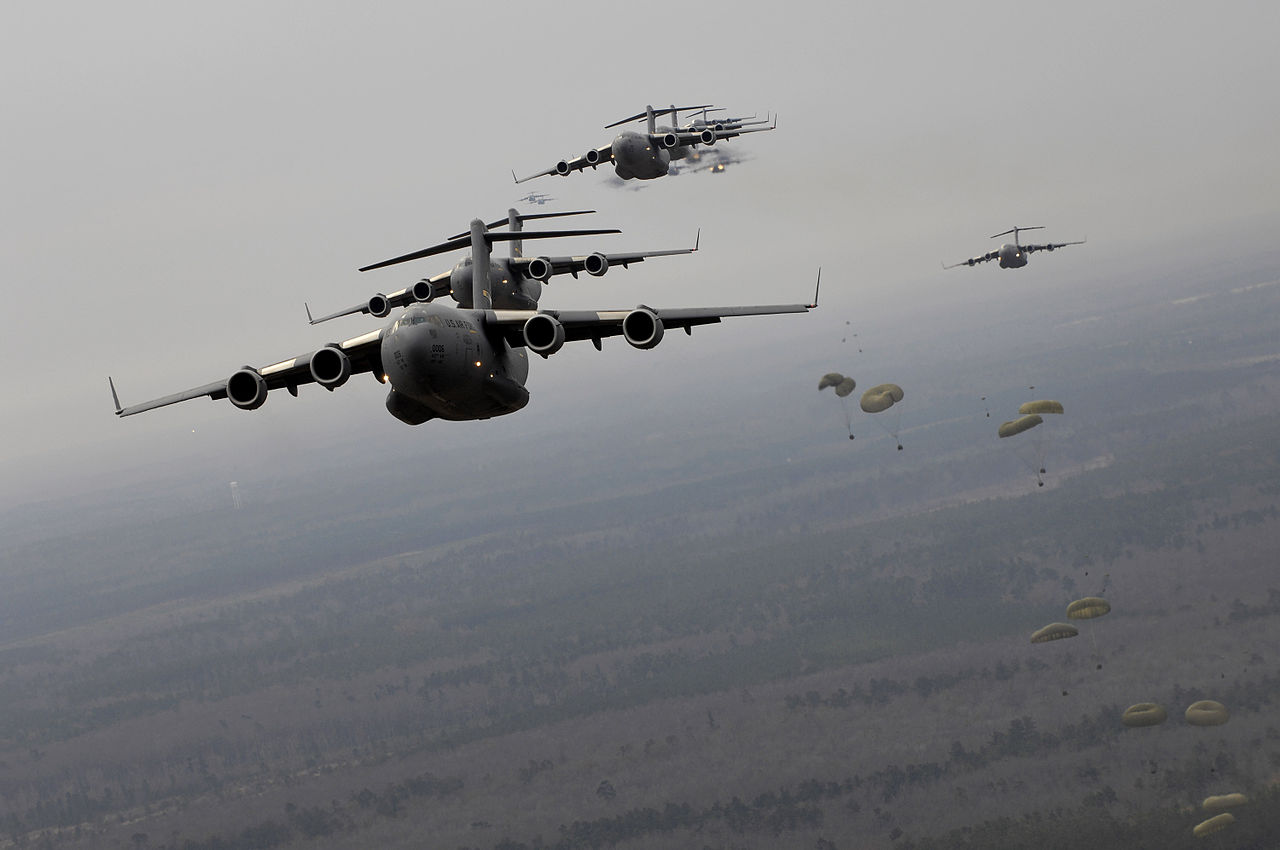
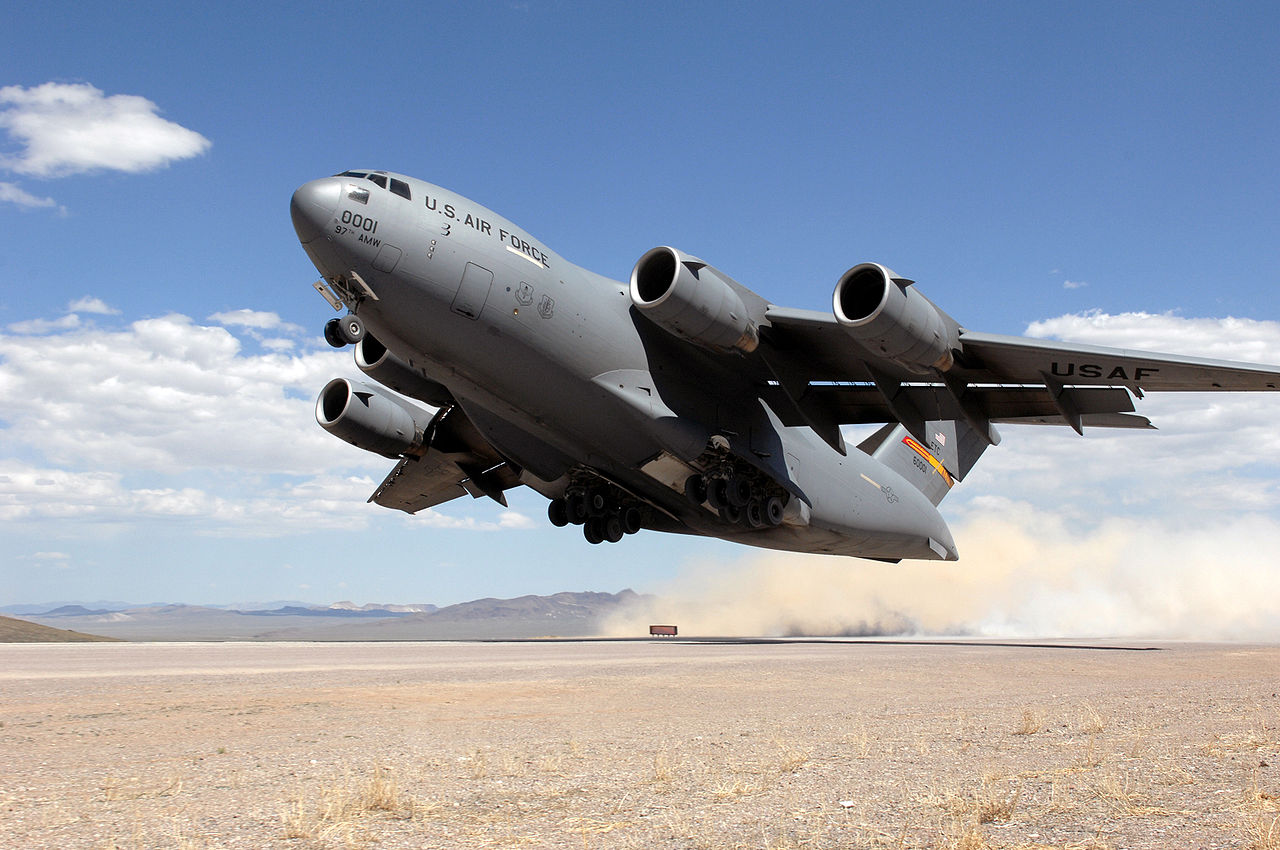
The first of 10 Boeing C-17 Globemaster III transport aircraft has been delivered as scheduled and will now undergo flight testing at Edwards Air Force Base in California.
India signed a $1.8 billion Foreign Military Sales contract on June 15, 2012 with the United States for the delivery of 10 C-17 aircraft. India had previously purchased 6 Lockheed Martin C-130J turboprop transport aircraft.
Four more of the heavy transport C-17 aircraft will be delivered to the Indian Air Force in 2013, with the remaining 5 aircraft due in 2014.
Boeing has delivered 250 C-17 aircraft, 218 to the United States and the remaining 32 to Australia, Canada, India, Qatar, the United Arab Emirates, the United Kingdom and the Strategic Airlift Capability initiative of NATO and Partnership for Peace.
Specifications
Crew: 2 pilots, 1 loadmaster
Capacity: 158 troops, a M1 Abrams tank, three Strykers, or six M1117 vehicles
Payload: 77519 kg of cargo distributed at max over 18 463L master pallets Length: 53 m
Wingspan: 51.75 m
Height: 16.8 m
Empty weight: 128100 kg
Max. takeoff weight: 265350 kg
Powerplant: 4 Pratt & Whitney F117-PW-100 turbofans, 180 kN each
Fuel capacity: 134556 L
Cruise speed: Mach 0.76 (830 km/h)
Range: 4482 km, 10390 km with paratroops
Service ceiling: 13716 m
Takeoff run at MTOW: 2316 m
Landing distance: 1060 m
http://boeing.mediaroom.com/index.php?s=43&item=2568
India signed a $1.8 billion Foreign Military Sales contract on June 15, 2012 with the United States for the delivery of 10 C-17 aircraft. India had previously purchased 6 Lockheed Martin C-130J turboprop transport aircraft.
Four more of the heavy transport C-17 aircraft will be delivered to the Indian Air Force in 2013, with the remaining 5 aircraft due in 2014.
Boeing has delivered 250 C-17 aircraft, 218 to the United States and the remaining 32 to Australia, Canada, India, Qatar, the United Arab Emirates, the United Kingdom and the Strategic Airlift Capability initiative of NATO and Partnership for Peace.
Specifications
Crew: 2 pilots, 1 loadmaster
Capacity: 158 troops, a M1 Abrams tank, three Strykers, or six M1117 vehicles
Payload: 77519 kg of cargo distributed at max over 18 463L master pallets Length: 53 m
Wingspan: 51.75 m
Height: 16.8 m
Empty weight: 128100 kg
Max. takeoff weight: 265350 kg
Powerplant: 4 Pratt & Whitney F117-PW-100 turbofans, 180 kN each
Fuel capacity: 134556 L
Cruise speed: Mach 0.76 (830 km/h)
Range: 4482 km, 10390 km with paratroops
Service ceiling: 13716 m
Takeoff run at MTOW: 2316 m
Landing distance: 1060 m
http://boeing.mediaroom.com/index.php?s=43&item=2568
Saturday, January 12, 2013
India again selects A330 MRTT Multi Role Tanker Transport aircraft
India has again selected Airbus Military as the preferred bidder to supply its A330 MRTT Multi Role Tanker Transport to the Indian Air Force (IAF) after a long and thorough selection process, which resulted in a prior selection being cancelled in 2010. The Ilyushin IL-78MK from Russia was the losing candidate in the competition.
A contract for the supply of 6 aircraft in 2013, as expected, would bring the number exported to 34 and make India the fifth country to use the A330 MRTT aircraft, following:
The wide-body Airbus Military A330 MRTT aircraft can be used both as a tanker and transport aircraft and is derived from the civilian A330-200 airliner. It supports both the Boom Refuelling system and Hose and Drogue Pod Refuelling system.
As a transport aircraft, the A330 MRTT can carry up to 300 troops or a payload of up to 45 ton. It can also function in the Medical Evacuation (MEDEVAC) role with room for 130 stretchers.
Specifications
Crew: 3
Length: 58.80 m
Wingspan: 60.3 m
Height: 17.4 m
Maximum speed: 880 km/h
Cruise speed: 860 km/h
Range: 14800 km
Service ceiling: 12600 m
Empty weight: 125000 kg
Useful load: 45000 kg non-fuel payload
Max takeoff weight: 233000 kg
Powerplant: 2× Rolls-Royce Trent 772B or General Electric CF6-80E1A4 or Pratt & Whitney PW 4168A turbofans, 320 kN (72,000 lbf) each
Fuel Capability: 111000 kg max, 65,000 kg at 1000 nmi with 2 hours on station
http://www.airbusmilitary.com/LatestNews/tabid/176/ArticleID/234/ArtMID/681/Airbus-Military-A330-MRTT-selected-by-Indian-Government-.aspx
A contract for the supply of 6 aircraft in 2013, as expected, would bring the number exported to 34 and make India the fifth country to use the A330 MRTT aircraft, following:
- Australia order for 5 of which 4 have been delivered,
- Saudi Arabia ordered 6,
- the United Arab Emirates ordered 3,
- the United Kingdom ordered 14 with 1 delivered.
The wide-body Airbus Military A330 MRTT aircraft can be used both as a tanker and transport aircraft and is derived from the civilian A330-200 airliner. It supports both the Boom Refuelling system and Hose and Drogue Pod Refuelling system.
As a transport aircraft, the A330 MRTT can carry up to 300 troops or a payload of up to 45 ton. It can also function in the Medical Evacuation (MEDEVAC) role with room for 130 stretchers.
Specifications
Crew: 3
Length: 58.80 m
Wingspan: 60.3 m
Height: 17.4 m
Maximum speed: 880 km/h
Cruise speed: 860 km/h
Range: 14800 km
Service ceiling: 12600 m
Empty weight: 125000 kg
Useful load: 45000 kg non-fuel payload
Max takeoff weight: 233000 kg
Powerplant: 2× Rolls-Royce Trent 772B or General Electric CF6-80E1A4 or Pratt & Whitney PW 4168A turbofans, 320 kN (72,000 lbf) each
Fuel Capability: 111000 kg max, 65,000 kg at 1000 nmi with 2 hours on station
http://www.airbusmilitary.com/LatestNews/tabid/176/ArticleID/234/ArtMID/681/Airbus-Military-A330-MRTT-selected-by-Indian-Government-.aspx
Labels:
Air Force,
Aircraft,
Australia,
India,
Saudi Arabia,
Transport Aircraft,
UAE,
UK
Thursday, January 10, 2013
India test fires Brahmos / Yakhont cruise missile
The Indian Navy has test fired a Brahmos cruise missile from a warship in the Bay of Bengal. The target ship was hit one meter above the waterline after performing S-type evasive maneuvers.
The Brahmos missile is derived from the Russian Yakhont (SS-N-26) missile, which in turn is the export version of the 3M55 Onyx missile. Its specification are:
The Brahmos missile has recently been upgraded with the addition of Russian GLONASS satellite navigation to the existing doppler-inertial system. A further upgrade, the hypersonic Brahmos 2, will be able to reach speeds of Mach 5 and Mach 7.
The Brahmos missile was developed by the Brahmos Aerospace Private Limited, a joint venture between India's Defense Research and Development Organisation (DRDO) and Russia's NPO Mashinostroeyenia.
The name BrahMos is derived from the names of two rivers, the Brahmaputra of India and the Moskva of Russia.
The Brahmos missile is currently in service with both the Indian Army and Indian Navy. The Indian Air Force plans to integrate an air-launched version of the Brahmos missile with up to 40 Su-30MKI fighter aircraft.
http://en.rian.ru/military_news/20130109/178664783/India_Tests_Sea-Based_Brahmos_Missile__.html
The Brahmos missile is derived from the Russian Yakhont (SS-N-26) missile, which in turn is the export version of the 3M55 Onyx missile. Its specification are:
- Length: 8.4 m
- Diameter: 0.7 m
- Wingspan: 1.7 m
- Weight: 3000 kg (surface-launched), 2500 kg (air-launched)
- Warhead: 300 kg
- Range: 290 km (Hi-Lo flight profile), 120 km (Lo-Lo flight profile)
- Cruise altitude: 5 m to 14000 m
- Max speed: Mach 2.8
The Brahmos missile has recently been upgraded with the addition of Russian GLONASS satellite navigation to the existing doppler-inertial system. A further upgrade, the hypersonic Brahmos 2, will be able to reach speeds of Mach 5 and Mach 7.
The Brahmos missile was developed by the Brahmos Aerospace Private Limited, a joint venture between India's Defense Research and Development Organisation (DRDO) and Russia's NPO Mashinostroeyenia.
The name BrahMos is derived from the names of two rivers, the Brahmaputra of India and the Moskva of Russia.
The Brahmos missile is currently in service with both the Indian Army and Indian Navy. The Indian Air Force plans to integrate an air-launched version of the Brahmos missile with up to 40 Su-30MKI fighter aircraft.
http://en.rian.ru/military_news/20130109/178664783/India_Tests_Sea-Based_Brahmos_Missile__.html
Monday, December 31, 2012
India Receives the Fifth Talwar Class Frigate From Russia
The INS Tarkash has arrived in Mumbai after leaving Russia on November 17. It is the second Talwar class out of 3 that are to be delivered as part of a $1.6 billion contract signed in 2006.
This contract was preceded by a first batch of 3 similar frigates consisting of the INS Talwar, INS Trishul and INS Tabar. The Talwar class is based on the Krivak III class frigate.
The Indian Navy received its predecessor, INS Teq, on April 27. The third, the Trikand, is currently undergoing trials in the Baltic Sea and will be delivered to India in the summer of 2013.
This Talwar class is equipped with:
http://en.rian.ru/military_news/20121230/178497380/India_Receives_Second_Russia-Built.html
This contract was preceded by a first batch of 3 similar frigates consisting of the INS Talwar, INS Trishul and INS Tabar. The Talwar class is based on the Krivak III class frigate.
The Indian Navy received its predecessor, INS Teq, on April 27. The third, the Trikand, is currently undergoing trials in the Baltic Sea and will be delivered to India in the summer of 2013.
This Talwar class is equipped with:
- eight supersonic Brahmos (second batch) or Klub (first batch) anti-ship cruise missiles
- a 100 mm A-190 dual purpose gun
- the Shtil-1 air defense system with 24 surface-to-air missiles
- two Kashtan Close-In Weapon Systems (first batch) or AK-630 (second batch)
- two dual 533 mm torpedo launchers
- a single Ka-28 anti-submarine warfare helicopter
http://en.rian.ru/military_news/20121230/178497380/India_Receives_Second_Russia-Built.html
Sunday, December 30, 2012
India received 4 MiG-29K fighter aircraft from Russia
The Indian Navy received 4 MiG-29K/KUB shipborne fighter aircraft from the Russian aircraft maker MiG to bring its total inventory of such aircraft to 20. These aircraft were delivered as part of a $1.5 billion contract for 29 MiG-29K/KUB, signed in 2010 between Russia and India.
A previous contract signed in 2004 for the delivery of 12 single-seat MiG-29K and 4 two-seat MiG-29KUB was completed in 2011. The contracts for MiG-29 aircraft also include:
The MiG-29K is a naval variant of the original land-based MiG-29 with the addition of:
http://en.rian.ru/military_news/20121229/178478220/Russia_Delivers_Four_MiG-29K_Fighters.html
A previous contract signed in 2004 for the delivery of 12 single-seat MiG-29K and 4 two-seat MiG-29KUB was completed in 2011. The contracts for MiG-29 aircraft also include:
- pilot training
- aircraft maintenance
- delivery of flight simulators
- interactive ground and sea-based training systems.
The MiG-29K is a naval variant of the original land-based MiG-29 with the addition of:
- folding wings
- an arrester tail-hook
- strengthened airframe
- multirole capability
- compatibility with a wide variety of air-to-air and air-to-surface weaponry
http://en.rian.ru/military_news/20121229/178478220/Russia_Delivers_Four_MiG-29K_Fighters.html
Tuesday, December 25, 2012
India purchases 42 Su-30MKI fighter aircraft and 71 Mi-17 helicopters from Russia
India has ordered 42 Su-30MKI fighter aircraft from Russia to bring the total number of aircraft contracted to be assembled by Hindustan Aeronautics Limited (HAL) to 103. Another 119 have already been assembled by HAL. Around 50 were purchased directly from Russia to bring the total number to 272 Su-30MKI fighter aircraft.
The Su-30MKI is a two-seat, supersonic, multi-role fighter aircraft for day and night operations in all weather conditions. The aircraft is fitted with Russian AL-31FP engines and advanced avionics from Russian, Western and indigenous sources.
The license building of SU-30MKI aircraft has enabled HAL to acquire new aircraft manufacturing techniques like machining, forming, welding, assembly, testing and aircraft system checks, while creating hundreds of jobs locally.
Over 157 vendors in India provide 13350 components to the Su-30MKI project, while HAL itself manufactures 19450 components. The work is divided as follow:
http://www.hal-india.com/SU-30_MKI_Contract_24-12-12.asp
The Su-30MKI is a two-seat, supersonic, multi-role fighter aircraft for day and night operations in all weather conditions. The aircraft is fitted with Russian AL-31FP engines and advanced avionics from Russian, Western and indigenous sources.
The license building of SU-30MKI aircraft has enabled HAL to acquire new aircraft manufacturing techniques like machining, forming, welding, assembly, testing and aircraft system checks, while creating hundreds of jobs locally.
Over 157 vendors in India provide 13350 components to the Su-30MKI project, while HAL itself manufactures 19450 components. The work is divided as follow:
- aircraft airframes are made at Nasik
- engines are assembled Koraput
- aircraft communication and navigation accessories at Hyderabad
- hydraulic, pneumatic and fuel aggregates and instruments at Lucknow
- avionic displays and INGPS at Korwa
- overhauling and repairs of Su-30 MKI at Nasik
http://www.hal-india.com/SU-30_MKI_Contract_24-12-12.asp
Wednesday, December 12, 2012
India received first 3 upgraded MiG-29UPG aircraft from Russia
The first 3 MiG-29UPG fighter aircraft have been delivered to India on board an AN-124 transport aircraft. These aircraft were the first of 69 aircraft to be upgraded as part of a $900 million contract.
The upgraded MiG-29 aircraft will have an extended service life of 40 years. Air-to-air refueling ability will be incorporated and beyond visual range combat ability will be improved. A new avionics kit will be installed and the existing N-109 radar is to be replaced by the Phazotron Zhuk-M radar.
Another 3 MiG-29 aircraft are to be upgraded in Russia and the remaining by Hindustan Aeronautics Limited (HAL) in India. HAL is also licensed to produce 120 RD-33 Series 3 engines for MiG-29 aircraft as part of the upgrade.
http://en.rian.ru/military_news/20121211/178064533.html
The upgraded MiG-29 aircraft will have an extended service life of 40 years. Air-to-air refueling ability will be incorporated and beyond visual range combat ability will be improved. A new avionics kit will be installed and the existing N-109 radar is to be replaced by the Phazotron Zhuk-M radar.
Another 3 MiG-29 aircraft are to be upgraded in Russia and the remaining by Hindustan Aeronautics Limited (HAL) in India. HAL is also licensed to produce 120 RD-33 Series 3 engines for MiG-29 aircraft as part of the upgrade.
http://en.rian.ru/military_news/20121211/178064533.html
Saturday, December 8, 2012
Indian plans for second indigenous aircraft carrier IAC-2
The Indian Navy is making plans for a second indigenous aircraft carrier (IAC-2), as a follow-up to the first indigenous aircraft carrier (IAC-1). The IAC-1 is a 36,000 ton ship currently being build in the Kochi shipyard and is similar in size to the INS Vikramaditya, the former Admiral Gorshkov from Russia.
The IAC-2 will be larger and have a displacement of about 60,000 ton. The ship will enter service in 10 to 15 years and will likely have either steam or electro-magnetic catapults installed.
The addition of catapults to IAC-2 would offer the following benefits:
India plans to have 3 aircraft carriers available after the retirement of the Viraat. This would allow one carrier to be stationed on each coast, while the third undergoes training or maintenance.
The delivery of the INS Vikramaditya from Russia has been delayed until the second half of 2013 at the earliest after problems with the propulsion systems. Meanwhile, Russian pilots have successfully conducted flight tests from the ship using the MiG-29K/KUB aircraft.
http://www.flightglobal.com/news/articles/india-nears-catapult-decision-for-second-indigenous-carrier-379825/
The IAC-2 will be larger and have a displacement of about 60,000 ton. The ship will enter service in 10 to 15 years and will likely have either steam or electro-magnetic catapults installed.
The addition of catapults to IAC-2 would offer the following benefits:
- operate heavier aircraft such as fixed-wing Airborne Early Warning (AEW), including the Northop Grumman E-2D Hawkeye. Fixed-wing aircraft offer superior situational awareness compared to helicopter-borne aircraft such as the Ka-31 currently being used.
- catapults reduce the amount of deck space required to launch aircraft, while also allowing increased fuel and payload during takeoff.
- aircraft such as the Boeing F/A-18E/F Super Hornet and the Dassault Rafale are only compatible with catapults. The Rafale was recently selected as winner of the Indian Air Force's Medium Multi-Role Combat Aircraft (MMRCA) competition.
India plans to have 3 aircraft carriers available after the retirement of the Viraat. This would allow one carrier to be stationed on each coast, while the third undergoes training or maintenance.
The delivery of the INS Vikramaditya from Russia has been delayed until the second half of 2013 at the earliest after problems with the propulsion systems. Meanwhile, Russian pilots have successfully conducted flight tests from the ship using the MiG-29K/KUB aircraft.
http://www.flightglobal.com/news/articles/india-nears-catapult-decision-for-second-indigenous-carrier-379825/
Friday, December 7, 2012
India chooses Boeing Chinook helicopter over Russian Mi-26
Russia's Mi-26T2 helicopter has lost the tender for delivery of 15 helicopters to the Indian Air Force in a statement issued by the Indian Defense Ministry last Wednesday.
Both the Mi-26T2 and Ch-47F had qualified in the technical trials and their financial bids, which covered both the initial acquisition costs as well as the life cycle costs.
According to Indian media reports, the Boeing Chinook CH-47F was selected as the preferred candidate for the Heavy Lift Helicopter requirements based on cost effectiveness and after-sales service.
The Indian Defense Ministry stated that the Boeing CH-47F had been found compliant will all the stated Air Staff Qualitative Requirements (ASQR) during Field Evaluation Trials.
Russia's losing tender continues the decline in its previously dominant market position in India due to strong competition with American and European companies. Earlier Russia's Mi-28 attack helicopter lost to the AH-64D Apache attack helicopter from the United States.
The Russian Mi-35 fighter aircraft also did not make it to the final rounds during the Medium Multi-Role Combat Aircraft (MMRCA) competition, which was eventually won by the French Rafale aircraft over the European Typhoon.
http://en.rian.ru/military_news/20121205/177940820.html
Both the Mi-26T2 and Ch-47F had qualified in the technical trials and their financial bids, which covered both the initial acquisition costs as well as the life cycle costs.
According to Indian media reports, the Boeing Chinook CH-47F was selected as the preferred candidate for the Heavy Lift Helicopter requirements based on cost effectiveness and after-sales service.
The Indian Defense Ministry stated that the Boeing CH-47F had been found compliant will all the stated Air Staff Qualitative Requirements (ASQR) during Field Evaluation Trials.
Russia's losing tender continues the decline in its previously dominant market position in India due to strong competition with American and European companies. Earlier Russia's Mi-28 attack helicopter lost to the AH-64D Apache attack helicopter from the United States.
The Russian Mi-35 fighter aircraft also did not make it to the final rounds during the Medium Multi-Role Combat Aircraft (MMRCA) competition, which was eventually won by the French Rafale aircraft over the European Typhoon.
http://en.rian.ru/military_news/20121205/177940820.html
Thursday, November 29, 2012
India issues request for proposals for 56 transport aircraft
India has issued a Request For Proposals (RFP) for 56 transport aircraft to replace its fleet of 30 Avro HS-748 aircraft. Out of the 56 aircraft, 16 are to be procured directly, while the remaining 40 are to be manufactured locally under license in partnership with an Indian partner.
Potential candidates for the deal, worth an estimated $2.5 to $3 billion, are the IL-114 from Russia's Ilyushin Aviation Complex, the Ukrainian AN-148, the European EADS Casa C-295 and Italy's Alenia C-27J.
The first aircraft are expected to be delivered in the next four to five years after a contract has been signed.
http://www.aviationweek.com/Article.aspx?id=/article-xml/asd_11_27_2012_p03-02-521298.xml
Potential candidates for the deal, worth an estimated $2.5 to $3 billion, are the IL-114 from Russia's Ilyushin Aviation Complex, the Ukrainian AN-148, the European EADS Casa C-295 and Italy's Alenia C-27J.
The first aircraft are expected to be delivered in the next four to five years after a contract has been signed.
http://www.aviationweek.com/Article.aspx?id=/article-xml/asd_11_27_2012_p03-02-521298.xml
Tuesday, September 25, 2012
Indian aircraft carrier delayed
Malfunctions during sea trials of the Indian Navy aircraft carrier
Vikramaditya, refitted by a Russian shipyard, will delay the vessel’s
handover to India yet again, Kommersant business daily reported on
Monday.
The delay is the latest in a string of hold-ups in the refit of the ship, in a defense deal that has become a shipwreck of its own.
The Vikramaditya, formerly the Russian Navy's Admiral Gorshkov, was to have been handed over to India on December 4 after ongoing sea trials following a much-delayed refit that has gone massively over-budget. The deadline has now been postponed again until October 2013.
http://en.rian.ru/mlitary_news/20120917/176004107.html
The delay is the latest in a string of hold-ups in the refit of the ship, in a defense deal that has become a shipwreck of its own.
The Vikramaditya, formerly the Russian Navy's Admiral Gorshkov, was to have been handed over to India on December 4 after ongoing sea trials following a much-delayed refit that has gone massively over-budget. The deadline has now been postponed again until October 2013.
http://en.rian.ru/mlitary_news/20120917/176004107.html
Subscribe to:
Posts (Atom)
.jpg)