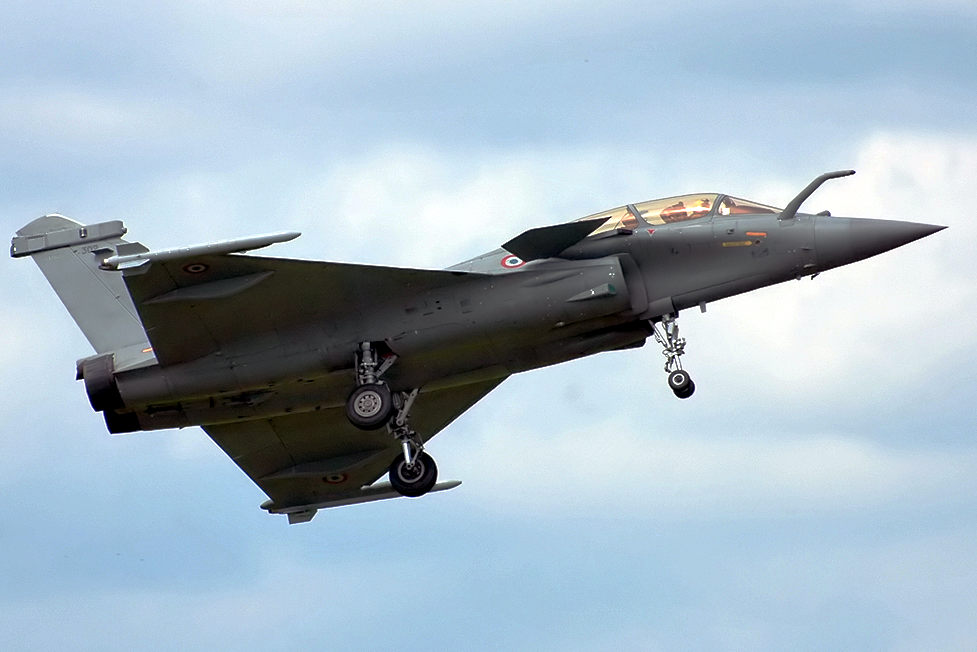
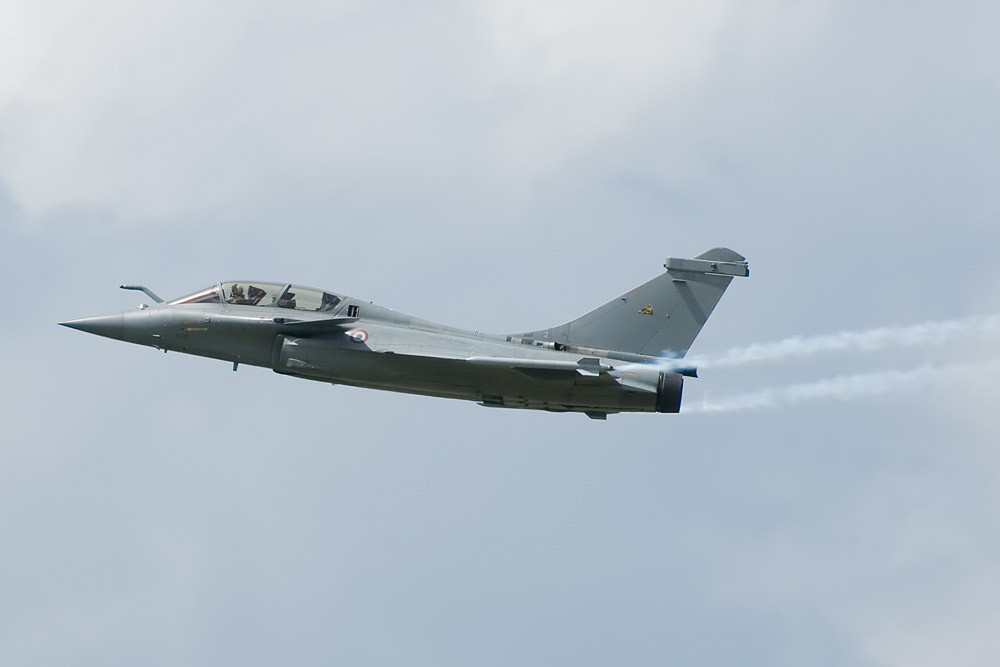
Egypt has agreed to buy 24 Rafale fighter aircraft from France, ending the French quest to find the first export customer for the Rafale which had its first flight all the way back in 1986.
Prior to this, France had lost in several countries against fighter aircraft from other countries, such as the F-16, Typhoon and the Gripen. This includes countries such as Morocco and Brazil where it had initially been considered the favorite to win, but in the end lost out to someone else.
Ironically, Egypt also happens to be the first export destination of the Mirage 2000, the predecessor of the Rafale. There are still about 18 Mirage 2000 in service with the Egyptian Air Force.
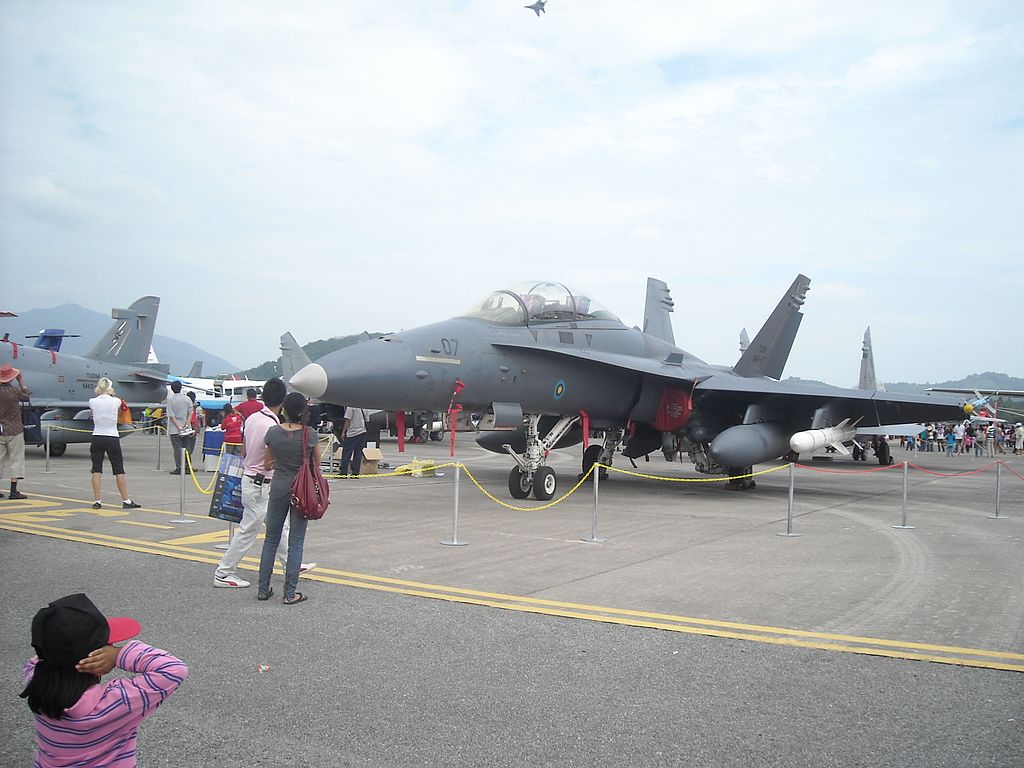
In the near future, France is looking at additional customers for the Rafale in Qatar and India, both of which have operated the Mirage 2000. Other countries where the Rafale is hoping to secure a contract in the more distant future is Malaysia.
Egypt also becomes the second customer of the French-Italian FREMM frigate after Morocco, which, like Egypt, ordered a single ship in 2008. This ship was delivered to Morocco in 2014 and is more similar to the French version of the FREMM than the Italian version.
Besides Morocco, France has two FREMM frigates and Italy has another four frigates. In all, Egypt has spent over 5 billion euros on new acquisitions. France is expected to provide loans to Egypt to help cover the purchases.
https://www.thalesgroup.com/en/worldwide/defence/press-release/egypt-selects-rafale-and-fremm-equip-its-forces
Showing posts with label France. Show all posts
Saturday, February 28, 2015
Sunday, October 6, 2013
French Air Force Receives First Tranche 4 Rafale Fighter Aircraft
The French Air Force has received the first two Rafale fighter aircraft of the sixty that are to be delivered as part of Tranche 4. The Trache 4 aircraft were ordered in 2009 to bring the total number of aircraft contracted for to 180.
These two dual-seat aircraft brings the total number of Dassault Rafale fighters currently in service to 122, consisting of:
The sixty Tranche 4 aircraft will be of the F3R standard. The preceding 120 aircraft were build to three different standards:
These two dual-seat aircraft brings the total number of Dassault Rafale fighters currently in service to 122, consisting of:
- 38 Rafale M single-seat aircraft of the French Navy
- 40 Rafale B dual-seat aircraft of the French Air Force
- 44 Rafale C single-seat aircraft of the French Air Force
The sixty Tranche 4 aircraft will be of the F3R standard. The preceding 120 aircraft were build to three different standards:
- The F1 standard: limited to air-to-air combat only. All were naval Rafale M aircraft and will be upgraded to the F3 standard.
- The F2 standard: are also capable of ground attack with various precision guided munitions and other upgrades.
- The F3 standard: capable of nuclear attack with ASMP missiles, naval strike with Exocet missiles and other upgrades.
- The F3R standard: various upgrades and improvements such as compatibility with long-range Meteor air-to-air missiles, RBE2 software upgrades and SPECTRA improvements
Friday, July 26, 2013
UAE Buys 2 Optical Satellites From France
The United Arab Emirates (UAE) has signed a contract in Abu Dhabi with France for the delivery of two optical reconnaissance satellites. The Falcon Eye satellite contract is valued at about 700 million Euros or about $900 million.
The decision had come down between France and the United States after several other countries has been eliminated earlier. The United States was led by Lockheed Martin.
The contract will be executed by Astrium, a subsidiary of of EADS, and Thales Alenia Space, a joint venture between French Thales and Italian Finmeccanica. The two high-resolution Pléiades-class satellites will be delivered in 2017 and 2018.
The UAE contract is a much needed win for France, whose defense orders fell by over 25 percent in 2012. It may also help boost cooperation between France in the UAE on defense matters.
In addition to building the satellites and related control station, France will also launch the satellites into orbit. France will also assist with image processing software, transmission and encryption systems and intelligence interpretation and analysis training.
Although optical reconnaissance and surveillance satellites suffer from some drawbacks such as susceptibility to weather conditions, they've become much more affordable in recent years.
It is now possible for countries and even private companies to get their own highly detailed images that were impossible to obtain several decades ago except for a few intelligence services.
http://uk.finance.yahoo.com/news/uae-buys-two-french-surveillance-164255629.html
The decision had come down between France and the United States after several other countries has been eliminated earlier. The United States was led by Lockheed Martin.
The contract will be executed by Astrium, a subsidiary of of EADS, and Thales Alenia Space, a joint venture between French Thales and Italian Finmeccanica. The two high-resolution Pléiades-class satellites will be delivered in 2017 and 2018.
The UAE contract is a much needed win for France, whose defense orders fell by over 25 percent in 2012. It may also help boost cooperation between France in the UAE on defense matters.
In addition to building the satellites and related control station, France will also launch the satellites into orbit. France will also assist with image processing software, transmission and encryption systems and intelligence interpretation and analysis training.
Although optical reconnaissance and surveillance satellites suffer from some drawbacks such as susceptibility to weather conditions, they've become much more affordable in recent years.
It is now possible for countries and even private companies to get their own highly detailed images that were impossible to obtain several decades ago except for a few intelligence services.
http://uk.finance.yahoo.com/news/uae-buys-two-french-surveillance-164255629.html
Tuesday, April 30, 2013
France to Cut Troops and Limit Defense Spending in White Paper
France has released its White Paper, which contains French defense outlook over the next six years from 2014 to 2019. Overall, France intends to maintain sufficient military capability, including the ability to respond militarily to a crisis abroad on its own.
Despite the current economic difficulties in France, French defense spending will be kept relatively stable over the next six years. However, there will be some cuts needed in order to balance the budget.
The total defense budget during this period will be €179.2 billion or $233.4 billion. From 2014 to 2025 spending is seen at €364 billion or $476 billion. In 2014, spending will be €31.4 billion or $41.1 billion.
The number of personnel will also be reduced by the Defense Ministry. This is in addition to the 54000 job cuts announced by former President Nicolas Sarkozy in 2008. The number of cuts may vary between 20000 to 34000. Exact details are still to be negotiated.
Some other highlights from this report are:
http://www.elysee.fr/assets/pdf/Livre-blanc-sur-la-Defense-et-la-Securite-nationale.pdf
Despite the current economic difficulties in France, French defense spending will be kept relatively stable over the next six years. However, there will be some cuts needed in order to balance the budget.
The total defense budget during this period will be €179.2 billion or $233.4 billion. From 2014 to 2025 spending is seen at €364 billion or $476 billion. In 2014, spending will be €31.4 billion or $41.1 billion.
The number of personnel will also be reduced by the Defense Ministry. This is in addition to the 54000 job cuts announced by former President Nicolas Sarkozy in 2008. The number of cuts may vary between 20000 to 34000. Exact details are still to be negotiated.
Some other highlights from this report are:
- Increased cooperation between France and other European countries in matters relating to defense.
- Joint development of a new anti-ship missile known as the Future Anti-Surface Guided Weapon in the United Kingdom and Anti-Navire Léger in France.
- Maintain the single aircraft carrier France currently has, but building of a second aircraft carrier in addition to the Charles de Gaulle is postponed indefinitely.
- Maintain the number of nuclear ballistic missiles submarines at four and the number of nuclear attack submarines at six.
- Possible reduction in the number of Rafale fighter aircraft to be acquired for the Navy and Air Force to a total of 225.
- Replacement of Boeing refuelling aircraft currently in service with 12 new Airbus A330 MRTT multi-role refuelling / transport aircraft instead of the previously planned 14.
- Acquisition of 50 new Airbus A400M turboprop transport aircraft.
- Reduction in the number of rapid deployment forces from 30000 to between 15000 and 20000.
- Increase availability of resources for special forces.
http://www.elysee.fr/assets/pdf/Livre-blanc-sur-la-Defense-et-la-Securite-nationale.pdf
Monday, April 29, 2013
Composition of French Armed Forces in 2012 and Top Defense Contractors
According to the French Ministry of Defense, France's current armed forces consist of the following:
In 2012, the top seven defense contractors in France and their total revenue (including non-military revenue) were:
http://news.yahoo.com/factbox-frances-military-defense-contractors-081206422.html
- The French military has 328,869 active personnel. The army makes up the largest proportion at 137,248 or about 41.7 percent.
- A total of 18,800 military personnel were stationed outside of France in various parts of the world.
- 7299 armored vehicles
- 391 helicopters
- 273 combat aircraft
- 246 surface-to-air weapon systems
- 75 combat and other support ships
In 2012, the top seven defense contractors in France and their total revenue (including non-military revenue) were:
- Safran at €13.56 billion or $17.66 billion provides navigation systems, optronics, software for submarines, ships, aircraft and soldiers.
- Thales at €14.16 billion or $18.45 billion provides radar systems, secure communications, unmanned aerial vehicles, drones, electronic missile systems.
- Dassault Aviation at €3.94 billion or $5.13 billion provides fighter aircraft such as the Rafale and the Mirage
- EADS at €56.48 billion or $73.58 billion provides NH90 transport and naval helicopters, Tiger attack helicopters, Airbus A400M transport aircraft, Harfang drones, Astrium anti-missile defense systems and other missile systems in cooperation with MBDA
- Nexter at €0.74 billion or $0.96 billion provides Leclerc main battle tanks, VBCI armored vehicles, Caesar wheeled self-propelled guns, Aravis tanks and various munitions.
- DCNS at €2.60 billion or $3.39 billion provides conventional and nuclear-powered submarines, Fremm multi-role frigates, Mistral Landing Platform Helicopter.
- MBDA at €3.0 billion or $3.91 billion provides Meteor ramjet-powered air-to-air missiles, Storm shadow / Scalp cruise missile, Aster surface-to-air missiles, Milan anti-tank missiles.
http://news.yahoo.com/factbox-frances-military-defense-contractors-081206422.html
Friday, April 19, 2013
FREMM Frigate starts sea trials for delivery to Morocco in 2013
The Mohammed VI, the FREMM frigate destined for the Moroccan Navy has started sea trails and is on schedule to be delivered in late 2013. Morroco had ordered the French anti-submarine warfare (ASW) variant in 2008 to become the first and to date only export customer of the FREMM frigate.
Developed by France and Italy, only one FREMM frigate, the Aquitaine, has so far been commissioned in France. Like the Mohammed VI, the Aquitaine is also of the ASW variant. The next FREMM frigate, the Normandie, is set to be delivered in 2014.
In all, France intends to acquire 9 hulls of the ASW variant and another 2 hulls of the FREDA variant. The FREDA is a version of the FREMM frigate dedicated to providing air defense.
Italy intends to acquire 4 units of the ASW variant and another 6 units of the general purpose variant. The first general purpose variant, the Carlo Bergamini, is set to be commissioned into the Italian Navy in late 2013.
All the FREMM frigates share a common hull design, but the Italian and French versions differ from each other and are relatively easy to distinguish. The FREMM frigate specifications are:
There are many differences between the French and Italian versions in terms of sensors, weapons and other equipment fitted. Some notable differences are:
The FREMM frigates will succeed the HORIZON class frigates. Only 4 units of the HORIZON class were build for the French and Italian Navies.
http://en.dcnsgroup.com/2013/04/18/dcns-debute-les-essais-en-mer-de-la-fregate-multimissions-fremm-destinee-a-la-marine-royale-du-maroc/
Developed by France and Italy, only one FREMM frigate, the Aquitaine, has so far been commissioned in France. Like the Mohammed VI, the Aquitaine is also of the ASW variant. The next FREMM frigate, the Normandie, is set to be delivered in 2014.
In all, France intends to acquire 9 hulls of the ASW variant and another 2 hulls of the FREDA variant. The FREDA is a version of the FREMM frigate dedicated to providing air defense.
Italy intends to acquire 4 units of the ASW variant and another 6 units of the general purpose variant. The first general purpose variant, the Carlo Bergamini, is set to be commissioned into the Italian Navy in late 2013.
All the FREMM frigates share a common hull design, but the Italian and French versions differ from each other and are relatively easy to distinguish. The FREMM frigate specifications are:
- a lenght of 142-144 m
- a beam of about 20 m
- a draught of 5 m
- a displacement of 6000 tonnes
- a maximum speed of 27-30 kn
- a range of 6000 nautical miles at 15 kn
There are many differences between the French and Italian versions in terms of sensors, weapons and other equipment fitted. Some notable differences are:
- the French version uses the Herakles radar, while the Italian verison uses the EMPAR radar
- both versions use the Otobreda Super Rapid 76 mm gun, but the Italian version is fitted with one on the hangar and the Otobreda 127 mm gun
- both versions have 32 VLS cells, but differ in the type of SYLVER modules that are installed
- the French version carries a single NH90 helicopter, while the Italian version can carry an additional NH90 or EH101 helicopter
The FREMM frigates will succeed the HORIZON class frigates. Only 4 units of the HORIZON class were build for the French and Italian Navies.
http://en.dcnsgroup.com/2013/04/18/dcns-debute-les-essais-en-mer-de-la-fregate-multimissions-fremm-destinee-a-la-marine-royale-du-maroc/
Friday, March 29, 2013
Malaysia Wants to Buy 18 Fighter Aircraft by 2015
Malaysia is looking to buy 18 new fighter aircraft by 2015 to replace the Mikoyan MiG-29 aircraft it currently has in service. It has short listed the following 5 candidates:
The exact cost of the contract for the new fighter aircraft has yet to be determined, but is certain to run into the billions. The competition for the contract is expected to be intense with extensive lobbying for the contract by manufacturers.
Some of the competitors, such as Sweden and France, are in dire need of an export contract. Winning the contract would greatly help the Gripen E/F and Rafale program with the addition of a second buyer.
Despite having been selected as the winner of India's MMRCA competition, France has yet to score an export contract for the Rafale. Sweden has recently ordered the Gripen E/F, but Switzerland has yet to decide on a proposal for 22 Gripen E/F.
Malaysia now has a fighter aircraft fleet of 18 Su-30MKM, 8 F/A-18D and 18 MiG-29N, of which only 10 are operational. All of the MiG-29N aircraft are to be retired by 2014.
The MiG-29N and F/A-18 had been ordered at the same time in 1993 in a split order. They were delivered in 1995 and 1997 respectively. The MiG-29N reportedly proved less than satisfactorily in service.
The MiG Corporation own internal problems starting in the nineties meant that is was unable to provide adequate after sales service and the aircraft suffered from a chronic lack of spares.
In 2003, Malaysia ordered the 18 Su-30MKM in a $900 million contract with Russia. The Su-30MKM is similar to India's Su-30MKI with some changes in avionics. It has canards and thrust-vectoring engines.
http://www.reuters.com/article/2013/03/28/malaysia-fighters-idUSL3N0CK7WW20130328
- the Russian Su-30 from Sukhoi
- the Swedish Jas-39 Gripen from Saab
- the American F/A-18E/F Super Hornet from Boeing
- the French Rafale from Dassault
- the European Eurofighter Typhoon from EADS, BAE and Alenia Aeronautica
The exact cost of the contract for the new fighter aircraft has yet to be determined, but is certain to run into the billions. The competition for the contract is expected to be intense with extensive lobbying for the contract by manufacturers.
Some of the competitors, such as Sweden and France, are in dire need of an export contract. Winning the contract would greatly help the Gripen E/F and Rafale program with the addition of a second buyer.
Despite having been selected as the winner of India's MMRCA competition, France has yet to score an export contract for the Rafale. Sweden has recently ordered the Gripen E/F, but Switzerland has yet to decide on a proposal for 22 Gripen E/F.
Malaysia now has a fighter aircraft fleet of 18 Su-30MKM, 8 F/A-18D and 18 MiG-29N, of which only 10 are operational. All of the MiG-29N aircraft are to be retired by 2014.
The MiG-29N and F/A-18 had been ordered at the same time in 1993 in a split order. They were delivered in 1995 and 1997 respectively. The MiG-29N reportedly proved less than satisfactorily in service.
The MiG Corporation own internal problems starting in the nineties meant that is was unable to provide adequate after sales service and the aircraft suffered from a chronic lack of spares.
In 2003, Malaysia ordered the 18 Su-30MKM in a $900 million contract with Russia. The Su-30MKM is similar to India's Su-30MKI with some changes in avionics. It has canards and thrust-vectoring engines.
http://www.reuters.com/article/2013/03/28/malaysia-fighters-idUSL3N0CK7WW20130328
Tuesday, March 12, 2013
SAMP/T Aster 30 Intercepts Tactical Ballistic Missile Target
The Surface-to-Air Missile Platform/Terrain (SAMP/T) air defense system from Eurosam was again tested against a simulated 300 km range tactical ballistic missile target that was launched from an aircraft.
After the target was acquired by the ARABEL multi-function radar, a Aster 30 B1 missile was fired and scored a direct hit against the target. Two other successful tests had been carried out earlier in 2010 and 2011.
The SAMP/T system is part of the Aster family of surface-to-air missiles (SAM), which are designed for:
The SAMP/T is usually mounted on eight-wheeled trucks with up to eight vertically launched Aster 30 missiles. Each two-stage Aster 30 missile has:
Eurosam has so far delivered 14 SAMP/T units to Italy and France. Ten of those will be deployed in 5 French air defense squadrons, of which 4 are currently equipped or being equipped.
The remaining four SAMP/T units, that have been delivered, currently serve in a single Italian regiment in Mantova. The regiment is to have a total of five units. The SAMP/T may also be exported to Turkey and Singapore.
http://www.mbda-systems.com/mediagallery/#/news/3039
After the target was acquired by the ARABEL multi-function radar, a Aster 30 B1 missile was fired and scored a direct hit against the target. Two other successful tests had been carried out earlier in 2010 and 2011.
The SAMP/T system is part of the Aster family of surface-to-air missiles (SAM), which are designed for:
- Point defense on naval platforms with Aster 15
- Area defense on naval platforms with Aster 30
- Area defense on land platforms with Aster 30
The SAMP/T is usually mounted on eight-wheeled trucks with up to eight vertically launched Aster 30 missiles. Each two-stage Aster 30 missile has:
- a length of 4.9 m
- a weight of 450 kg
- a maximum range of 120 km
- a maximum altitude of 20 km
- a maximum speed of Mach 4.5
Eurosam has so far delivered 14 SAMP/T units to Italy and France. Ten of those will be deployed in 5 French air defense squadrons, of which 4 are currently equipped or being equipped.
The remaining four SAMP/T units, that have been delivered, currently serve in a single Italian regiment in Mantova. The regiment is to have a total of five units. The SAMP/T may also be exported to Turkey and Singapore.
http://www.mbda-systems.com/mediagallery/#/news/3039
Thursday, February 21, 2013
UAE signs 750 MRAP deal and other contracts worth $1.42 billion
The United Arab Emirates has signed 17 contracts worth 5.2 billion Dirham or roughly $1.42 billion, including:
The M-ATV is lighter, smaller and more maneuverable than previous generation MRAP vehicles, while maintaining their levels of protection with its Plasan composite armored hull. The vehicle has a:
The Predator XP is an export version of the medium-altitude, long-endurance (MALE) MQ-1 Predator Unmanned Aerial Vehicle (UAV). The Predator has:
The CIRIT is an air-to-surface missile developed by Turkey's RoketSan for helicopters and UAVs. The missile has:
Earlier this month, the UAE received the first of 3 A330 MRTT multi-role tanker and transport aircraft it ordered from Airbus. The UAE is also negotiating the potential purchase of the Typhoon or Rafale fighter aircraft, but no contract has been signed.
http://gulfnews.com/business/general/uae-armed-forces-sign-17-deals-1.1147973
- a 1.4 billion Dirham or $381 million contract with the Oshkosh Corporation from the United States for the delivery of 750 Mine Resistant Ambush Protected (MRAP) All-Terrain Vehicles (M-ATVs) in 2013
- a 722 million Dirham or $196 million contract with General Atomics for export Predator XP unmanned aircraft
- a 720 million Dirham or $196 million contract with Tawazun for the purchase of CIRIT laser guided missiles
- a 472.7 million Dirham or $128.7 million contract with Russia’s KBP for the delivery of ammunition
- a 375.4 million Dirham or $102.2 million contract with the Abu Dhabi Ship Building Company for the installation of Rolling Airframe Missiles (RAM)
- a 140 million Dirham or $38 million contract with the Italian Fincantieri to provide technical support for naval vessels it recently acquired
The M-ATV is lighter, smaller and more maneuverable than previous generation MRAP vehicles, while maintaining their levels of protection with its Plasan composite armored hull. The vehicle has a:
- length of 6.27 m
- width of 2.49 m
- speed of 105 km/hr
- range of 510 km
- maximum weight of 14700 kg
The Predator XP is an export version of the medium-altitude, long-endurance (MALE) MQ-1 Predator Unmanned Aerial Vehicle (UAV). The Predator has:
- a length of 8.22 m
- a wingspan of 14.8 m
- a height of 2.1 m
- an empty weight of 512 kg
- a max takeoff weight of 1020 kg
- a max speed of 217 km/hr
- a max range of 1100 km
- a max endurance of 24 hrs
The CIRIT is an air-to-surface missile developed by Turkey's RoketSan for helicopters and UAVs. The missile has:
- a length of 1.9 m
- a diameter of 70 mm
- weighs 14 kg
- a warhead of 3 kg
- a maximum range of 8 km
Earlier this month, the UAE received the first of 3 A330 MRTT multi-role tanker and transport aircraft it ordered from Airbus. The UAE is also negotiating the potential purchase of the Typhoon or Rafale fighter aircraft, but no contract has been signed.
http://gulfnews.com/business/general/uae-armed-forces-sign-17-deals-1.1147973
Saturday, January 19, 2013
First Airbus A400M aircraft rolled off production line for France
The first Airbus A400M has been rolled off the production line for France, where it is expected to enter service in the first quarter of 2013. The A400M is a new multi-purpose military turboprop transport aircraft, that can:
Crew: 3 or 4 (2 pilots with 3rd optional, 1 loadmaster)
Payload: 37000 kg or 116 fully equipped troops / paratroops or up to 66 stretchers with 25 medical personnel
Length: 45.1 m
Wingspan: 42.4 m
Height: 14.7 m
Empty weight: 76500 kg
Max takeoff weight: 141000 kg
Fuel capacity: 50500 kg internal fuel
Max landing weight: 122000 kg
Powerplant: 4 Europrop TP400-D6 turboprop, 8250 kW each with 8-bladed, 5.3 m diameter propeller
Cruising speed: 780 km/h (Mach 0.68 to 0.72)
Initial cruise altitude at MTOW: 9000 m
Range: 3298 km at max payload (long range cruise speed, reserves as per MIL-C-5011A)
Range with 30 tonne payload: 4540 km
Range with 20 tonne payload: 6390 km
Ferry range: 8710 km
Service ceiling: 11300 m
Tactical takeoff distance: 980 m (aircraft weight of 100 ton, soft field, ISA, sea level)
Tactical landing distance: 770 m
Turning radius (ground): 28.6 m
http://www.airbusmilitary.com/LatestNews/tabid/176/ArticleID/240/ArtMID/681/PgrID/681/PageID/2/First-production-Airbus-Military-A400M-in-French-Air-Force-colours.aspx
- fly at higher speed and altitude than previous turboprops,
- is highly maneuverable, even at low speed,
- land on short and rough airfields,
- the cargo hold is designed to carry outsize equipment.
Crew: 3 or 4 (2 pilots with 3rd optional, 1 loadmaster)
Payload: 37000 kg or 116 fully equipped troops / paratroops or up to 66 stretchers with 25 medical personnel
Length: 45.1 m
Wingspan: 42.4 m
Height: 14.7 m
Empty weight: 76500 kg
Max takeoff weight: 141000 kg
Fuel capacity: 50500 kg internal fuel
Max landing weight: 122000 kg
Powerplant: 4 Europrop TP400-D6 turboprop, 8250 kW each with 8-bladed, 5.3 m diameter propeller
Cruising speed: 780 km/h (Mach 0.68 to 0.72)
Initial cruise altitude at MTOW: 9000 m
Range: 3298 km at max payload (long range cruise speed, reserves as per MIL-C-5011A)
Range with 30 tonne payload: 4540 km
Range with 20 tonne payload: 6390 km
Ferry range: 8710 km
Service ceiling: 11300 m
Tactical takeoff distance: 980 m (aircraft weight of 100 ton, soft field, ISA, sea level)
Tactical landing distance: 770 m
Turning radius (ground): 28.6 m
http://www.airbusmilitary.com/LatestNews/tabid/176/ArticleID/240/ArtMID/681/PgrID/681/PageID/2/First-production-Airbus-Military-A400M-in-French-Air-Force-colours.aspx
Wednesday, December 26, 2012
Russia postpones building 2 Mistral class amphibious assault ships locally
Russia is postponing building 2 Mistral class amphibious assault ships under French license from 2013 to 2016. The ships were to be 80 percent Russian and 20 percent french.
The reason for the delay is to reassess the ships performance, role and status within the Russian navy. Modifications to the ship design according to Russian needs may also be necessary.
The other 2 Mistral class ships from France, all part of the $1.2 billion contract signed between Russia and France in 2011, will proceed as planned.
The first ship , the Vladivostok, is scheduled to be delivered in 2014 and is being built at a DCNS shipyard in Saint-Nazaire. The second ship, the Sevastopol, is scheduled for delivery one year later. Both are expected to join Russia's Pacific Fleet.
The Mistral-class ship can carry 16 helicopters, four landing vessels, 70 armored vehicles, and 450 personnel.
http://en.rian.ru/business/20121221/178312682.html
The reason for the delay is to reassess the ships performance, role and status within the Russian navy. Modifications to the ship design according to Russian needs may also be necessary.
The other 2 Mistral class ships from France, all part of the $1.2 billion contract signed between Russia and France in 2011, will proceed as planned.
The first ship , the Vladivostok, is scheduled to be delivered in 2014 and is being built at a DCNS shipyard in Saint-Nazaire. The second ship, the Sevastopol, is scheduled for delivery one year later. Both are expected to join Russia's Pacific Fleet.
The Mistral-class ship can carry 16 helicopters, four landing vessels, 70 armored vehicles, and 450 personnel.
http://en.rian.ru/business/20121221/178312682.html
Saturday, December 8, 2012
Indian plans for second indigenous aircraft carrier IAC-2
The Indian Navy is making plans for a second indigenous aircraft carrier (IAC-2), as a follow-up to the first indigenous aircraft carrier (IAC-1). The IAC-1 is a 36,000 ton ship currently being build in the Kochi shipyard and is similar in size to the INS Vikramaditya, the former Admiral Gorshkov from Russia.
The IAC-2 will be larger and have a displacement of about 60,000 ton. The ship will enter service in 10 to 15 years and will likely have either steam or electro-magnetic catapults installed.
The addition of catapults to IAC-2 would offer the following benefits:
India plans to have 3 aircraft carriers available after the retirement of the Viraat. This would allow one carrier to be stationed on each coast, while the third undergoes training or maintenance.
The delivery of the INS Vikramaditya from Russia has been delayed until the second half of 2013 at the earliest after problems with the propulsion systems. Meanwhile, Russian pilots have successfully conducted flight tests from the ship using the MiG-29K/KUB aircraft.
http://www.flightglobal.com/news/articles/india-nears-catapult-decision-for-second-indigenous-carrier-379825/
The IAC-2 will be larger and have a displacement of about 60,000 ton. The ship will enter service in 10 to 15 years and will likely have either steam or electro-magnetic catapults installed.
The addition of catapults to IAC-2 would offer the following benefits:
- operate heavier aircraft such as fixed-wing Airborne Early Warning (AEW), including the Northop Grumman E-2D Hawkeye. Fixed-wing aircraft offer superior situational awareness compared to helicopter-borne aircraft such as the Ka-31 currently being used.
- catapults reduce the amount of deck space required to launch aircraft, while also allowing increased fuel and payload during takeoff.
- aircraft such as the Boeing F/A-18E/F Super Hornet and the Dassault Rafale are only compatible with catapults. The Rafale was recently selected as winner of the Indian Air Force's Medium Multi-Role Combat Aircraft (MMRCA) competition.
India plans to have 3 aircraft carriers available after the retirement of the Viraat. This would allow one carrier to be stationed on each coast, while the third undergoes training or maintenance.
The delivery of the INS Vikramaditya from Russia has been delayed until the second half of 2013 at the earliest after problems with the propulsion systems. Meanwhile, Russian pilots have successfully conducted flight tests from the ship using the MiG-29K/KUB aircraft.
http://www.flightglobal.com/news/articles/india-nears-catapult-decision-for-second-indigenous-carrier-379825/
Monday, November 19, 2012
Rafale Equipped With RBE2 AESA Radar & Test Fires Meteor BVRAAM
On October 2012, the first fighter aircraft in Europe to be equipped with an Active Electronically Scanned Array (AESA) Radar, entered service with the French Air force.
In addition, successful test firing took place of the long range METEOR Beyond Visual Range Air-to-Air Missile (BVRAAM). Made by MBDA, the Meteor has an active radar seeker, ramjet motor, speed of mach 4 and weighs 185 kg.
As of October 2012, 111 production Rafale aircraft have been delivered so far. These include 36 Rafale-M for the French Navy. The French Air force has received 38 Rafale-B and 37 Rafale-C.
Total requirements for the Navy and Air force are 58 and 228 respectively. Out of these, contracts for 180 Rafale aircraft have actually been signed.
http://www.dassault-aviation.com/fr/aviation/presse/press-kits/2012/the-rafale-omnirole-fighter-pushing-forward-on-new-air-to-air-capabilities.html?cHash=8328870e9f
In addition, successful test firing took place of the long range METEOR Beyond Visual Range Air-to-Air Missile (BVRAAM). Made by MBDA, the Meteor has an active radar seeker, ramjet motor, speed of mach 4 and weighs 185 kg.
As of October 2012, 111 production Rafale aircraft have been delivered so far. These include 36 Rafale-M for the French Navy. The French Air force has received 38 Rafale-B and 37 Rafale-C.
Total requirements for the Navy and Air force are 58 and 228 respectively. Out of these, contracts for 180 Rafale aircraft have actually been signed.
http://www.dassault-aviation.com/fr/aviation/presse/press-kits/2012/the-rafale-omnirole-fighter-pushing-forward-on-new-air-to-air-capabilities.html?cHash=8328870e9f
Labels:
Air Force,
Aircraft,
Fighter Aircraft,
France,
Missiles
Subscribe to:
Posts (Atom)