Germany has approved the sale of 100 used Leopard 2A6 Main Battle Tanks and 50 Marder 1A3 Infantry Fighting vehicles (IFV) to Indonesia. The German National Security Council must approve all large arms sales to other countries.
Indonesia had earlier selected to buy the Leopard 2 tanks from Germany's Rheinmetall over the option of buying them from the Netherlands. Russia had also offered its T-90 tanks to Indonesia.
Indonesia had earlier put the cost of the 100 refurbished Leopard 2A6 tanks, including related equipment, support vehicles and services, at $280 million. Delivery is expected to be complete by 2014.
The purchase are part of the $15 billion, which Indonesia plans to spend to upgrade its army. Currently, Indonesia only has outdated British Scorpion and French AMX13 tanks, which are much smaller and lighter than the heavy Leopard 2 tanks.
The Leopard 2 tank is armed with a 120 mm smoothbore cannon with a crew of 4 and weighs over 60 tons. The tracked Marder IFV is armed with a 20 mm cannon with a crew of 3 and can carry 7 soldiers.
Unlike Indonesia, a decision on whether or not to proceed with the sale of Leopard 2 tanks to Saudi Arabia has been postponed by Germany until after the federal elections in September 2013.
Saudi Arabia is interested in purchasing several hundred new Leopard 2 tanks and other armored vehicles. Qatar has already purchased 62 Leopard 2 tanks and 24 PzH2000 Self-Propelled Howitzers recently.
The first eight Flakpanzer Gepard Self-Propelled Anti-Aircraft Gun (SPAAG) to Brazil are due for delivery later this year. Brazil ordered 34 used Gepards in April 2013. They are armed with two 35 mm guns for short-range air defense.
http://www.reuters.com/article/2013/05/03/germany-arms-indonesia-saudi-idUSL6N0DK2II20130503
Showing posts with label Germany. Show all posts
Sunday, May 5, 2013
Wednesday, May 1, 2013
Second Dolphin II Class Submarine Inaugurated by Israel in Germany
The INS Rahav, the second of the Dolphin II class diesel-powered submarines was handed over in Germany to the Israeli Navy. Some equipment still needs to be installed, but it is expected to arrive in Israel sometime in late 2013 or early 2014.
Similar to its predecessors, the Dolphin II class submarines were designed specifically for Israel and are loosely based on the German Type 212 submarines. However, the Dolphin II submarines are much larger with many modifications.
The three earlier Dolphin I class submarines were also based on the Type 209 submarines but larger. Israel only had to pay for half on the third Dolphin I submarine, while the rest and the first two submarines were granted free of charge to Israel by Germany during the nineties.
Israel order two Dolphin II submarines in 2006 and ordered another one in 2011. The total cost is estimated at over $2 billion of which Israel will pay about three fourth and the rest by Germany. Israel received the first Dolphin II class submarine, the Tannin, in 2012.
The Dolphin class submarines are build by Howaldtswerke-Deutsche Werft AG (HDW) for Israel. No other country operates either the Dolphin I or Dolphin II class submarines.
The Dolphin II class submarines are equipped with Air Independent Propulsion (AIP) similar to those on the Type 212 to remain submerged for longer periods of time. The German version of AIP relies on fuel cells, unlike those of some other countries that use a different method.
The Dolphin class submarines are rare in that they are equipped with 650 mm torpedo tubes in addition to the 533 mm torpedo tubes. Normally, 650 mm torpedo tubes are only found on some Russian nuclear attack submarines and can fire much larger weapons with longer range.
It is thought that the primary use of the Dolphin submarines to Israel is to house their nuclear deterrent using long-range cruise missiles fired from under water using the larger torpedo tubes.
Israel being a relatively small country that is surrounded by hostile states at very close range makes it vulnerable to a surprise attack. The Dolphin submarines are believed to be less vulnerable and hence take a prominent role in ensuring the security of Israel.
http://rt.com/news/israel-dolphin-submarine-nuclear-598/
Similar to its predecessors, the Dolphin II class submarines were designed specifically for Israel and are loosely based on the German Type 212 submarines. However, the Dolphin II submarines are much larger with many modifications.
The three earlier Dolphin I class submarines were also based on the Type 209 submarines but larger. Israel only had to pay for half on the third Dolphin I submarine, while the rest and the first two submarines were granted free of charge to Israel by Germany during the nineties.
Israel order two Dolphin II submarines in 2006 and ordered another one in 2011. The total cost is estimated at over $2 billion of which Israel will pay about three fourth and the rest by Germany. Israel received the first Dolphin II class submarine, the Tannin, in 2012.
The Dolphin class submarines are build by Howaldtswerke-Deutsche Werft AG (HDW) for Israel. No other country operates either the Dolphin I or Dolphin II class submarines.
The Dolphin II class submarines are equipped with Air Independent Propulsion (AIP) similar to those on the Type 212 to remain submerged for longer periods of time. The German version of AIP relies on fuel cells, unlike those of some other countries that use a different method.
The Dolphin class submarines are rare in that they are equipped with 650 mm torpedo tubes in addition to the 533 mm torpedo tubes. Normally, 650 mm torpedo tubes are only found on some Russian nuclear attack submarines and can fire much larger weapons with longer range.
It is thought that the primary use of the Dolphin submarines to Israel is to house their nuclear deterrent using long-range cruise missiles fired from under water using the larger torpedo tubes.
Israel being a relatively small country that is surrounded by hostile states at very close range makes it vulnerable to a surprise attack. The Dolphin submarines are believed to be less vulnerable and hence take a prominent role in ensuring the security of Israel.
http://rt.com/news/israel-dolphin-submarine-nuclear-598/
Tuesday, April 23, 2013
Qatar Buys 62 Leopard II Tanks and 24 PzH2000 Self-Propelled Howitzers from Germany
Krauss-Maffei Wegmann from Germany has signed a contract with Qatar for the delivery of 62 Leopard II Main Battle Tanks and 24 PzH2000 Self-Propelled Howitzers / Guns.
Qatar wants to modernize its armed forces due to increasing tensions recently in the middle east and the new acquisitions are intended to achieve that goal. Other purchases such as the Javelin missiles from the United States are part of the effort.
The contract, including related equipment, training and other services, is estimated to be €1.89 billion or about $2.5 billion. Last year, Qatar had expressed interest in acquiring up to 200 Leopard 2 tanks.
The Leopard 2, depending on version weighs over 60 tons and carries a 120 mm smoothbore gun as its main armament. It is operated by a crew consisting of the driver, commander, loader and gunner.
The tracked PzH2000 is a 155 mm and 52 caliber Self-Propelled Howitzer with support for Multiple Rounds Simultaneous Impact (MRSI), where 5 rounds are fired in sequence and impact simultaneously.
The PzH2000 has a very high maximum rate of fire of up to 13 rounds per minute. The diesel-powered vehicle is operated by a crew consisting of the driver, commander and gunner.
Qatar currently operates the French AMX-30B2 tanks and South African G5 towed 155 mm howitzers that were acquired back in the eighties and will have to be replaced.
Krauss-Maffei Wegmann, in cooperation with other German defense companies such as Rheinmetall, is now looking at selling hundreds of Leopard 2A7 tanks and Boxer Infantry Fighting Vehicles to Saudi Arabia.
http://www.kmweg.de/de/en/fileadmin/user_upload/pdfs/Press_Releases/Press_Release_Army_modernization_Qatar.pdf
Qatar wants to modernize its armed forces due to increasing tensions recently in the middle east and the new acquisitions are intended to achieve that goal. Other purchases such as the Javelin missiles from the United States are part of the effort.
The contract, including related equipment, training and other services, is estimated to be €1.89 billion or about $2.5 billion. Last year, Qatar had expressed interest in acquiring up to 200 Leopard 2 tanks.
The Leopard 2, depending on version weighs over 60 tons and carries a 120 mm smoothbore gun as its main armament. It is operated by a crew consisting of the driver, commander, loader and gunner.
The tracked PzH2000 is a 155 mm and 52 caliber Self-Propelled Howitzer with support for Multiple Rounds Simultaneous Impact (MRSI), where 5 rounds are fired in sequence and impact simultaneously.
The PzH2000 has a very high maximum rate of fire of up to 13 rounds per minute. The diesel-powered vehicle is operated by a crew consisting of the driver, commander and gunner.
Qatar currently operates the French AMX-30B2 tanks and South African G5 towed 155 mm howitzers that were acquired back in the eighties and will have to be replaced.
Krauss-Maffei Wegmann, in cooperation with other German defense companies such as Rheinmetall, is now looking at selling hundreds of Leopard 2A7 tanks and Boxer Infantry Fighting Vehicles to Saudi Arabia.
http://www.kmweg.de/de/en/fileadmin/user_upload/pdfs/Press_Releases/Press_Release_Army_modernization_Qatar.pdf
Sunday, April 7, 2013
South Korea will buy Taurus KEPD 350 air-to-surface cruise missiles
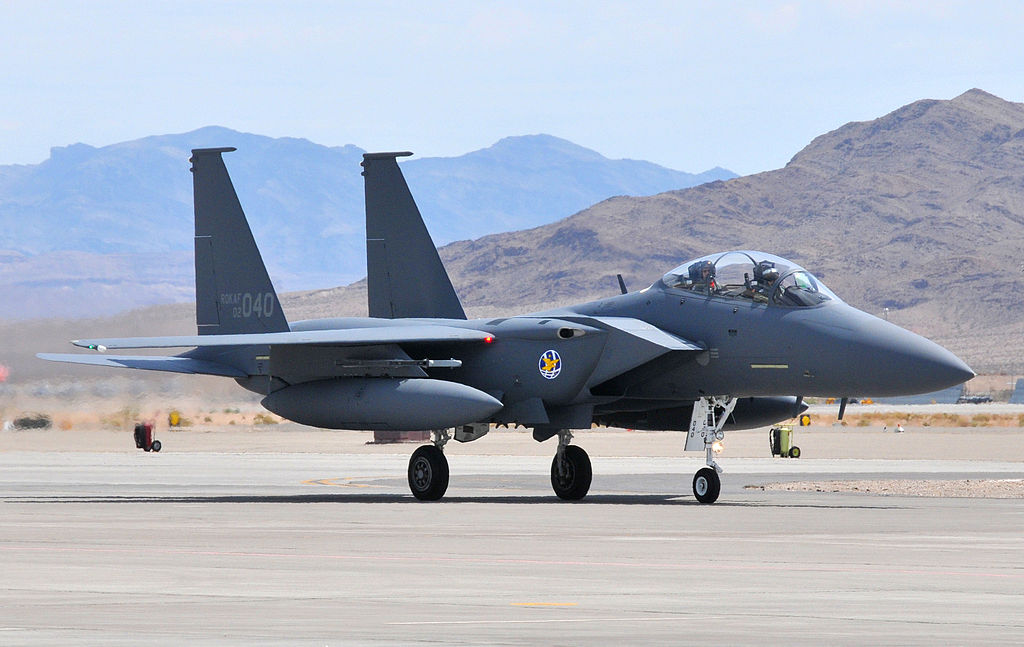
According to Defense Minister, Kim Kwan-jin, South Korea will buy the Taurus missile and integrate them with the F-15K fighters currently in service. South Korea may buy up to 200 missiles.
South Korea is said to prefer the AGM-158 JASSM from the United States. However, the US is unwilling to sell the JASSM to South Korea causing it to turn to Europe for an alternative.
The Taurus KEPD 350 is a low-flying, long-range, stealthy, highly-accurate cruise missile developed jointly by Germany and Sweden. Its specifications are:
The Taurus KEPD 350 is designed to penetrate and strike high-value targets against strong air defenses at stand-off ranges. Its mutiple guidance methods makes it highly immune to any jamming environment.
The Multi-Effect Penetrator, HIgh Sophisticated and Target Optimised (MEPHISTO) warhead gives the Taurus KEPD 350 the ability to strike at hardened bunkers buried deep beneath the earth.
Its Programmable Intelligent Multi-Purpose Fuze (PIMPF) gives the KEPD 350 the ability to detonate the penetrator at pre-selected floors within the target through layer counting and void sensing technologies.
This makes the Taurus KEPD 350 suitable against North Korea which has extensive underground facilities. North Korea's hilly landscape is also suited to the terrain hugging flight profile of the Taurus missile.
The Taurus KEPD 350 will complement the existing SLAM-ER, an air-to-surface variant of the Harpoon missile with a range of about 280 km. The missiles were acquired as part of the purchase of 61 F-15K aircraft.
South Korea will also soon decide the winning bidder for the competition to provide 60 new fighter aircraft. The 3 competing candidates are the F-35 Joint Strike Fighter, the F-15 Silent Eagle and the Eurofighter Typhoon.
http://www.reuters.com/article/2013/04/04/korea-defense-missiles-idUSL3N0CR1D120130404
South Korea is said to prefer the AGM-158 JASSM from the United States. However, the US is unwilling to sell the JASSM to South Korea causing it to turn to Europe for an alternative.
The Taurus KEPD 350 is a low-flying, long-range, stealthy, highly-accurate cruise missile developed jointly by Germany and Sweden. Its specifications are:
- a length of 5.1 m
- a missile diameter of 1.08 m
- a wingspan of 2.06 m
- a weight of 1400 kg
- a warhead of 480 kg
- a maximum speed of Mach 0.95
- a maximum range of over 500 km
The Taurus KEPD 350 is designed to penetrate and strike high-value targets against strong air defenses at stand-off ranges. Its mutiple guidance methods makes it highly immune to any jamming environment.
The Multi-Effect Penetrator, HIgh Sophisticated and Target Optimised (MEPHISTO) warhead gives the Taurus KEPD 350 the ability to strike at hardened bunkers buried deep beneath the earth.
Its Programmable Intelligent Multi-Purpose Fuze (PIMPF) gives the KEPD 350 the ability to detonate the penetrator at pre-selected floors within the target through layer counting and void sensing technologies.
This makes the Taurus KEPD 350 suitable against North Korea which has extensive underground facilities. North Korea's hilly landscape is also suited to the terrain hugging flight profile of the Taurus missile.
The Taurus KEPD 350 will complement the existing SLAM-ER, an air-to-surface variant of the Harpoon missile with a range of about 280 km. The missiles were acquired as part of the purchase of 61 F-15K aircraft.
South Korea will also soon decide the winning bidder for the competition to provide 60 new fighter aircraft. The 3 competing candidates are the F-35 Joint Strike Fighter, the F-15 Silent Eagle and the Eurofighter Typhoon.
http://www.reuters.com/article/2013/04/04/korea-defense-missiles-idUSL3N0CR1D120130404
Saturday, April 6, 2013
South Korea to Buy 60 Fighter Jets in June 2013
South Korea will decide in June 2013 who the winning bidder is of the competition to provide 60 new fighter aircraft. Currently, negotiotions are still ongoing regarding pricing.
South Korea plans to acquire 60 fighter jets from one of 3 candidates, who have been competing since 2010 for the contract:
The Eurofighter Typhoon is the most mature platform of the 3 competitors. While its air-to-air capability is fairly well developed, its air-to-ground capability does remain significantly behind.
The Eurofighter Typhoon is in service in a number of countries already and has won recent contracts in Oman. It may also win in other countries such as the United Arab Emirates.
Both the F-35 and F-15SE are not ready at this point and still have a lot of testing and development ahead of them. The F-35 is probably the most advanced on paper and a true fifth generation fighter.
However, the F-35 has encountered lots of problems recently. A number of countries have reduced or cancelled some orders and the cost of the aircraft is rapidly escalating.
The F-15SE has the advantage in that it is the next iteration of the F-15, which is already in service in South Korea after placing orders for 61 F-15K aircraft. The F-15K is a variant of the F-15E Strike Eagle modified for South Korea.
The F-15SE improves on its predecessors by reducing its Radar Cross Section. It offers some fifth generation features such as internal weapons carriage. However, if South Korea orders it, it will be the only operator of the aircraft.
South Korea does have the tendency to favor American companies in arms purchases for strategic reasons. Increased tensions with North Korea recently can only increase emphasis on interoperability with American equipment.
However, American companies do sometimes lose in South Korea. This was proven again when the European AW159 was surprisingly selected over the American Seahawk helicopter.
There is currently no clear favorite to win the competition. All three parties are still jockeying for position. EADS just recently offered South Korea local production of 48 Typhoons instead of the earlier offer of 30.
As the date of the final decision comes closer, candidates may decide to sweeten their offer in the hopes of securing the win. Whatever the outcome, it's likely to be only decided at the last moment.
http://english.yonhapnews.co.kr/news/2013/04/03/0200000000AEN20130403004700315.HTML
South Korea plans to acquire 60 fighter jets from one of 3 candidates, who have been competing since 2010 for the contract:
- the American F-35
- the American F-15 Silent Eagle
- the European Eurofighter Typhoon
The Eurofighter Typhoon is the most mature platform of the 3 competitors. While its air-to-air capability is fairly well developed, its air-to-ground capability does remain significantly behind.
The Eurofighter Typhoon is in service in a number of countries already and has won recent contracts in Oman. It may also win in other countries such as the United Arab Emirates.
Both the F-35 and F-15SE are not ready at this point and still have a lot of testing and development ahead of them. The F-35 is probably the most advanced on paper and a true fifth generation fighter.
However, the F-35 has encountered lots of problems recently. A number of countries have reduced or cancelled some orders and the cost of the aircraft is rapidly escalating.
The F-15SE has the advantage in that it is the next iteration of the F-15, which is already in service in South Korea after placing orders for 61 F-15K aircraft. The F-15K is a variant of the F-15E Strike Eagle modified for South Korea.
The F-15SE improves on its predecessors by reducing its Radar Cross Section. It offers some fifth generation features such as internal weapons carriage. However, if South Korea orders it, it will be the only operator of the aircraft.
South Korea does have the tendency to favor American companies in arms purchases for strategic reasons. Increased tensions with North Korea recently can only increase emphasis on interoperability with American equipment.
However, American companies do sometimes lose in South Korea. This was proven again when the European AW159 was surprisingly selected over the American Seahawk helicopter.
There is currently no clear favorite to win the competition. All three parties are still jockeying for position. EADS just recently offered South Korea local production of 48 Typhoons instead of the earlier offer of 30.
As the date of the final decision comes closer, candidates may decide to sweeten their offer in the hopes of securing the win. Whatever the outcome, it's likely to be only decided at the last moment.
http://english.yonhapnews.co.kr/news/2013/04/03/0200000000AEN20130403004700315.HTML
Labels:
Air Force,
Aircraft,
Fighter Aircraft,
Germany,
Italy,
South Korea,
UK,
US
Friday, April 5, 2013
THAAD Missile Defense System to be deployed to Guam
In response to increasing tensions on the Korean peninsula and the threats of nuclear attack by North Korea, the United States has ordered the Terminal High Altitude Area Defense (THAAD) system to be deployed to Guam.
Guam and other bases in Japan and South Korea are considered to be within striking distance of North Korean ballistic missiles. Despite severe internal problems, North Korea has invested its limited resources into ballistic missiles.
Although not as sophisticated as those in Russia and China, the North Korean arsenal has several ballistic missiles with which it could potentially launch an attack, including:
For its part, the US has invested significant resources into ballistic missile defense. It has a range of systems of systems available to form a multi-layered defense under the guidance of the Missile Defense Agency (MDA), including:
intercepts. Other systems, such as the Airborne Laser (ABL) may also join service.
While ballistic missile defense true effectiveness is something that has been debated extensively, it is something that can only be determined for sure in an actual conflict under real conditions.
However, there is very little doubt that todays systems are more capable than ever. Today's technology has made possible what wasn't doable in the past during say the eighties.
Of course, this applies equally for both the attacking and defending sides. As technology continues to progress, what's impossible can become possible. It is up to each country to make sure that they keep up, don't fall behind and perhaps even gain an advantage over opponents.
http://www.bbc.co.uk/news/world-us-canada-22021832
Guam and other bases in Japan and South Korea are considered to be within striking distance of North Korean ballistic missiles. Despite severe internal problems, North Korea has invested its limited resources into ballistic missiles.
Although not as sophisticated as those in Russia and China, the North Korean arsenal has several ballistic missiles with which it could potentially launch an attack, including:
- Nodong-1
- Taepodong-1
- Musudan
- Taepodong-2
For its part, the US has invested significant resources into ballistic missile defense. It has a range of systems of systems available to form a multi-layered defense under the guidance of the Missile Defense Agency (MDA), including:
- Ground Based Interceptor (GBI)
- SM-3
- THAAD
- PAC-3
intercepts. Other systems, such as the Airborne Laser (ABL) may also join service.
While ballistic missile defense true effectiveness is something that has been debated extensively, it is something that can only be determined for sure in an actual conflict under real conditions.
However, there is very little doubt that todays systems are more capable than ever. Today's technology has made possible what wasn't doable in the past during say the eighties.
Of course, this applies equally for both the attacking and defending sides. As technology continues to progress, what's impossible can become possible. It is up to each country to make sure that they keep up, don't fall behind and perhaps even gain an advantage over opponents.
http://www.bbc.co.uk/news/world-us-canada-22021832
Tuesday, April 2, 2013
Germany buys RIM-116 Block 2 Rolling Airframe Missiles
The Germany Navy has awarded a $155.6 million contract to Raytheon for Block 2 Rolling Airframe Missiles (RAM). It is the largest ever RAM contract so far by Germany.
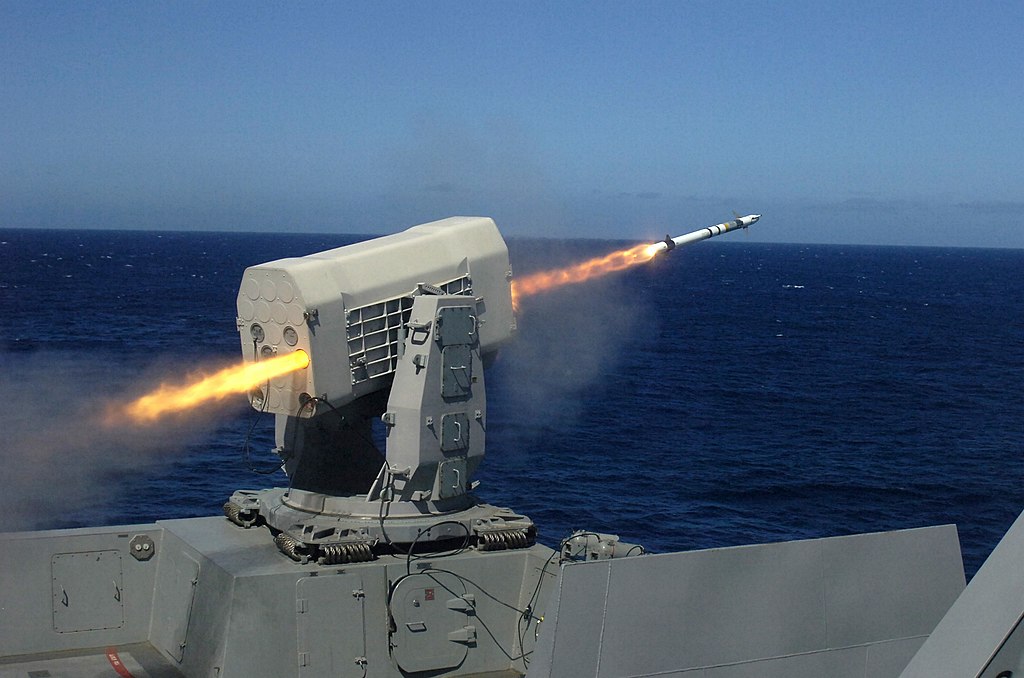
The RIM-116 RAM is a missile-based, Close-In Weapon System (CIWS) developed by the United States and Germany. Its specifications are:
The RAM Mk 31 Guided Missile Weapon System (GMWS) consists of the Mk 44 Guided Missile Round Pack (GMRP) and the Mk 49 Guided Missile Launching System (GMLS) with 21 missiles.
The RAM is designed to be flexible in integration with existing platforms and requires no dedicated sensors. All targeting information is provided by various external sensors already fitted on the ship.
The Block 2 RAM is the latest version featuring several upgrades, including:
One variant of the Rolling Airframe Missile currently under development is the SeaRAM. The SeaRAM replaces the M601A1 Gatling gun in the Phalanx CIWS with an 11-round launcher.
The SeaRAM is fitted with the sensors of the Phalanx CIWS to create an autonomous system, eliminating the need for external targeting information as in the original RAM.
http://raytheon.mediaroom.com/index.php?s=43&item=2303
The RIM-116 RAM is a missile-based, Close-In Weapon System (CIWS) developed by the United States and Germany. Its specifications are:
- a length of 2.79 m
- a diameter of 127 mm
- a wingspan of 434 mm
- a speed of Mach 2.0+
- a warhead of 11.3 kg
- a weight of 73.5 kg
- a range of 9 km
The RAM Mk 31 Guided Missile Weapon System (GMWS) consists of the Mk 44 Guided Missile Round Pack (GMRP) and the Mk 49 Guided Missile Launching System (GMLS) with 21 missiles.
The RAM is designed to be flexible in integration with existing platforms and requires no dedicated sensors. All targeting information is provided by various external sensors already fitted on the ship.
The Block 2 RAM is the latest version featuring several upgrades, including:
- a four-axis independent control actuator system
- an increase in rocket motor capability
- double the missile's effective range
- three times increase in maneuverability
- an upgraded passive radio frequency seeker
- can detect Low Probability of Intercept anti-ship missiles
- a digital autopilot
One variant of the Rolling Airframe Missile currently under development is the SeaRAM. The SeaRAM replaces the M601A1 Gatling gun in the Phalanx CIWS with an 11-round launcher.
The SeaRAM is fitted with the sensors of the Phalanx CIWS to create an autonomous system, eliminating the need for external targeting information as in the original RAM.
http://raytheon.mediaroom.com/index.php?s=43&item=2303
Wednesday, March 27, 2013
US funding for MEADS restored
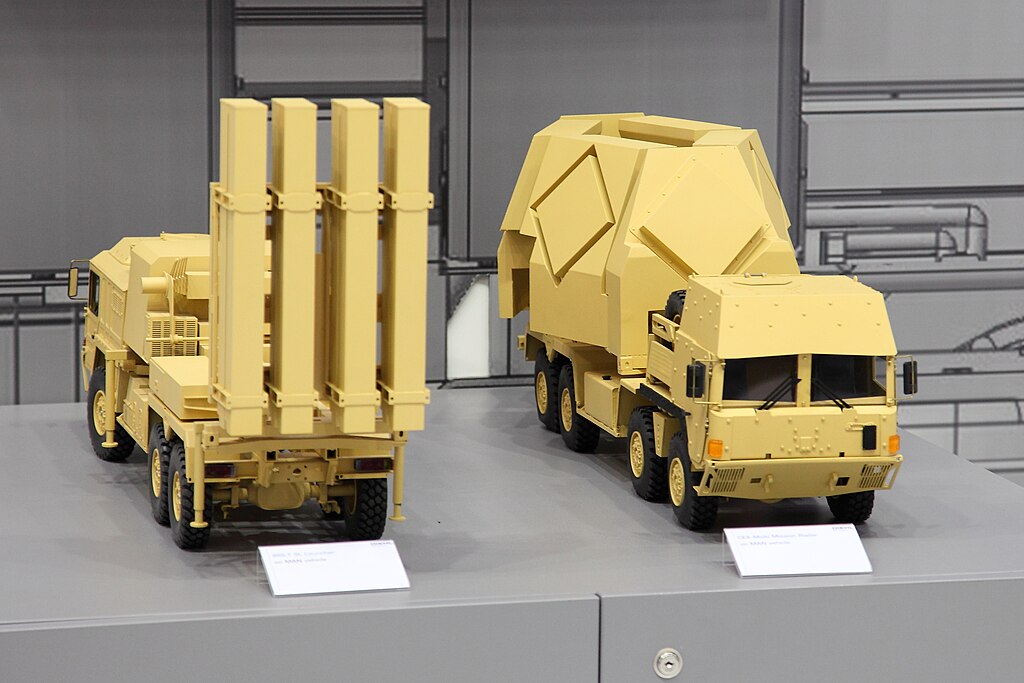
Funding for the Medium Extended Air Defense System (MEADS) that had earlier been cut by the United States Congress has been restored by congressional appropriators, who control the actual funding for arms programs.
Lockheed Martin and US officials had urged them to do so as this move helps prevent termination fees and diplomatic backlash from Germany and Italy, who are partners of the US in the development of MEADS.
The contract calls for the US to pay termination fees that are roughly equal to the $380 million that the US has made available. The last year of funding had been blocked earlier, because it didn't make sense to help fund a program that will not be used by the US.
The United States is currently confronting some cuts in defense spending and MEADS was seen as a good candidate to help reduce spending. However, thanks to some politicians, MEADS is now set to again receive funding.
About $4 billion has already been spent on MEADS, a successor of the Patriot Air Defense System. In the event that the UC withdraws from the program, Lockheed Martin has stated that it intends to keep working on MEADS with Italy and Germany.
MEADS will be tested later this year if it can interecept a ballistic missile target. Lockheed Martin claims MEADS will offer capabilities that the US lacks. It will be cheaper to operate and be able to provide wider coverage.
MEADS is to use the new Patriot Advanced Capability-3 Missile Segment Enhancement (PAC-3 MSE). The PAC-3 MSE is an improved version of the PAC-3 missile, featuring improved manoeuvrability and extended range of up to 50 percent.
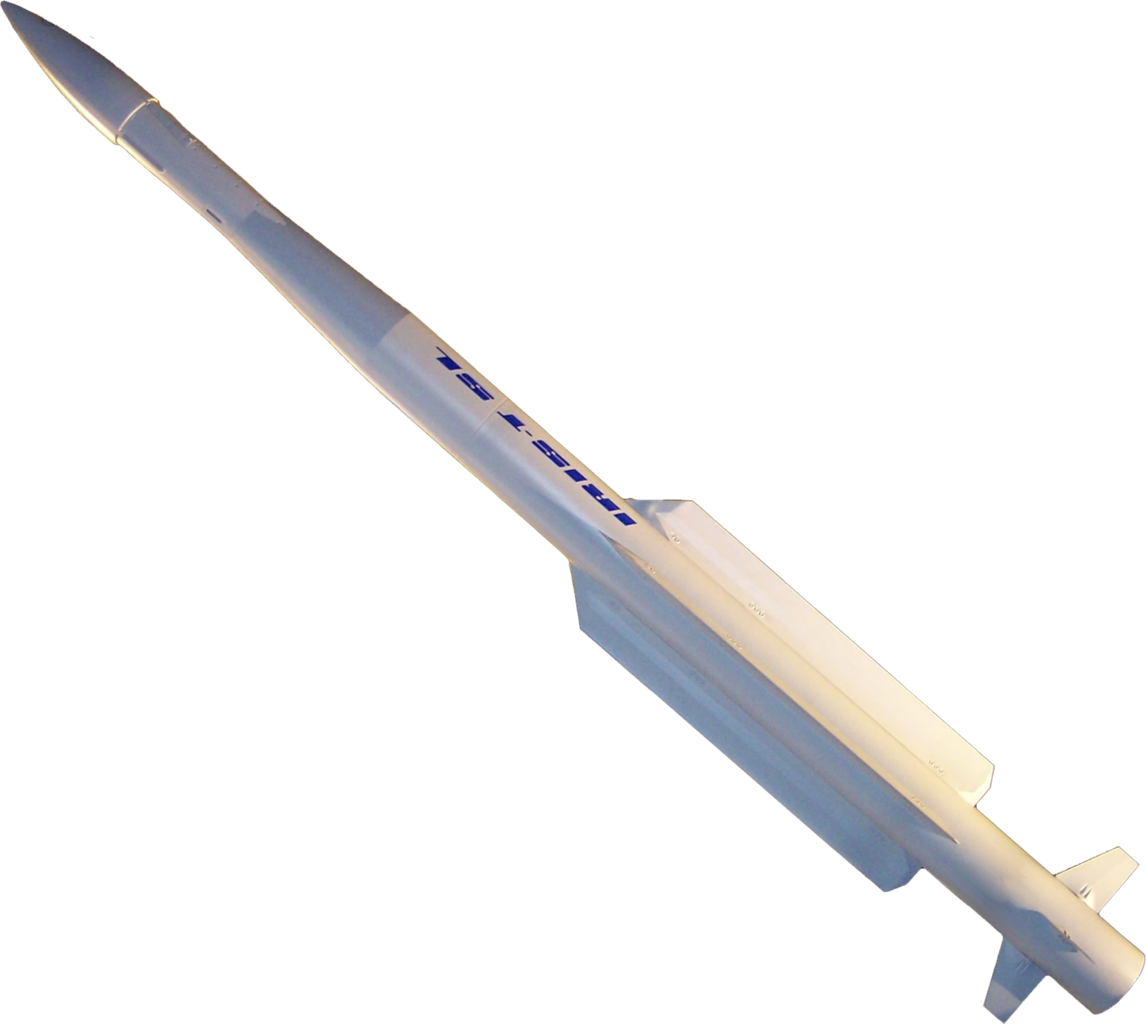
In Germany, it may also be complemented by the shorter-range IRIS-T SL missile. This missile is derived from the air-to-air IRIS-T missile, somewhat similar to how the Evolved Sea Sparrow Missile (ESSM) came to be.
Still, even if development of MEADS does get completed, it will find it hard to find widespread adoption in many countries due to competing systems with the possible exception being Germany.
In the US, MEADS will have to compete with the Patriot Defense System, which continues to be constantly upgraded and modernized. In Italy, there is the SAMP/T Air Defense System that has already entered service and performs a similar role as MEADS.
http://www.reuters.com/article/2013/03/25/us-lockheed-missiles-idUSBRE92O02F20130325
Lockheed Martin and US officials had urged them to do so as this move helps prevent termination fees and diplomatic backlash from Germany and Italy, who are partners of the US in the development of MEADS.
The contract calls for the US to pay termination fees that are roughly equal to the $380 million that the US has made available. The last year of funding had been blocked earlier, because it didn't make sense to help fund a program that will not be used by the US.
The United States is currently confronting some cuts in defense spending and MEADS was seen as a good candidate to help reduce spending. However, thanks to some politicians, MEADS is now set to again receive funding.
About $4 billion has already been spent on MEADS, a successor of the Patriot Air Defense System. In the event that the UC withdraws from the program, Lockheed Martin has stated that it intends to keep working on MEADS with Italy and Germany.
MEADS will be tested later this year if it can interecept a ballistic missile target. Lockheed Martin claims MEADS will offer capabilities that the US lacks. It will be cheaper to operate and be able to provide wider coverage.
MEADS is to use the new Patriot Advanced Capability-3 Missile Segment Enhancement (PAC-3 MSE). The PAC-3 MSE is an improved version of the PAC-3 missile, featuring improved manoeuvrability and extended range of up to 50 percent.
In Germany, it may also be complemented by the shorter-range IRIS-T SL missile. This missile is derived from the air-to-air IRIS-T missile, somewhat similar to how the Evolved Sea Sparrow Missile (ESSM) came to be.
Still, even if development of MEADS does get completed, it will find it hard to find widespread adoption in many countries due to competing systems with the possible exception being Germany.
In the US, MEADS will have to compete with the Patriot Defense System, which continues to be constantly upgraded and modernized. In Italy, there is the SAMP/T Air Defense System that has already entered service and performs a similar role as MEADS.
http://www.reuters.com/article/2013/03/25/us-lockheed-missiles-idUSBRE92O02F20130325
Saturday, March 16, 2013
Germany buys fewer NH90 and Tiger but more NH90 NFH helicopters
After more than a year of negotiations, Germany and Eurocopter have agreed on how to restructure the previous contract with the following:
The medium-sized NH90 NFH helicopter is the naval variant of the NH90 with:
The NH90 NFH is usually stationed on surface ships and can perform a wide range of roles, including:
The NH90 NFH compact and efficient design allows it to perform several roles during the same flight. It can also quickly be reconfigured to a changing role should there be a need to.
http://www.bloomberg.com/news/2013-03-15/germany-cuts-eads-military-chopper-order-while-adding-navy-model.html
- reduce the number of Tiger attack helicopters from 80 to 57
- reduce the number of NH90 Tactical Transport Helicopter (TTH) from 122 to 82
- buy 18 NH90 NATO Frigate Helicopter (NFH) / NFH90
The medium-sized NH90 NFH helicopter is the naval variant of the NH90 with:
- a length of 19.56 m
- a width of 16.30 m
- a height of 5.31 m
- an empty weight of 6400 kg
- a maximum takeoff weight of 10600 kg
- a maximum speed of 300 km/hr
- a maximum range of 982 km
- a maximum endurance of 5 hrs
The NH90 NFH is usually stationed on surface ships and can perform a wide range of roles, including:
- Anti-Submarine Warfare (ASW)
- Anti-Surface Warfare (ASuW)
- Search and Rescue (SAR)
- Vertical Replenishment (VERTREP)
- Casualty Evacuation (CASEVAC)
- Maritime surveillance and control
- Logistic transport and utility support
- Special Operations such as counter terrorism and anti-piracy
- Tactical 360 degree radar that is capable of multiple track while scan, auto initialisation and Inverse Synthetic Aperture Radar (ISAR)
- Dipping sonar that is capable of Low Frequency Continuous Wave and Frequency Modulation
- Tactical Forward Looking Infrared (FLIR) interfaced with the radar and navigation system
- Electronic Warfare System including ESM and Counter Measures System
- Sonobuoys storage, launch and processing system
- Digital Map Generator system
- IFF Interrogator
- Data Link 11
The NH90 NFH compact and efficient design allows it to perform several roles during the same flight. It can also quickly be reconfigured to a changing role should there be a need to.
http://www.bloomberg.com/news/2013-03-15/germany-cuts-eads-military-chopper-order-while-adding-navy-model.html
Wednesday, March 13, 2013
First IRIS-T SLS Air Defense System Exported to Sweden
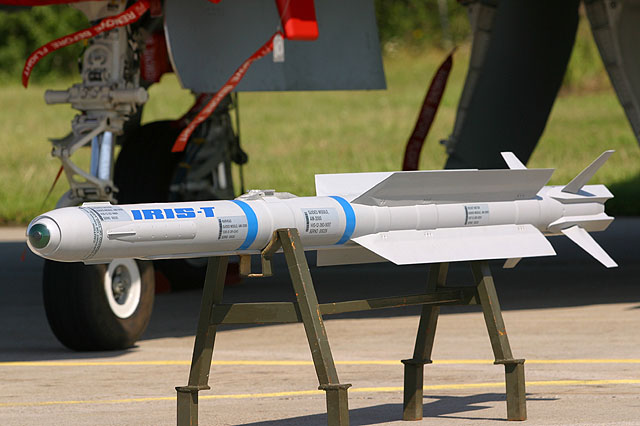
Sweden has become the first country to buy the surface-to-air (SAM) version of the Infra Red Imaging System Tail/Thrust Vector-Controlled (IRIS-T) within visual range air-to-air missile, the IRIS-T SLS.
The contract was signed by the Swedish Defence Material Administration with Diehl Defense for delivery starting in 2016. The IRIS-T missile in already in service in Sweden with the Gripen fighter aircraft. Ten other countries have also acquired the IRIS-T for their air forces.
The short range IRIS-T SLS complements the medium range IRIS-T SL / SLM, which has recently been successfully tested for the first time. Both surface launched missiles provide comprehensive air defense, including against aircraft, unmanned aerial vehicles and missiles.
However, while the IRIS-T SLS retains the basic missile body and infrared seeker of the original IRIS-T missile, the IRIS-T SL / SLM features a radar seeker and a heavily modified missile body.
Another variant based on the IRIS-T is the Interactive Defense and Attack System for Submarines (IDAS) now in development. Four IDAS can be fitted inside a magazine and fired directly from a single torpedo tube.
The IDAS missile gives submerged submarines the ability for the first time to engage aerial targets such as anti-submarine warfare (ASW) helicopters, which previously were immune from submarine counter attacks. It can also be used to attack small surface vessels and other coastal targets.
http://www.diehl.com/en/nc/diehl-defence/press/diehl-receives-swedish-air-defence-contract/6.html
The contract was signed by the Swedish Defence Material Administration with Diehl Defense for delivery starting in 2016. The IRIS-T missile in already in service in Sweden with the Gripen fighter aircraft. Ten other countries have also acquired the IRIS-T for their air forces.
The short range IRIS-T SLS complements the medium range IRIS-T SL / SLM, which has recently been successfully tested for the first time. Both surface launched missiles provide comprehensive air defense, including against aircraft, unmanned aerial vehicles and missiles.
However, while the IRIS-T SLS retains the basic missile body and infrared seeker of the original IRIS-T missile, the IRIS-T SL / SLM features a radar seeker and a heavily modified missile body.
Another variant based on the IRIS-T is the Interactive Defense and Attack System for Submarines (IDAS) now in development. Four IDAS can be fitted inside a magazine and fired directly from a single torpedo tube.
The IDAS missile gives submerged submarines the ability for the first time to engage aerial targets such as anti-submarine warfare (ASW) helicopters, which previously were immune from submarine counter attacks. It can also be used to attack small surface vessels and other coastal targets.
http://www.diehl.com/en/nc/diehl-defence/press/diehl-receives-swedish-air-defence-contract/6.html
Friday, February 8, 2013
MEADS problems continue with US funding cut
The Medium Extended Air Defense System (MEADS) has suffered another setback with the decision by the United States Congress to cut $400.9 million of funding for the program.
The decision was made despite the US government urging Congress to approve the final payment citing backlash from Germany and Italy. Law makers have stated that the United States does not intend to procure the system.
There is a chance funding will still go through if congressional appropriators, who control the actual funding for arms programs, allow it to happen. If not, the US may be penalized with termination fees.
A total of $4 billion has been spent over the last 10 years on the MEADS, which is being developed jointly by:
MEADS is intended to replace the MIM-104 Patriot, MIM-14 Nike Hercules and MIM-23 Hawk. It can provide air defense against:
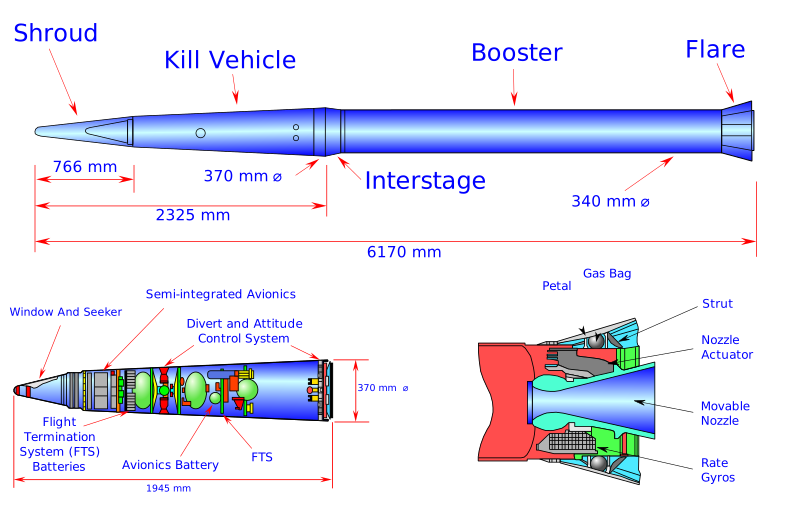
The PAC-3 MSE is an improved version of the hit-to-kill Patriot Advanced Capability-3 missile, featuring improved manoeuvrability and extended range of up to 50 percent. The MEADS consortium has scheduled a test in the fourth quarter of 2013 to prove that it can intercept a ballistic missile.
Meanwhile, the Patriot system, which is supposed to be replaced by MEADS, continues to be upgraded and modernized by Raytheon. This is increasingly making the MEADS a redundant system, if it isn't already one, to the US, which won't offer anything more than what it already has. Not to mention that the US has to share control over the MEADS with Germany and Italy.
http://www.reuters.com/article/2013/02/02/germany-meads-idUSL5N0B20PI20130202
The decision was made despite the US government urging Congress to approve the final payment citing backlash from Germany and Italy. Law makers have stated that the United States does not intend to procure the system.
There is a chance funding will still go through if congressional appropriators, who control the actual funding for arms programs, allow it to happen. If not, the US may be penalized with termination fees.
A total of $4 billion has been spent over the last 10 years on the MEADS, which is being developed jointly by:
- Lockheed Martin from the United States
- MBDA Deutschland GmbH from Germany,
- MBDA Italia from Italy
MEADS is intended to replace the MIM-104 Patriot, MIM-14 Nike Hercules and MIM-23 Hawk. It can provide air defense against:
- tactical ballistic missiles
- cruise missiles
- unmanned aerial vehicles (UAV)
- aircraft
- large caliber rockets
The PAC-3 MSE is an improved version of the hit-to-kill Patriot Advanced Capability-3 missile, featuring improved manoeuvrability and extended range of up to 50 percent. The MEADS consortium has scheduled a test in the fourth quarter of 2013 to prove that it can intercept a ballistic missile.
Meanwhile, the Patriot system, which is supposed to be replaced by MEADS, continues to be upgraded and modernized by Raytheon. This is increasingly making the MEADS a redundant system, if it isn't already one, to the US, which won't offer anything more than what it already has. Not to mention that the US has to share control over the MEADS with Germany and Italy.
http://www.reuters.com/article/2013/02/02/germany-meads-idUSL5N0B20PI20130202
Saturday, February 2, 2013
Thailand to negotiate purchase of 3 Chinese Type 054A class frigates
Thailand is to negotiate a Chinese proposal of 3 Type 054A class frigates for the Royal Thai Navy, which has budgeted 30 billion Thai Baht or roughly $1 billion for 2 frigates.
The Thai government last year approved the purchase of 2 frigates after a previous attempt to purchase 6 used Type U-206 submarines from Germany was unsuccessful.
Instead of the 2 frigates budgeted, Thailand would receive 3 Type 054T frigates, build according to Thai specifications, and which could come with offsets for local component production and up to 6 Z-9C Anti-Submarine Warfare helicopters.
The Thai Navy already operates 4 Type 053 frigates, which were build by China for Thailand during the nineties and fitted with various western systems and weapons.
The Type 054A frigates are upgraded versions of the 2 earlier Type 054 frigates, which in the past have been reported to cost the Chinese Navy around $250 million each. So far, 16 Type 054A hulls have been either launched or commissioned with several more under contruction.
Each Combined Diesel And Diesel (CODAD) Type054A frigate has a length of 134 m, a beam of 16m, a maximum displacement of 4053 tons and is armed with:
http://www.janes.com/products/janes/defence-security-report.aspx?ID=1065975734
The Thai government last year approved the purchase of 2 frigates after a previous attempt to purchase 6 used Type U-206 submarines from Germany was unsuccessful.
Instead of the 2 frigates budgeted, Thailand would receive 3 Type 054T frigates, build according to Thai specifications, and which could come with offsets for local component production and up to 6 Z-9C Anti-Submarine Warfare helicopters.
The Thai Navy already operates 4 Type 053 frigates, which were build by China for Thailand during the nineties and fitted with various western systems and weapons.
The Type 054A frigates are upgraded versions of the 2 earlier Type 054 frigates, which in the past have been reported to cost the Chinese Navy around $250 million each. So far, 16 Type 054A hulls have been either launched or commissioned with several more under contruction.
Each Combined Diesel And Diesel (CODAD) Type054A frigate has a length of 134 m, a beam of 16m, a maximum displacement of 4053 tons and is armed with:
- one PJ26 76 mm dual-purpose gun
- 2 x 4 YJ-83 / C-802A anti-ship missiles
- 4 x 8 Vertical Launch System (VLS) able to fire HHQ-16 anti-air missiles or rocket-assisted anti-submarine torpedoes
- two H/PJ12 7-barrel 30 mm Close-In Weapon System (CIWS) gatling guns
- 2 x 3 324 mm torpedoes
http://www.janes.com/products/janes/defence-security-report.aspx?ID=1065975734
Sunday, January 13, 2013
Diehl Defense Successfully Tested IRIS-T SL Surface-to-Air Missile
A prototype of a Surface-to-Air (SAM) variant of the Infra Red Imaging System Tail/Thrust Vector-Controlled (IRIS-T) air-to-air missile has been successfully tested in South Africa by Diehl Defense.
The validation trials of the radar-guided IRIS-T SL SAM included:
The IRIS-T origins can be traced back to an agreement made where the United States would develop a new Advanced Medium Range Air-to-Air Missile (AMRAAM) and its European allies, principally the United Kingdom and Germany, a new Advanced Short Range Air-to-Air Missile (ASRAAM).
The original ASRAAM was criticized for its manoeuvrability, especially the lack of thrust vectoring, which led Germany to abandon the ASRAAM project and develop its own IRIS-T missile. The United States would also develop its own short-range air-to-air missile, citing delays with the ASRAAM.
The result was that instead of a single replacement missile for the AIM-9 Sidewinder missile, three short-range air-to-air missiles appeared:
The medium range IRIS-T SL will also be complemented by the shorter range IRIS-T SLS. Unlike the heavily modified IRIS-T SL, the surface launched IRIS-T SLS retains the basic missile body and imaging infrared seeker of the original air launched IRIS-T.
Specifications IRIS-T
Weight: 87.4 kg
Length: 2936 mm
Diameter: 127 mm
Wingspan: 447 mm
Engine: Solid-fuel rocket
Max range: 25000 m
Speed: Mach 3
Guidance: Imaging Infrared seeker
http://www.diehl.com/en/diehl-group/press/air-defence-missile-iris-t-sl-tested-successfully/190.html
The validation trials of the radar-guided IRIS-T SL SAM included:
- target cueing by external radar data
- target acquisition after launch
- target tracking by the missile
The IRIS-T origins can be traced back to an agreement made where the United States would develop a new Advanced Medium Range Air-to-Air Missile (AMRAAM) and its European allies, principally the United Kingdom and Germany, a new Advanced Short Range Air-to-Air Missile (ASRAAM).
The original ASRAAM was criticized for its manoeuvrability, especially the lack of thrust vectoring, which led Germany to abandon the ASRAAM project and develop its own IRIS-T missile. The United States would also develop its own short-range air-to-air missile, citing delays with the ASRAAM.
The result was that instead of a single replacement missile for the AIM-9 Sidewinder missile, three short-range air-to-air missiles appeared:
- the ASRAAM from the United Kingdom
- the IRIS-T from Germany and partners
- the AIM-9X from the United States
The medium range IRIS-T SL will also be complemented by the shorter range IRIS-T SLS. Unlike the heavily modified IRIS-T SL, the surface launched IRIS-T SLS retains the basic missile body and imaging infrared seeker of the original air launched IRIS-T.
Specifications IRIS-T
Weight: 87.4 kg
Length: 2936 mm
Diameter: 127 mm
Wingspan: 447 mm
Engine: Solid-fuel rocket
Max range: 25000 m
Speed: Mach 3
Guidance: Imaging Infrared seeker
http://www.diehl.com/en/diehl-group/press/air-defence-missile-iris-t-sl-tested-successfully/190.html
Saturday, December 22, 2012
Oman Purchases 12 Typhoon Fighter and 8 Hawk Trainer Aircraft
BAE Systems has signed a contract for the delivery of 12 Typhoon fighter aircraft and 8 Hawk trainer aircraft to Oman in 2017.
This makes Oman the seventh country to order the Typhoon after the UK, Germany, Italy, Spain, Austria and Saudi Arabia.
The order was a much needed win for BAE Systems after it was eliminated from India's Medium Multi-Role Combat Aircraft (MMRCA) competition to acquire 126 fighter aircraft, which was won by the French Dassault Rafale.
The Typhoon is also competing against Boeing F-15 Silent Eagle and Lockheed Martin F-35 to supply South Korea with 60 aircraft for its F-X III program.
Negotiations with Saudi Arabia to adjust contract prices from the 2007 deal have yet to make any progress after 2 years. Only 24 of the 72 Typhoon aircraft contracted have so far been delivered.
The 8 aircraft to Oman brings the total number of Hawk aircraft sold or on order to 998.
http://www.baesystems.com/article/BAES_155046/we-welcome-oman-order-for-typhoon-and-hawk-aircraft
This makes Oman the seventh country to order the Typhoon after the UK, Germany, Italy, Spain, Austria and Saudi Arabia.
The order was a much needed win for BAE Systems after it was eliminated from India's Medium Multi-Role Combat Aircraft (MMRCA) competition to acquire 126 fighter aircraft, which was won by the French Dassault Rafale.
The Typhoon is also competing against Boeing F-15 Silent Eagle and Lockheed Martin F-35 to supply South Korea with 60 aircraft for its F-X III program.
Negotiations with Saudi Arabia to adjust contract prices from the 2007 deal have yet to make any progress after 2 years. Only 24 of the 72 Typhoon aircraft contracted have so far been delivered.
The 8 aircraft to Oman brings the total number of Hawk aircraft sold or on order to 998.
http://www.baesystems.com/article/BAES_155046/we-welcome-oman-order-for-typhoon-and-hawk-aircraft
Friday, November 30, 2012
Germany receives first MANTIS Air Defense System from Rheinmetall
The first Modular, Automatic and Network-capable Targeting and Interception System (MANTIS) Air Defense System is scheduled to be deployed with the Flugabwehrraketengeschwader 1 (1st Air Defense Squadron) based in Husum, Germany.
Based on Oerlikon Skyshield air defense technology, the MANTIS is a short-range Counter-Rocket, Artillery and Mortar (C-RAM) system designed by Rheinmetall Defense to protect military sites and important civilian infrastructure from airborne threats.
Equipped with six 35 mm guns, two sensor units and a central command ground-control unit, the system can detect missiles at a range of 3 km. Each gun fires Advanced Hit Efficiency And Destruction (AHEAD) rounds, which release 152 tungsten projectiles in front of the target.
http://www.rheinmetall-defence.com/en/rheinmetall_defence/public_relations/news/latest_news/details_2368.php
Based on Oerlikon Skyshield air defense technology, the MANTIS is a short-range Counter-Rocket, Artillery and Mortar (C-RAM) system designed by Rheinmetall Defense to protect military sites and important civilian infrastructure from airborne threats.
Equipped with six 35 mm guns, two sensor units and a central command ground-control unit, the system can detect missiles at a range of 3 km. Each gun fires Advanced Hit Efficiency And Destruction (AHEAD) rounds, which release 152 tungsten projectiles in front of the target.
http://www.rheinmetall-defence.com/en/rheinmetall_defence/public_relations/news/latest_news/details_2368.php
Subscribe to:
Posts (Atom)