Qatar continues to strengthen its armed forces with new acquisitions worth over $20 billion. The latest deals includes three airborne early warning and control (AEW&C) systems mounted on Boeing 737 aircraft, making it the fourth country to select the type after Australia, South Korea and Turkey.
The aircraft were originally developed for Australia under project Wedgetail and feature a non-rotating radar in contrast to the rotodome found on E-3 Sentry aircraft. They will join the C-130J and C-17 transport aircraft that Qatar previously acquired from the United States.
Qatar has significantly boosted its helicopter fleet with the purchase of 24 AH-64E Apache attack helicopters from Boeing and 22 NH90 helicopters from NH Industries, consisting of 12 NH90 Tactical Transport Helicopter (TTH) variant and 10 NH90 NATO Frigate Helicopter (NFH) maritime variant.
Showing posts with label Force Multipliers. Show all posts
Showing posts with label Force Multipliers. Show all posts
Monday, March 31, 2014

Wednesday, November 6, 2013
Xianglong / Soaring Dragon and the Box / Diamond Wing HALE UAV in China
China is currently in the process of testing several High-Altitude Long-Endurance (HALE) Unmanned Aerial Vehicles (UAV) which are notable for incorporating the box wing or diamond wing concept.
This feature was first displayed in model form at the Zhuhai Airshows several years ago. Since then, these initial concepts have progressed to the point that actual flying prototypes are now available.
Traditionally, aircraft with very long endurance, including HALE UAVs, had to rely on very long and straight wings. This can be clearly seen in U-2 aircraft during the sixties and more recently in the Global Hawk UAV.
Such as wing configuration gives them the ability to loiter for an extended period thanks to the lift provided by the large wing area without expending a lot of fuel. This is somewhat similar to glider aircraft.
One drawback is that a long wingspan makes the wings very rigid and drag and reduces the maneuverability of the aircraft. High G forces would cause too much stress and the wings would simply break apart.
One alternative approach to solve this problem is known as the box wing or diamond wing concept, which can reduce wingspan and drag, but without sacrificing the advantages offered by longer wings, including extended endurance.
This feature was first displayed in model form at the Zhuhai Airshows several years ago. Since then, these initial concepts have progressed to the point that actual flying prototypes are now available.
Traditionally, aircraft with very long endurance, including HALE UAVs, had to rely on very long and straight wings. This can be clearly seen in U-2 aircraft during the sixties and more recently in the Global Hawk UAV.
Such as wing configuration gives them the ability to loiter for an extended period thanks to the lift provided by the large wing area without expending a lot of fuel. This is somewhat similar to glider aircraft.
One drawback is that a long wingspan makes the wings very rigid and drag and reduces the maneuverability of the aircraft. High G forces would cause too much stress and the wings would simply break apart.
One alternative approach to solve this problem is known as the box wing or diamond wing concept, which can reduce wingspan and drag, but without sacrificing the advantages offered by longer wings, including extended endurance.
Wednesday, October 30, 2013
China Launches Shijian 16 ELINT / SIGINT and Yaogan 18 SAR Satellites
Within a week, China has added two more satellites to its network of military satellites. The first on October 15th was Shijian 16, the next-generation of electronic / signals intelligence (ELINT / SIGINT) satellites.
The Shijian 16 is the first of a new series that will succeed the Shijian 6 series, which consisted of four pairs with two satellites each. The Shijian 6 satellites were launched between 2004 and 2010.
The second satellite to be launched was the Yaogan 18 on October 29th. The Yaogan 18 is a Synthetic Aperture Radar (SAR) satellite, similar to Yaogan 6 and Yaogan 13 that preceded it.
The SAR satellites complement imagery provided by other Yaogan satellites equipped with an optical payload. They tend to have lower resolution, but do not suffer from some of the restrictions that limit the latter.
The Shijian 16 is the first of a new series that will succeed the Shijian 6 series, which consisted of four pairs with two satellites each. The Shijian 6 satellites were launched between 2004 and 2010.
The second satellite to be launched was the Yaogan 18 on October 29th. The Yaogan 18 is a Synthetic Aperture Radar (SAR) satellite, similar to Yaogan 6 and Yaogan 13 that preceded it.
The SAR satellites complement imagery provided by other Yaogan satellites equipped with an optical payload. They tend to have lower resolution, but do not suffer from some of the restrictions that limit the latter.
Tuesday, September 3, 2013
China Launches Yaogan 17 ELINT / SIGINT Satellites
China added Yaogan 17, a group of three Electronic / Signals Intelligence satellites, to its network of military satellites on September 1 (September 2 local time). It is the third in a series, which was preceded by Yaogan 9 on March 2010 and Yaogan 16 on November 2012.
The cluster of satellites can be used in conjunction to analyse and locate the position of various objects based on their electronic emissions and the time difference of arrival technique in a manner reminiscent of the United States Naval Ocean Surveillance System (NOSS).
Another significant development is China's demonstrated ability to orbit satellites with much enhanced ability to maneuver in space and in a very precise manner.
Unlike most satellites which tend to follow a fixed orbit for most of their life span and have very rudimentary maneuverability, these satellites are closer to unmanned aircraft which can change their orbit in space periodically and on demand.
The cluster of satellites can be used in conjunction to analyse and locate the position of various objects based on their electronic emissions and the time difference of arrival technique in a manner reminiscent of the United States Naval Ocean Surveillance System (NOSS).
Another significant development is China's demonstrated ability to orbit satellites with much enhanced ability to maneuver in space and in a very precise manner.
Unlike most satellites which tend to follow a fixed orbit for most of their life span and have very rudimentary maneuverability, these satellites are closer to unmanned aircraft which can change their orbit in space periodically and on demand.
Friday, July 26, 2013
UAE Buys 2 Optical Satellites From France
The United Arab Emirates (UAE) has signed a contract in Abu Dhabi with France for the delivery of two optical reconnaissance satellites. The Falcon Eye satellite contract is valued at about 700 million Euros or about $900 million.
The decision had come down between France and the United States after several other countries has been eliminated earlier. The United States was led by Lockheed Martin.
The contract will be executed by Astrium, a subsidiary of of EADS, and Thales Alenia Space, a joint venture between French Thales and Italian Finmeccanica. The two high-resolution Pléiades-class satellites will be delivered in 2017 and 2018.
The UAE contract is a much needed win for France, whose defense orders fell by over 25 percent in 2012. It may also help boost cooperation between France in the UAE on defense matters.
In addition to building the satellites and related control station, France will also launch the satellites into orbit. France will also assist with image processing software, transmission and encryption systems and intelligence interpretation and analysis training.
Although optical reconnaissance and surveillance satellites suffer from some drawbacks such as susceptibility to weather conditions, they've become much more affordable in recent years.
It is now possible for countries and even private companies to get their own highly detailed images that were impossible to obtain several decades ago except for a few intelligence services.
http://uk.finance.yahoo.com/news/uae-buys-two-french-surveillance-164255629.html
The decision had come down between France and the United States after several other countries has been eliminated earlier. The United States was led by Lockheed Martin.
The contract will be executed by Astrium, a subsidiary of of EADS, and Thales Alenia Space, a joint venture between French Thales and Italian Finmeccanica. The two high-resolution Pléiades-class satellites will be delivered in 2017 and 2018.
The UAE contract is a much needed win for France, whose defense orders fell by over 25 percent in 2012. It may also help boost cooperation between France in the UAE on defense matters.
In addition to building the satellites and related control station, France will also launch the satellites into orbit. France will also assist with image processing software, transmission and encryption systems and intelligence interpretation and analysis training.
Although optical reconnaissance and surveillance satellites suffer from some drawbacks such as susceptibility to weather conditions, they've become much more affordable in recent years.
It is now possible for countries and even private companies to get their own highly detailed images that were impossible to obtain several decades ago except for a few intelligence services.
http://uk.finance.yahoo.com/news/uae-buys-two-french-surveillance-164255629.html
Friday, February 15, 2013
Northrop Grumman E-2D Advanced Hawkeye approved for full-rate production
The E-2D Advanced Hawkeye has been approved to enter full-rate production by the Office of the Secretary of Defense (OSD). The E-2D had earlier been declared operationally suitable and effective in a report after the successful completion of a 10-month initial operational test and evaluation (IOT&E) by the US Navy.
The E-2 is a high-wing, twin turboprop aircraft with retractable tricycle landing gear and equipped with a tail hook for landings on aircraft carriers. A rotodome is mounted on top of the fuselage to provide Airborne Early Warning and Control (AEW&C).
The E-2D is the latest and most advanced version of the E-2 Hawkeye designed by Northrop Grumman Corporation. The E2-D features:
Northrop Grumman has already delivered 9 E-2D aircraft to the US Navy and another 11 units are currently in various stages of manufacturing and pre-delivery flight-testing.
A further 55 E-2D aircraft are expected to be delivered over the next 10 years for a total of 75 aircraft. The US Navy expects to declare initial operational capability with the E-2D in 2015.
Specifications
Crew: 5, including pilot, copilot, Radar Officer (RO), Combat Information Center Officer (CICO), Aircraft Control Officer (ACO)
Length: 17.60 m
Wingspan: 24.56 m
Height: 5.58 m
Empty weight: 18090 kg
Loaded weight: 19536 kg
Max. takeoff weight: 26083 kg
Maximum speed: 648 km/h
Cruise speed: 474 km/h
Ferry range: 2708 km
Endurance: 6 hrs
Service ceiling: 10576 m
Powerplant: 2 Allison / Rolls-Royce T56-A-427A turboprops, 5,100 shp each
http://www.irconnect.com/noc/press/pages/news_releases.html?d=10021362


The E-2 is a high-wing, twin turboprop aircraft with retractable tricycle landing gear and equipped with a tail hook for landings on aircraft carriers. A rotodome is mounted on top of the fuselage to provide Airborne Early Warning and Control (AEW&C).
The E-2D is the latest and most advanced version of the E-2 Hawkeye designed by Northrop Grumman Corporation. The E2-D features:
- A new APY-9 Active Electronically Scanned Array (AESA) radar with both mechanical and electronic scanning capabilities
- A fully Integrated Glass Tactical Cockpit
- An Advanced Identification Friend or Foe System
- A new Mission Computer and Tactical Workstations
- Electronic Support Measures enhancements
- A modernized Communications and Data Link Suite
- Improved T56-A-427A turboprop engines
Northrop Grumman has already delivered 9 E-2D aircraft to the US Navy and another 11 units are currently in various stages of manufacturing and pre-delivery flight-testing.
A further 55 E-2D aircraft are expected to be delivered over the next 10 years for a total of 75 aircraft. The US Navy expects to declare initial operational capability with the E-2D in 2015.
Specifications
Crew: 5, including pilot, copilot, Radar Officer (RO), Combat Information Center Officer (CICO), Aircraft Control Officer (ACO)
Length: 17.60 m
Wingspan: 24.56 m
Height: 5.58 m
Empty weight: 18090 kg
Loaded weight: 19536 kg
Max. takeoff weight: 26083 kg
Maximum speed: 648 km/h
Cruise speed: 474 km/h
Ferry range: 2708 km
Endurance: 6 hrs
Service ceiling: 10576 m
Powerplant: 2 Allison / Rolls-Royce T56-A-427A turboprops, 5,100 shp each
http://www.irconnect.com/noc/press/pages/news_releases.html?d=10021362
Wednesday, January 23, 2013
KJ-2000 AWACS / AEW&C Specifications From China Media
The KJ-2000 is an Airborne Early Warning And Control (AEW&C) aircraft based on a modified Russian Ilyushin IL-76 aircraft and features a three-sided Active Electronically Scanned Array (AESA) radar from China Electronics Technology Group Corporation (CETC) housed in a radome on top of the fuselage.
The KJ-2000 was featured this month in a Chinese documentary shown on state television in honor of Wang Xiaomo, who this month had won China's top science award, the State Scientific and Technological Award, for his work, which includes the development of the KJ-2000.
According to Chinese media reports, the KJ-2000 radar is superior to that of the E-3A Sentry, IAI Phalcon and Beriev A-50.
The KJ-2000 radar is claimed to currently have the longest range in the world. Although under what conditions and Radar Cross Sections was not specified.
Only four KJ-2000 units are in active service after production was halted due to a shortage of available IL-76 airframes and a contract with Russia for the delivery of an additional 30 IL-76 aircraft fell through.
However, a recent purchase by China of ten used Il-76 aircraft from Russia and Belarus may make the IL-76 available again as a platform. The KJ-2000 is now supplemented by at least 10 KJ-200 aircraft.
http://news.cntv.cn/2013/01/18/VIDE1358481247397601.shtml

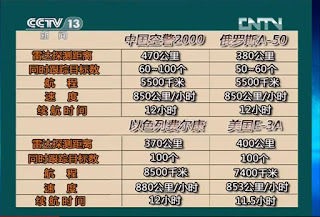
The KJ-2000 was featured this month in a Chinese documentary shown on state television in honor of Wang Xiaomo, who this month had won China's top science award, the State Scientific and Technological Award, for his work, which includes the development of the KJ-2000.
According to Chinese media reports, the KJ-2000 radar is superior to that of the E-3A Sentry, IAI Phalcon and Beriev A-50.
| - | KJ-2000 | Beriev A-50 | IAI Phalcon | E-3A Sentry |
| Maximum Radar Range | 470 km | 380 km | 370 km | 400 km |
| Number of targets tracked | 60 to 100 | 50 to 60 | 100 | 100 |
| Maximum Range | 5500 | 5500 | 8500 | 7400 |
| Maximum Speed | 850 | 850 | 880 | 853 |
| Maximum Endurance | 12 | 12 | 12 | 11.5 |
The KJ-2000 radar is claimed to currently have the longest range in the world. Although under what conditions and Radar Cross Sections was not specified.
Only four KJ-2000 units are in active service after production was halted due to a shortage of available IL-76 airframes and a contract with Russia for the delivery of an additional 30 IL-76 aircraft fell through.
However, a recent purchase by China of ten used Il-76 aircraft from Russia and Belarus may make the IL-76 available again as a platform. The KJ-2000 is now supplemented by at least 10 KJ-200 aircraft.
http://news.cntv.cn/2013/01/18/VIDE1358481247397601.shtml


Credit original poster, via Chinese Internet
Saturday, December 1, 2012
China's Military Satellite Network List Detailed
The People's Republic of China operates an extensive network of military satellites. The list below includes satellites which are known to be dedicated to military use.
Their use includes secure communications, electronic / signals intelligence (ELINT / SIGINT), early warning, ground / earth mapping, data relay and optical / Synthetic Aperture Radar (SAR) reconnaissance.
Not included are dual-use satellites which may perform some military use, but are not strictly so in nature. Not included therefore are the Beidou navigation satellites.
While not strictly military in nature due to their role in civilian use, the Beidou satellites are a crucial asset to the military.
Their use includes secure communications, electronic / signals intelligence (ELINT / SIGINT), early warning, ground / earth mapping, data relay and optical / Synthetic Aperture Radar (SAR) reconnaissance.
Not included are dual-use satellites which may perform some military use, but are not strictly so in nature. Not included therefore are the Beidou navigation satellites.
While not strictly military in nature due to their role in civilian use, the Beidou satellites are a crucial asset to the military.
Shentong strategic communications satellites
| Launch date | Name | Launcher | Type | Notes |
| 11/14/2003 | Chinasat 20 or Shentong 1-1 | CZ-3A | Strategic communications | - |
| 11/25/2010 | Chinasat 20A or Shentong 1-2 | CZ-3A | Strategic communications | - |
| 05/26/2012 | Chinasat 2A or Shentong 2 | CZ-3B/E | Strategic communications | - |
Fenghuo tactical communications satellites
| Launch date | Name | Launcher | Type | Notes |
| 01/26/2000 | Chinasat 22 or Fenghuo 1-1 | CZ-3A | Tactical communications | - |
| 09/12/2009 | Chinasat 22A or Fenghuo 1-2 | CZ-3A | Tactical communications | - |
| 09/19/2011 | Chinasat 1A or Fenghuo 2 | CZ-3B | Tactical communications | - |
Shijian 6 dual electronic / signals intelligence satellites
| Launch date | Name | Launcher | Type | Notes |
| 09/09/2004 | Shijian 6-01A / Shijian 6-01B | CZ-4B | ELINT / SIGINT | - |
| 10/24/2006 | Shijian 6-02A / Shijian 6-02B | CZ-4B | ELINT / SIGINT | - |
| 10/25/2008 | Shijian 6-03A / Shijian 6-03B | CZ-4B | ELINT / SIGINT | - |
| 10/06/2010 | Shijian 6-04A / Shijian 6-04B | CZ-4B | ELINT / SIGINT | - |
Shijian 16 electronic / signals intelligence satellites
| Launch date | Name | Launcher | Type | Notes |
| 10/25/2013 | Shijian 16-01 | CZ-4B | ELINT / SIGINT | - |
Shijian 11 surveillance satellites
| Launch date | Name | Launcher | Type | Notes |
| 11/12/2009 | Shijian 11-01 | CZ-2C | Infrared surveillance | - |
| 07/06/2011 | Shijian 11-02 | CZ-2C | Infrared surveillance | - |
| 07/29/2011 | Shijian 11-03 | CZ-2C | Infrared surveillance | - |
| 08/29/2011 | Shijian 11-04 | CZ-2C | Infrared surveillance | Rocket launch failure |
| 07/15/2013 | Shijian 11-05 | CZ-2C | Infrared surveillance | - |
| 03/31/2014 | Shijian 11-06 | CZ-2C | Infrared surveillance | - |
| 09/28/2014 | Shijian 11-07 | CZ-2C | Infrared surveillance | - |
| 10/27/2014 | Shijian 11-08 | CZ-2C | Infrared surveillance | - |
Tianhui earth mapping satellites
| Launch date | Name | Launcher | Type | Notes |
| 08/24/2010 | Tianhui 1-1 | CZ-2D | Earth mapping | - |
| 05/26/2012 | Tianhui 1-2 | CZ-2D | Earth mapping | - |
Tianlian data relay satellites
| Launch date | Name | Launcher | Type | Notes |
| 04/25/2008 | Tianlian 1-1 | CZ-3C | Data relay | - |
| 07/11/2011 | Tianlian 1-2 | CZ-3C | Data relay | - |
| 07/25/2012 | Tianlian 1-3 | CZ-3C | Data relay | - |
Yaogan / Jian Bing reconnaissance satellites
| Launch date | Name | Launcher | Type | Notes |
| 04/27/2006 | Yaogan 1 | CZ-4B | Synthetic Aperture Radar reconnaissance | Out of service |
| 05/25/2007 | Yaogan 2 | CZ-2D | Optical reconnaissance | - |
| 11/12/2007 | Yaogan 3 | CZ-4C | Synthetic Aperture Radar reconnaissance | - |
| 12/01/2008 | Yaogan 4 | CZ-2D | Optical reconnaissance | - |
| 12/15/2008 | Yaogan 5 | CZ-4B | Optical reconnaissance | Deorbited |
| 04/29/2009 | Yaogan 6 | CZ-2C | Synthetic Aperture Radar reconnaissance | - |
| 12/09/2009 | Yaogan 7 | CZ-2D | Optical reconnaissance | YG2+4 |
| 12/15/2009 | Yaogan 8 | CZ-4C | Optical reconnaissance(?) | - |
| 03/05/2010 | Yaogan 9A, Yaogan 9B, Yaogan 9C | CZ-4C | ELINT / SIGINT | Used to locate and track objects by their electronic emissions |
| 08/10/2010 | Yaogan 10 | CZ-4C | Synthetic Aperture Radar reconnaissance | YG1+3 |
| 09/22/2010 | Yaogan 11 | CZ-2D | Optical reconnaissance | YG2+4+7 |
| 11/09/2011 | Yaogan 12 | CZ-4B | Optical reconnaissance | - |
| 11/30/2011 | Yaogan 13 | CZ-4C | Synthetic Aperture Radar reconnaissance | - |
| 05/10/2012 | Yaogan 14 | CZ-2D | Optical reconnaissance | - |
| 05/29/2012 | Yaogan 15 | CZ-4B | Optical reconnaissance(?) | - |
| 11/25/2012 | Yaogan 16A, Yaogan 16B, Yaogan 16C | CZ-4C | ELINT / SIGINT | - |
| 09/01/2013 | Yaogan 17A, Yaogan 17B, Yaogan 17C | CZ-4C | ELINT / SIGINT | YG9+16 |
| 10/29/2013 | Yaogan 18 | CZ-2C | Synthetic Aperture Radar reconnaissance | YG6+13 |
| 11/20/2013 | Yaogan 19 | CZ-4C | Optical reconnaissance(?) | YG8+15 |
| 08/09/2014 | Yaogan 20A, Yaogan 20B, Yaogan 20C | CZ-4C | ELINT / SIGINT | YG9+16+17 |
| 09/08/2014 | Yaogan 21 | CZ-4B | Optical reconnaissance | YG5+12 |
| 10/20/2014 | Yaogan 22 | CZ-4C | Optical reconnaissance(?) | YG8+15+19 |
| 11/14/2014 | Yaogan 23 | CZ-2C | Synthetic Aperture Radar reconnaissance | YG6+13+18 |
| 11/20/2014 | Yaogan 24 | CZ-2D | Optical reconnaissance | YG2+4+7+11 |
| 12/10/2014 | Yaogan 25A, Yaogan 25B, Yaogan 25C | CZ-4C | ELINT / SIGINT | YG9+16+17+20 |
| 12/27/2014 | Yaogan 26 | CZ-4B | Optical reconnaissance | Succeeds YG5+12+21 |
Friday, October 26, 2012
Beidou Navigation Satellite System
The Beidou or Compass Navigation Satellite System is China’s second-generation satellite navigation system currently in the process of being deployed. Building upon the first generation Beidou System, which consisted of just 4 satellites, it is currently one of four navigation satellite systems worldwide. These being, in order of number of satellites deployed:
Similar to the other systems, Beidou offers service to both civilian and military users. The civilian service available to all, which is downgraded from the military service, will provide an accuracy of 10 meters in the user position, 0.2 m/s on the user velocity and 50 nanoseconds in time accuracy.
Unlike the other systems, Beidou includes not only medium earth orbit satellites but also geostationary satellites. Their fixed position in the sky ensures continuous coverage to areas where the satellites are visible. The benefit is that is allows full service with just a limited number of satellites, namely 5 geostationary, 5 inclined geosynchronous and 4 medium earth orbit satellites.
The drawback is that coverage is limited to china and the area surrounding it. Global coverage will be achieved after all medium earth satellites have been launched and placed into orbit.
Another unique feature of Beidou is the ability for authorized users to send and receive text messages up to 120 characters. BeiDou will officially commence service for the Asia-Pacific region by the end of 2012 after completion of 12 months of trial service.
- Global Positioning System (GPS) of the United States
- Russia's Globalnaya Navigatsionnaya Sputnikovaya Sistema (GLONASS)
- China's Beidou Navigation System
- Europe's Galileo Navigation System.
Similar to the other systems, Beidou offers service to both civilian and military users. The civilian service available to all, which is downgraded from the military service, will provide an accuracy of 10 meters in the user position, 0.2 m/s on the user velocity and 50 nanoseconds in time accuracy.
Unlike the other systems, Beidou includes not only medium earth orbit satellites but also geostationary satellites. Their fixed position in the sky ensures continuous coverage to areas where the satellites are visible. The benefit is that is allows full service with just a limited number of satellites, namely 5 geostationary, 5 inclined geosynchronous and 4 medium earth orbit satellites.
The drawback is that coverage is limited to china and the area surrounding it. Global coverage will be achieved after all medium earth satellites have been launched and placed into orbit.
Another unique feature of Beidou is the ability for authorized users to send and receive text messages up to 120 characters. BeiDou will officially commence service for the Asia-Pacific region by the end of 2012 after completion of 12 months of trial service.
List of current Beidou satellites
| Launch Date | Launcher | Satellite | Notes |
| 04/14/07 | LM-3A | Compass-M1 | Test Satellite |
| 04/15/09 | LM-3C | Compass-G2 | Not operational |
| 01/17/10 | LM-3C | Compass-G1 | - |
| 06/02/10 | LM-3C | Compass-G3 | - |
| 08/01/10 | LM-3A | Compass-IGSO1 | - |
| 11/01/10 | LM-3C | Compass-G4 | - |
| 12/18/10 | LM-3A | Compass-IGSO2 | - |
| 04/10/11 | LM-3A | Compass-IGSO3 | - |
| 07/26/11 | LM-3A | Compass-IGSO4 | - |
| 12/02/11 | LM-3A | Compass-IGSO5 | - |
| 02/24/12 | LM-3C | Compass-G5 | – |
| 04/29/12 | LM-3B | Compass-M3 | – |
| 04/29/12 | LM-3B | Compass-M4 | – |
| 09/18/12 | LM-3B | Compass-M5 | – |
| 09/18/12 | LM-3B | Compass-M6 | – |
| 10/25/12 | LM-3C | Compass-G6 | – |
Tuesday, June 26, 2012
Shaanxi Y-8 High New Aircraft Series
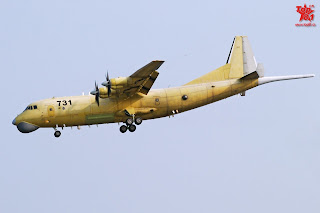
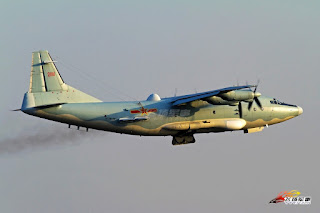
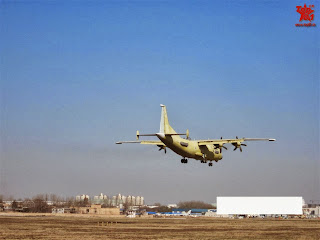
The Y-8 High New series of aircraft are force multipliers used by the Chinese armed forces. At least 7 different types have been identified.
Their use includes electronic attack, jamming and counter measures, providing targeting info, airborne command, electronic/signal intelligence, early warning, anti submarine warfare and psychological warfare.
All use the Y-8 manufactured by Shaanxi, which in turn is based on the Antonov AN-12. The GX5 and GX6 also use the improved Category 3 platform.
Included, although not in use by the Chinese armed forces, is the ZDK-03, which is a modified version of the GX5 with a rotodome developed for the Pakistani armed forces.
The Category 3 platform is also used for the new Y-9.
Specifications of the baseline Y-8
Crew: 3
Payload: 20,000 kg
Length: 34.02m
Wingspan: 38.0m
Height: 11.6m
Wing area: 121.9m²
Empty weight: 35,490kg
Useful load: 20,000kg
Max. takeoff weight: 61,000kg
Powerplant: 4 × Zhuzhou WoJiang-6 (WJ-6) turboprops, 3,170kW (4,250hp) each
Maximum speed: 660km/h
Cruise speed: 550km/h
Range: 5,615km
Service ceiling: 10,400m
Rate of climb: 10m/s


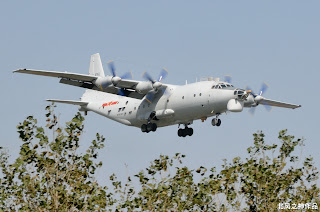


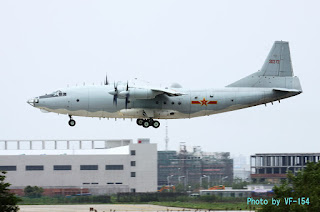


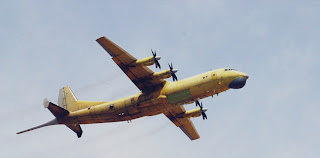



Their use includes electronic attack, jamming and counter measures, providing targeting info, airborne command, electronic/signal intelligence, early warning, anti submarine warfare and psychological warfare.
All use the Y-8 manufactured by Shaanxi, which in turn is based on the Antonov AN-12. The GX5 and GX6 also use the improved Category 3 platform.
Included, although not in use by the Chinese armed forces, is the ZDK-03, which is a modified version of the GX5 with a rotodome developed for the Pakistani armed forces.
The Category 3 platform is also used for the new Y-9.
Specifications of the baseline Y-8
Crew: 3
Payload: 20,000 kg
Length: 34.02m
Wingspan: 38.0m
Height: 11.6m
Wing area: 121.9m²
Empty weight: 35,490kg
Useful load: 20,000kg
Max. takeoff weight: 61,000kg
Powerplant: 4 × Zhuzhou WoJiang-6 (WJ-6) turboprops, 3,170kW (4,250hp) each
Maximum speed: 660km/h
Cruise speed: 550km/h
Range: 5,615km
Service ceiling: 10,400m
Rate of climb: 10m/s
Y-8 GX1: electronic attack, jamming and counter measures aircraft


Y-8 GX2: maritime targeting aircraft


Y-8 GX3: airborne command post


Y-8 GX4: ELINT aircraft


Y-8 GX5: AWACS aircraft


Y8 GX6: ASW aircraft


Y8 GX7: psychological warfare aircraft


Y8 GX8: ELINT / SIGINT aircraft
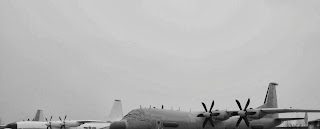
ZDK-03: AWACS aircraft


ZDK-03: AWACS aircraft


Photos credit original posters, via Chinese Internet
Subscribe to:
Posts (Atom)