The Indian Navy has commissioned the first of its latest P-15A class destroyer, the INS Kolkata. Two more, the INS Kochi and INS Chennai, have been launched to make a total of three units for the P-15A class, with the P-15B class in the works.
The P-15A class has been plagued by numerous delays and cost overruns. The Kolkata itself was laid down back in 2003 and launched in 2006. This gives the P-15A class the distinction of having one of the most drawn out development ever witnessed for a surface warship.
Further more, despite being formally commissioned into service, the ship still has yet to be fully fitted. Among other things, it still lacks the Barak 8 surface-to-air-missile that is being jointly developed by Indian and Israel and which also has seen extensive delays during development.
Even so, the introduction of the P-15A class marks a major milestone for the Indian Navy as it gives it capabilities that it did not possess before. This is sorely needed as India comes up short in terms of warships, both in terms of quantity and quality.
Showing posts with label Destroyers. Show all posts
Showing posts with label Destroyers. Show all posts
Sunday, August 31, 2014

Thursday, October 3, 2013
First Chinese 052D Destroyer Conducting Sea Trials
China has begun sea trials of the first 052D destroyer that will succeed the six 052C destroyers that preceded it. The ship still needs to have some equipment fitted, but largely confirm an earlier assessment made compared to the 052C destroyer.
The 052D destroyer is basically an improved version of the 052C using the same hull design and propulsion already introduced with its predecessors. Most of the changes are centered internally around the weapons, sensors and other equipment.
The new 64-cell Vertical Launch System (VLS) lacks the shared exhaust found on the previous hot launch VLS design of the 054A class, indicating its support for combined hot and cold launch.
The 052D may be the first ship to be commissioned with such an ability, although other Navies also look set to introduce similar capability. The traditionally hot launch American MK41 VLS was recently used to launch a cold launch Sea Ceptor missile using a special adapter.
The 052D destroyer is basically an improved version of the 052C using the same hull design and propulsion already introduced with its predecessors. Most of the changes are centered internally around the weapons, sensors and other equipment.
The new 64-cell Vertical Launch System (VLS) lacks the shared exhaust found on the previous hot launch VLS design of the 054A class, indicating its support for combined hot and cold launch.
The 052D may be the first ship to be commissioned with such an ability, although other Navies also look set to introduce similar capability. The traditionally hot launch American MK41 VLS was recently used to launch a cold launch Sea Ceptor missile using a special adapter.
Wednesday, June 5, 2013
US Navy Orders Up To 10 Arleigh Burke Class Destroyers
As had been expected, the United States Navy has awarded two contracts for DDG 51 Arleigh Burke class destroyers. A total of $6.1 billion was awarded in two contracts for nine destroyers with an option for a tenth.
Huntington Ingall received a ten year contract to build five destroyers in a contract worth $3.33 billion. One destroyer is to be build every year from FY 2013 through FY 2017.
General Dynamics received a $2.84 billion contract to build four destroyers with an option for one more, which the US Navy expects to exercise. In that case, the value of the contract is worth $3.53 billion. One destroyer will be build in FY 2013 and one each in FY 2015 through FY 2017.
First Commissioned in 1991, the Arleigh Burke class has gone through several versions, each resulting in increased capability and displacement. The first 28 ships were Flight I and Flight II ships (DDG 51 through DDG 78).
The current version of the Arleigh Burke is the Flight IIA starting with DDG 79, the USS Oscar Austin. Some specifications of the Flight IIA are:
The Flight IIA features several improvements over its predecessors, including:
The Arleigh Burke class is fitted with the MK 41 Vertical Launch System with up to 96 cells. Armament includes:
http://www.reuters.com/article/2013/06/03/us-navy-ships-idUSBRE95216H20130603
_class_guided_missile_Destroyer_USS_Shoup_(DDG_86).jpg)
Huntington Ingall received a ten year contract to build five destroyers in a contract worth $3.33 billion. One destroyer is to be build every year from FY 2013 through FY 2017.
General Dynamics received a $2.84 billion contract to build four destroyers with an option for one more, which the US Navy expects to exercise. In that case, the value of the contract is worth $3.53 billion. One destroyer will be build in FY 2013 and one each in FY 2015 through FY 2017.
First Commissioned in 1991, the Arleigh Burke class has gone through several versions, each resulting in increased capability and displacement. The first 28 ships were Flight I and Flight II ships (DDG 51 through DDG 78).
The current version of the Arleigh Burke is the Flight IIA starting with DDG 79, the USS Oscar Austin. Some specifications of the Flight IIA are:
- Length: 509 ft (155.29 m)
- Beam: 59 ft (18 m)
- Displacement: 9496 long tons (9648.4 metric tons)
- Speed: in excess of 30 knots
- Crew: 276
The Flight IIA features several improvements over its predecessors, including:
- The addition of the Kingfisher mine-avoidance capability
- A pair of helicopter hangars with the ability to deploy two Lamps MK III MH-60 helicopters
- Blast-hardened bulkheads.
The Arleigh Burke class is fitted with the MK 41 Vertical Launch System with up to 96 cells. Armament includes:
- RIM-66 Surface-to-Air Standard Missiles (SM-2MR)
- RIM-162 Evolved Sea Sparrow Missiles (ESSM)
- RUM-139 Vertical Launch ASROC (VLA)
- BGM-109 Tomahawk land attack cruise missiles
- MK-46 torpedoes (from two triple tube mounts)
- Phalanx Close In Weapon System (CIWS)
- MK 45 5-inch Gun
http://www.reuters.com/article/2013/06/03/us-navy-ships-idUSBRE95216H20130603
_class_guided_missile_Destroyer_USS_Shoup_(DDG_86).jpg)
Sunday, May 26, 2013
US Navy Releases Names Of Upcoming Arleigh Burke Class Destroyers
The United States Navy has announced that the next Arleigh Burke class destroyers are to be named the USS Paul Ignatius (DDG 117) and USS Daniel Inouye (DDg 118).
Paul Ignatius served as Secretary of The Navy and as Assistant Secretary of Defense under President Lyndon Johnson. Daniel Inouye was a US Senator and a recipient of the Medal of Honor for his actions during World War II.
The first Arleight Burke destroyer was commissioned in 1991 and there are a total of 62 ships in service (DDG 51 through DDG 112). Of these, 21 are Flight I and the remaining belonging to Flight II.
The Arleigh Burke class has been constantly upgraded and modernized, but also progressively grown larger in size with each flight. This has created some problems, including excessive levels of stress to the hull.
Construction was to have ended with 62 units, but has since been restarted due to issues with the successor, the Zumwalt class. A new Flight III will be constructed, which is now in the final design phase.
Only three Zumwalt class ships will be acquired and additional Flight II hulls will be build with elements of the Flight III gradually incorporated. The first Flight III may be commissioned in 2023.
Four Arleigh Burke Flight II hulls have now been contracted for and the US Navy may announce the addition of up to 10 hulls as early as next month in June 2013.
The Arleigh Burke class has never been exported, although Saudi Arabia has expressed interest. The four Kongo class and two improved Atago class destroyer in the Japanese Navy as based on the Arleigh Burke design.
The three KDX-III or Sejong The Great class destroyers in the South Korean Navy are also based on the Arleigh Burke design. The ships differ widely, including displacement, configuration and weapons fitted.
However, they all share the same Mk 41 Vertical Launch System, which uses the SM-2 as its main weapon for air defense. All also come with the Aegis System, including the phased array radars laid out in a similar manner.
http://www.navy.mil/submit/display.asp?story_id=74367
_transits_the_western_Pacific_Ocean.jpg)
Paul Ignatius served as Secretary of The Navy and as Assistant Secretary of Defense under President Lyndon Johnson. Daniel Inouye was a US Senator and a recipient of the Medal of Honor for his actions during World War II.
The first Arleight Burke destroyer was commissioned in 1991 and there are a total of 62 ships in service (DDG 51 through DDG 112). Of these, 21 are Flight I and the remaining belonging to Flight II.
The Arleigh Burke class has been constantly upgraded and modernized, but also progressively grown larger in size with each flight. This has created some problems, including excessive levels of stress to the hull.
Construction was to have ended with 62 units, but has since been restarted due to issues with the successor, the Zumwalt class. A new Flight III will be constructed, which is now in the final design phase.
Only three Zumwalt class ships will be acquired and additional Flight II hulls will be build with elements of the Flight III gradually incorporated. The first Flight III may be commissioned in 2023.
Four Arleigh Burke Flight II hulls have now been contracted for and the US Navy may announce the addition of up to 10 hulls as early as next month in June 2013.
The Arleigh Burke class has never been exported, although Saudi Arabia has expressed interest. The four Kongo class and two improved Atago class destroyer in the Japanese Navy as based on the Arleigh Burke design.
The three KDX-III or Sejong The Great class destroyers in the South Korean Navy are also based on the Arleigh Burke design. The ships differ widely, including displacement, configuration and weapons fitted.
However, they all share the same Mk 41 Vertical Launch System, which uses the SM-2 as its main weapon for air defense. All also come with the Aegis System, including the phased array radars laid out in a similar manner.
http://www.navy.mil/submit/display.asp?story_id=74367
_transits_the_western_Pacific_Ocean.jpg)
Saturday, May 4, 2013
Australia Intends to Acquire F-35 and EA-18G in 2013 Defense White Paper
Australia is still committed to the F-35 Lightning II in the 2013 Defense White Paper just released. The White Paper details the outlook in defense matters from Australia's point of view.
Australia does not rule out the possibility of still acquiring up to 100 F-35 fighter aircraft as originally intended, although this number may be reduced to just three fourth with an option for the remaining one fourth.
Australia's commitment to the Lockheed Martin F-35 had been in doubt, especially after the acquisition of 24 F/A-18E/F Super Hornet and the possibility of another 12 F/A-18E/F and 12 EA-18G Growler aircraft.
These purchases make it unlikely Australia will still acquire all of the 100 F-35 fighters. However, in the White Paper, only the purchase of 12 EA-18G electronic warfare aircraft from Boeing is confirmed.
Australia would become the only country outside of the United States to operate the Growler. The cost of these aircraft is estimated at $1.5 billion and would take 4 years to complete.
These 12 together with the 24 F/A-18E/F already in service would be joined by the F-35, which is scheduled to enter squadron service in 2020. By 2030, the Super Hornet could be replaced by exercising the option for the remaining F-35 jets.
Other notable highlights of the White Paper include:
It's important to note that the policy laid out in a White Paper is not set in stone. A new government could opt for a new strategy, which will be laid out in a new White Paper.
http://www.defence.gov.au/whitepaper2013/

Australia does not rule out the possibility of still acquiring up to 100 F-35 fighter aircraft as originally intended, although this number may be reduced to just three fourth with an option for the remaining one fourth.
Australia's commitment to the Lockheed Martin F-35 had been in doubt, especially after the acquisition of 24 F/A-18E/F Super Hornet and the possibility of another 12 F/A-18E/F and 12 EA-18G Growler aircraft.
These purchases make it unlikely Australia will still acquire all of the 100 F-35 fighters. However, in the White Paper, only the purchase of 12 EA-18G electronic warfare aircraft from Boeing is confirmed.
Australia would become the only country outside of the United States to operate the Growler. The cost of these aircraft is estimated at $1.5 billion and would take 4 years to complete.
These 12 together with the 24 F/A-18E/F already in service would be joined by the F-35, which is scheduled to enter squadron service in 2020. By 2030, the Super Hornet could be replaced by exercising the option for the remaining F-35 jets.
Other notable highlights of the White Paper include:
- Australia still seeks to build up to 12 diesel-electric submarines. These will either be derived from the Collins class or an entirely new submarine design. Australia will not consider existing submarine designs currently available as none of them fits Australia's needs.
- The acquisition of a fourth Air Warfare Destroyer will not be considered at this point. Australia is acquiring 3 Hobart class Air Warfare Destroyers, equipped with the Aegis system, with the first to be commissioned in 2016.
- Australia intends to buy around 7 maritime versions of the Northrop Grumman RQ-4 Global Hawk / MQ-4C Triton for long-range surveillance to protect offshore resources.
- Australia will replace both the HMAS Sirius and HMAS Success with new supply ships.
- Australia will look for a replacement for the Armidale class patrol boats.
It's important to note that the policy laid out in a White Paper is not set in stone. A new government could opt for a new strategy, which will be laid out in a new White Paper.
http://www.defence.gov.au/whitepaper2013/

Monday, March 18, 2013
Type 45 Destroyer May Incorporate Ballistic Missile Defense
The Ministry of Defense from the United Kingdom is looking into the potential of the Type 45 destroyer for ballistic missile defense. For the first time, a Type 45 destroyer will be included in a trial as part of a major research and development program.
The Samson radar, which is part of the Sea Viper missile system, will be tested in detecting and tracking ballistic missile targets. The trial will be conducted in cooperation with the United States Navy and the Missile Defense Agency.
The Royal Navy currently has 4 Type 45 / Daring class destroyers with another 2 to be commissioned later this year. They are:
https://www.gov.uk/government/news/royal-navy-destroyer-to-join-ballistic-defence-trial
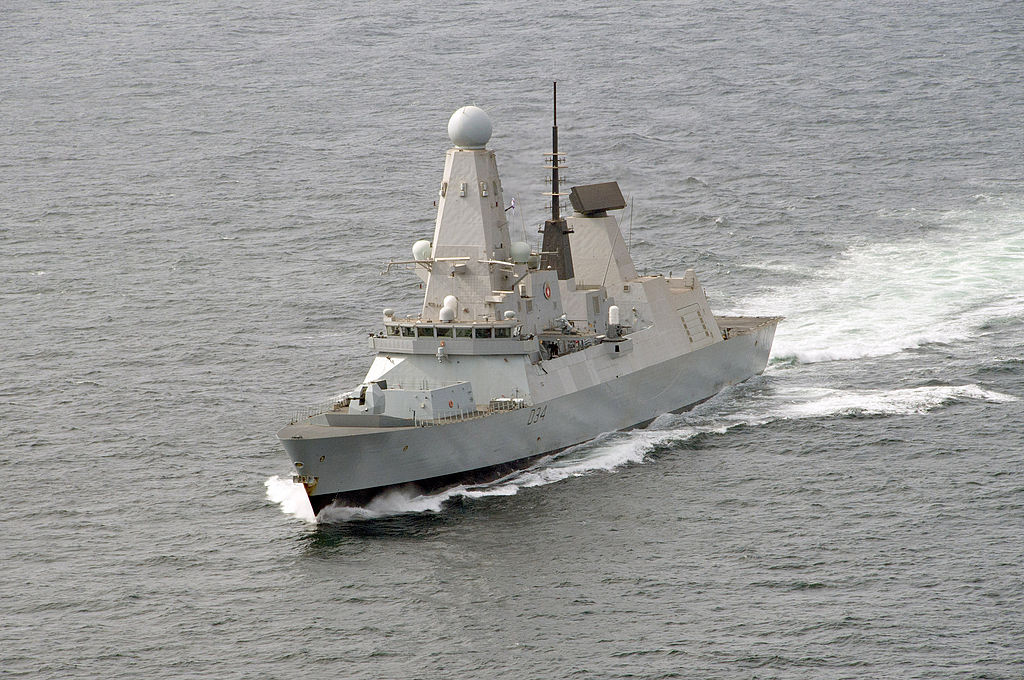

The Samson radar, which is part of the Sea Viper missile system, will be tested in detecting and tracking ballistic missile targets. The trial will be conducted in cooperation with the United States Navy and the Missile Defense Agency.
The Royal Navy currently has 4 Type 45 / Daring class destroyers with another 2 to be commissioned later this year. They are:
- HMS Daring (D32) commissioned on 7/23/2009
- HMS Dauntless (D33) commissioned on 6/3/2010
- HMS Diamond (D34) commissioned on 5/6/2011
- HMS Dragon (D35) commissioned on 4/20/2012
- HMS Defender (D36)
- HMS Duncan (D37)
- a length of 152 m
- a beam of 21.2 m
- a complement of 190
- a maximum range of 13000km
- a displacement of 8000 tons
- one 4.5 inch Mk8 main gun
- 6x8 Sylver A50 VLS with Aster 15 or Aster 30 surface-to-air missiles
- two 6-barrel 20 mm Phalanx Close-In Weapon Systems
- two 30 mm guns
https://www.gov.uk/government/news/royal-navy-destroyer-to-join-ballistic-defence-trial
Wednesday, February 13, 2013
052D Destroyer Universal VLS Continues Reemergence of Cold Launch vs Hot Launch
In recent years, some of the world navies have begun to reconsider the cold-launched Vertical Launch System (VLS) in addition to the hot-launched VLS, which until a few years ago, seem to have become the standard with cold-launched systems out of favor.
Examples of this new trend towards using cold-launched VLS are:
Both the European and Chinese hot-launched systems were basically modeled after the 2 x 4 square Mk 41/Mk 48 in general layout and design, featuring a centralized exhaust system.
The Russians have mostly stuck with cold-launch for their VLS, while the US has preferred hot-launched VLS, including in the new Mk 57.
In hot-launched VLS, the missile is fired from within the VLS cell and the missile rocket motor itself propels it out into the air. In cold-launched VLS, there is an additional stage, where the missile is ejected, usually by compressed gas or a piston, out of the VLS cell before the missile rocket motor is fired.
Both system have their advantages and disadvantages and can be more suitable depending on the situation, such as:
Possible problems with cold-launch such as the missile falling back after failure of the rocket motor to ignite has reportedly in Russian and Chinese service been insignificant and not more likely than other possible missile malfunctions in hot-launched systems.
The Chinese have adopted the military standard GJB 5860-2006, which seeks to create a hybrid VLS, which combines the advantages of both hot-launch and cold-launch by supporting both.
The Chinese have until now used both VLS systems, sometimes at the same time. For example, the HQ-16 / HHQ-16 comes in both a cold-launched version and a hot-launched version.
The new VLS has no central and shared exhaust system, but only when necessary, will each missile cannister have their own exhaust system. This takes up space alongside the square edges and reduces the thickness hot-launched missiles can have. When not necessary with cold-lauched missiles, almost the entire cell diameter can be used.
The Chinese modular VLS, which looks to make its debut on the Type 052D destroyer can:
The VLS can be used against all targets:
The addition of cold-launch and larger cells allows the integration of much larger missiles than has been seen in the past without taking up too much space in the confines of each ship.
If the hybrid system works in practice, it could offer crucial advantages in for instance anti-ballistic missiles or anti-satellite applications, where larger missiles could greatly increase the scope of high-altitude exoatmospheric engagement.


Examples of this new trend towards using cold-launched VLS are:
- The Europeans build their equivalent of the hot-launched Mk 41 VLS from the United States in the SYstème de Lancement VERtical (Sylver) VLS. The United Kingdom adopted the Sylver VLS with Aster missiles in their Type 45 destroyers. However, in their future Type 26 frigate, they will also use the smaller and lighter cold-launched Common Anti-Air Modular Missile (CAMM(M)) or Sea Ceptor, based on the ASRAAM missile.
- The Chinese first VLS developed was a cylindrical, cold-launched system in their Type 052C destroyer. This was followed by a hot-launched Mk 41 like system in the Type 054A frigate. Now it appears the Type 052D destroyer will use a new universal VLS combining hot-launch with cold-launch.
Both the European and Chinese hot-launched systems were basically modeled after the 2 x 4 square Mk 41/Mk 48 in general layout and design, featuring a centralized exhaust system.
The Russians have mostly stuck with cold-launch for their VLS, while the US has preferred hot-launched VLS, including in the new Mk 57.
In hot-launched VLS, the missile is fired from within the VLS cell and the missile rocket motor itself propels it out into the air. In cold-launched VLS, there is an additional stage, where the missile is ejected, usually by compressed gas or a piston, out of the VLS cell before the missile rocket motor is fired.
Both system have their advantages and disadvantages and can be more suitable depending on the situation, such as:
- Hot-launched VLS allows faster engagement of the target, while cold-launch is delayed by the extra ejection stage. However, in general, the shorter the target distance, the less suitable either VLS becomes, such as in Close-In Weapon Systems (CIWS) where every second is crucial. In this case, a more horizontal and direct launch path is preferable such as adopted by the Rolling Airframe Missile (RAM) or HHQ-10 / FL-3000N.
- Hot-launched VLS necessitates a complex, large and heavy venting and exhaust system, while cold-launched VLS does not. This allows much bigger and heavier missiles to be integrated with cold-launched VLS. Beyond a certain limit, hot-launched VLS exhaust cannot safely deal with excessive heat and fire generated by larger missiles and may cause damage to the ship.
Possible problems with cold-launch such as the missile falling back after failure of the rocket motor to ignite has reportedly in Russian and Chinese service been insignificant and not more likely than other possible missile malfunctions in hot-launched systems.
The Chinese have adopted the military standard GJB 5860-2006, which seeks to create a hybrid VLS, which combines the advantages of both hot-launch and cold-launch by supporting both.
The Chinese have until now used both VLS systems, sometimes at the same time. For example, the HQ-16 / HHQ-16 comes in both a cold-launched version and a hot-launched version.
The new VLS has no central and shared exhaust system, but only when necessary, will each missile cannister have their own exhaust system. This takes up space alongside the square edges and reduces the thickness hot-launched missiles can have. When not necessary with cold-lauched missiles, almost the entire cell diameter can be used.
The Chinese modular VLS, which looks to make its debut on the Type 052D destroyer can:
- Support both current and future hot-launched missiles like the HHQ-16 and cold-launched missiles such as the HHQ-9. Quad-packed missile canisters in one VLS cell similar to ESSM can also be integrated such as the DK-10.
- Various versions come in different canister length, such as 9000 mm, 7000 mm and 3300 mm for ships of different displacement. Each canister has a diameter of up to 850 mm.
The VLS can be used against all targets:
- In the air with surface-to-air missiles
- At sea with anti-ship missiles
- On land with land attack cruise missiles
- Under water with anti-submarine rocket assisted torpedoes
The addition of cold-launch and larger cells allows the integration of much larger missiles than has been seen in the past without taking up too much space in the confines of each ship.
If the hybrid system works in practice, it could offer crucial advantages in for instance anti-ballistic missiles or anti-satellite applications, where larger missiles could greatly increase the scope of high-altitude exoatmospheric engagement.


Wednesday, December 5, 2012
Chinese Type 052C and 052D Class Destroyers Compared During Construction
Photos taken confirm the 052D class destroyer has roughly the same hull dimensions and layout of the 052C class destroyer. The new destroyer class does have some new improvements and other changes that can already be observed.
The 052D features a new 130 mm H/PJ38 naval gun replacing the 052C's H/PJ87 100 mm gun, which is based on the French Creusot-Loire T100C gun. The new gun is based on the Russian AK-130 130 mm gun and is able to fire new long-range, precision-guided shells not previously available.
New universal 8 x 8 Vertical Launch System (VLS) on the 052D class, which can fire both cold and hot-launched missiles against air, sea, ground and submerged targets, replaces the cylindrical 8 x 6 cold-launched VLS on the 052C class. In addition, the new VLS cells can each fire 1 to 4 rounds or quad-packed rounds.
The H/PJ12 gun-based Close-In Weapon System (CIWS) at the stern atop the hangar on the 052C class has been deleted, presumably to be replaced by the missile-based HHQ-10 CIWS as found on the Type 056 class corvette.
If HHQ-10 is installed, 30 mm stabilized gun mounts such as those found on Type 056 class corvette will likely also be installed on port and starboard to defend against small and highly maneuverable attackers such as speedboats.
The 2 x 4 YJ-62 anti-ship missiles as found on the 052C class have been removed. Their role is now incorporated into the VLS of the 052D class, which can fire anti-ship missiles.
New radars are larger than before with the same overall layout for 360 degree coverage. The active phased array radars seem to require less elaborate cooling than before.
Propulsion remains Combined Diesel Or Gas (CODOG), but the Ukrainian DA80 / DN80 gas turbines have been replaced by domestic QC-280 turbines based on Ukrainian technology with higher output.
Hangar has been moved to the center with the removal of the H/PJ12 CIWS, which required significant deck penetration.
The boat / raft launching systems are now both fully enclosed and moved alongside the hangar as found on the Type 054A class frigate.

The 052D features a new 130 mm H/PJ38 naval gun replacing the 052C's H/PJ87 100 mm gun, which is based on the French Creusot-Loire T100C gun. The new gun is based on the Russian AK-130 130 mm gun and is able to fire new long-range, precision-guided shells not previously available.
New universal 8 x 8 Vertical Launch System (VLS) on the 052D class, which can fire both cold and hot-launched missiles against air, sea, ground and submerged targets, replaces the cylindrical 8 x 6 cold-launched VLS on the 052C class. In addition, the new VLS cells can each fire 1 to 4 rounds or quad-packed rounds.
The H/PJ12 gun-based Close-In Weapon System (CIWS) at the stern atop the hangar on the 052C class has been deleted, presumably to be replaced by the missile-based HHQ-10 CIWS as found on the Type 056 class corvette.
If HHQ-10 is installed, 30 mm stabilized gun mounts such as those found on Type 056 class corvette will likely also be installed on port and starboard to defend against small and highly maneuverable attackers such as speedboats.
The 2 x 4 YJ-62 anti-ship missiles as found on the 052C class have been removed. Their role is now incorporated into the VLS of the 052D class, which can fire anti-ship missiles.
New radars are larger than before with the same overall layout for 360 degree coverage. The active phased array radars seem to require less elaborate cooling than before.
Propulsion remains Combined Diesel Or Gas (CODOG), but the Ukrainian DA80 / DN80 gas turbines have been replaced by domestic QC-280 turbines based on Ukrainian technology with higher output.
Hangar has been moved to the center with the removal of the H/PJ12 CIWS, which required significant deck penetration.
The boat / raft launching systems are now both fully enclosed and moved alongside the hangar as found on the Type 054A class frigate.


Subscribe to:
Posts (Atom)