Showing posts with label Transport Aircraft. Show all posts

Tuesday, March 31, 2015

Shaanxi Y30 and Y9 Military Transport Aircraft in China

The Shaanxi Aircraft Corporation displayed the turboprop Y-30, a new medium transport aircraft, in model form at the 2014 Zhuhai Airshow. The Y-30 would succeed the current Shaanxi Y-9, which in turn succeeded the Y-8 in Chinese service.

Back in the late nineties when China first announced a replacement for the Y-8, the planned aircraft was known as the Y-8X. Over time this new aircraft gradually evolved into what is now known as the Y-9 from Shaanxi.

While the Y-9 is a significant improvement over the original Y-8, it's much less ambitious with less performance than what the Y-8X was supposed to be. The Y-9 is more like a radically improved Y-8 than a clean sheet design from the ground up.

With the new Y-30 design, Shaanxi comes closer to what the Y-8X was originally supposed to be and more. For instance, dimensions of the cargo hold will be more optimized and payload will be increased to above 30 tons. Shaanxi would go from a Y-9, which is comparable to the Lockheed Martin C-130J-30, to something that is somewhat below the Airbus A-400M.

This would make the Y-30 compatible with newer generation wheeled vehicles, which are becoming bigger and heavier. For instance, the Type 09 vehicles, which are set to become the backbone of China's land forces, would be able to utilize the Y-30 and not have to rely on the heavier Xian Y-20. The basic version of these come in at least 20 tons and more depending on the version.

The Xian Aircraft Corporation, which is now developing the Y-20, has also offered an alternative to the Y-30 from Shaanxi in the Y-19. The main difference is that the Y-19 will be powered by two turbofans and not turboprops as in the Y-9 and Y-30.

As for the Y-9 which has now entered service in China, it was displayed with a range of vehicles that are compatible with the Y-9 platform. Included were:
  • The Type 03 or ZBD03 (ZLC-2000), a light-weight, tracked infantry fighting vehicle which can be airdropped. The 8 ton ZBD03 is amphibious and is fitted with a one man turret armed with a 30 mm gun and anti-tank missiles. Somewhat comparable to the Russian BMD-3.
  • Norinco AH-4, a light-weight, 155 mm, 39 caliber towed  howitzer weighing 3 to 4 tons. Somewhat comparable to the American M777.
  • Norinco CS/SH-1, a self-propelled 122 mm howitzer mounted on a 4x4 vehicle.
  • Various other light vehicles such as the 4x4 CS/VN-3.
Also worth mentioning is that the Y-9s in Chinese service come with a Forward-Looking Infrared (FLIR) which should help during bad weather. Most other aircraft around the world only include it as an option on selected aircraft only.


Credit original poster, via Chinese Internet

Monday, March 31, 2014

Qatar Buys Boeing 737 AEW&C, AH-64E and NH-90 Heicopters

Qatar continues to strengthen its armed forces with new acquisitions worth over $20 billion. The latest deals includes three airborne early warning and control (AEW&C) systems mounted on Boeing 737 aircraft, making it the fourth country to select the type after Australia, South Korea and Turkey.

The aircraft were originally developed for Australia under project Wedgetail and feature a non-rotating radar in contrast to the rotodome found on E-3 Sentry aircraft. They will join the C-130J and C-17 transport aircraft that Qatar previously acquired from the United States.

Qatar has significantly boosted its helicopter fleet with the purchase of 24 AH-64E Apache attack helicopters from Boeing and 22 NH90 helicopters from NH Industries, consisting of 12 NH90 Tactical Transport Helicopter (TTH) variant and 10 NH90 NATO Frigate Helicopter (NFH) maritime variant.

Saturday, April 20, 2013

Kuwait Looking to Add Second C-17 Globemaster III Transport Aircraft

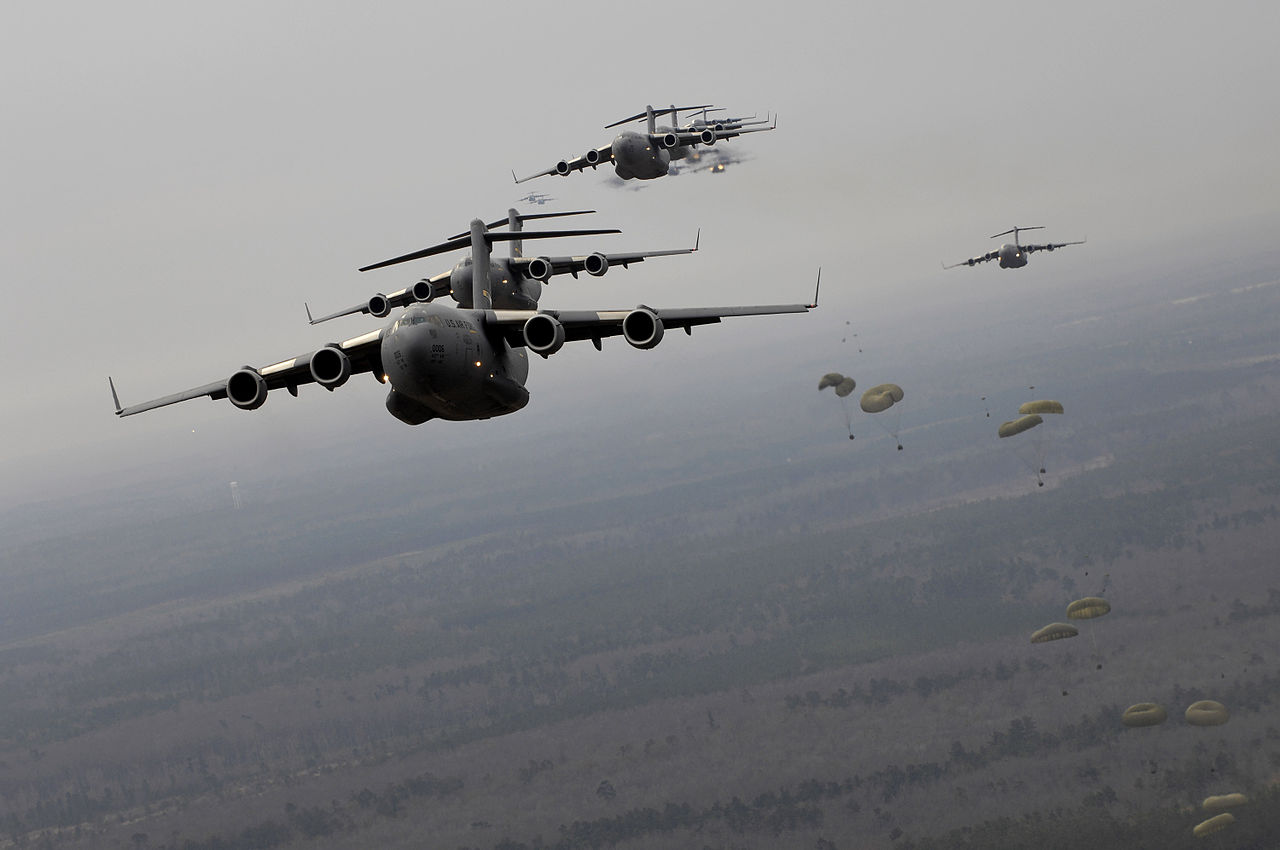
The Defense Security Cooperation Agency (DSCA) has notified the United States congress of a possible Foreign Military Sale (FMS) of a single Boeing C-17 Globemaster III transport aircraft. The value of the contract is estimated at $371 million.

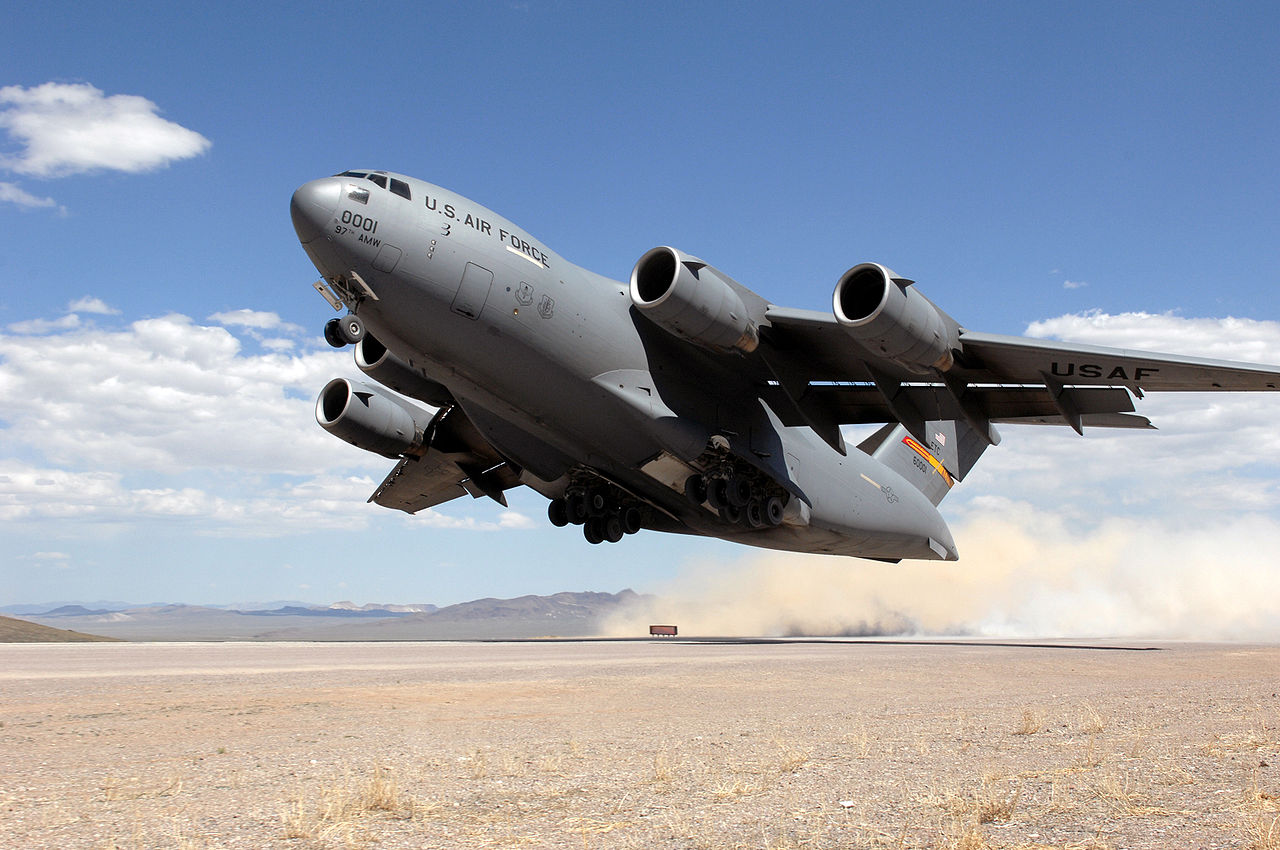
The C-17 is a heavy transport aircraft with a maximum payload of 77000 kg. Besides Short Take-Off and Landing capability, the C-17 can also operate from unpaved runways.

If the deal is concluded, the contract provides Kuwait with:
  • 1 Boeing C-17 transport aircraft
  • 4 F117-PW-100 turbofan engines
  • 1 AN/AAR-47 Missile Approach Warning System
  • 1 AN/ALE-47 Countermeasure Dispenser Set (CMDS)
  • secure radios
  • precision navigation equipment
  • spare and repair parts
  • support and test equipment
  • publications and technical documentation
  • tactics manuals
  • personnel training and training equipment
  • US Government and contractor engineering
  • aircraft ferry support
  • aircraft fuel
  • technical and logistics support services
  • logistical and program support
The Kuwaiti Air Force had reportedly already ordered one C-17.

Besides Kuwait, the C-17 is already in service with 6 countries. They are Australia, Canada, Qatar, the United Arab Emirates, the United Kingdom and the United States.

The C-17 is also in service with NATO. India has ordered 10 C-17 aircraft in 2011. The first aircraft is currently conducting flight tests and is scheduled to be delivered sometime in 2013.


http://www.dsca.mil/PressReleases/36-b/2013/Kuwait_13-14.doc.pdf


Monday, April 15, 2013

Antonov An-70 transport aircraft again suffering delays

Mykola Azarov, the Ukrainian Prime Minister, has said that Ukraine will continue development of the Antonov An-70 aircraft even in Russia were to withdraw from the project.

The An-70 is a transport aircraft being developed by the Ukraine and Russia. Russia is reportedly again dragging its feet with regards to the An-70 and has already withdrawn from the project before, only for it to rejoin after some time.

The An-70 project dates back to the former Soviet Union and has suffered numerous delays over the years. These delays have really hurt the progress of the An-70 aircraft. Crashes involving test aircraft didn't help matters.

At one point during the nineties, the An-70 was considered to have great prospects. It was well ahead of the competition in terms of development. Since then, that lead has pretty much been squandered away to the point that the future of the An-70 is now increasingly in doubt.

The delays have allowed other aircraft to catch up and even surpass the An-70:
  • Russia itself favors its own upgraded Ilyushin IL-476 and has never really shown to completely support the An-70 project, but only halfheartedly.
  • China was once thought to be a prime customer for the An-70. But since then, the Y-9 and Y-20 projects have reached fruition. Both are backed by China and it's unlikely there is room left for another aircraft like the An-70.
  • The An-70 was once marketed to European customers. However, the homegrown Airbus A400M, which is the aircraft most similar to the An-70, is guaranteed to have the market in Western Europe.
All these aircraft are potential competitors the An-70 may have to face against. They have strong backing from their respective countries, while the only country to consistently back the An-70 is the Ukraine itself.

However, the Ukraine is a country with very limited resources. The An-70 project will almost certainly need at least one other customer to make the project worthwhile. Otherwise, it is doubtful the An-70 will be able to compete against other aircraft.

The An-70 aircraft is designed for short takeoff and landing. It can also takeoff and land on unpaved airfields. The An-70 specifications are:
  • a length of 40.7 m
  • a wingspan of 44.06 m
  • a height of 16.38 m
  • a maximum payload of 47000 kg
  • an empty weight of 66230 kg
  • a maximum takeoff weight of 145000 kg
  • a maximum speed of 780 km/hr
  • a ceiling of 12000 m
  • a range of 3000 km with 47000 kg payload
  • a range of 5100 km with 35000 kg payload
  • a range of 6600 km with 20000 kg payload
The An-70 is powered by 4 Progress D-27 propfans with 14000 hp each.

The An-70 is notable for its unique counter-rotating propfans. In theory, these would offer performance approaching those of turbofans, while maintaining the benefits of a turboprop engine.

For example, they can generate much more power than traditional turboprops allowing higher aircraft speed and increased payload. At the same time, they use much less fuel compared to normal turbofans.

In practice, the D-27 propfans have so far proved troublesome. It's possible that the engine could be refined and the problems solved. However, it doesn't look like the resources will be available to make that happen.


http://en.rian.ru/world/20130412/180611737/Ukraine-Ready-to-Go-Ahead-With-An-70-Project-on-Its-Own---PM.html


Tuesday, April 9, 2013

Tunisia receives its first C-130J-30 Super Hercules transport aircraft

Tunisia has received its first Lockheed Martin C-130J-30 Super Hercules transport aircraft. It had placed an order for 2 aircraft in 2010. Tunisia thus becomes the first country in Africa to receive this type of aircraft.

The Tunisian Air Force already operates the older versions of the Hercules, namely the C-130B and C-130H. The new aircraft will be used for multiple missions, including relief efforts, firefighting and airlift sorties.

The C-130J is the latest version of the C-130 family of turboprop transport aircraft. The C-130J-30 is in turn a stretched version of the C-130J with a longer fuselage. Its specifications are:
  • a crew of 3
  • a maximum payload of 44000 lbs
  • a length of 34.36 m
  • a wingspan of 40.41 m
  • a height of 11.84 m
  • an empty weight of 34274 kg
  • a maximum takeoff weight of 175000 lbs
  • a maximum speed of 671 km/hr
  • a range of 5250 km
The C-130J is powered by 4 Rolls-Royce AE 2100D3 turboprops with Dowty R391 6-bladed composite propellers, each generating 4637 shp.

The original version of the C-130 entered service in 1957. Designed to use unprepared runways for landings and takeoffs, the C-130 has seen many variants used for different roles, including:
  • troop and cargo transport
  • medical evacuation
  • search and rescue
  • aerial refuelling
  • maritime patrol
  • reconnaissance
  • airborne assault
  • gunship
The C-130 family has now been in production for over half a century, which is a record.

Besides Tunisia, the C-130J aircraft is in service with 14 other countries. They are Australia, Canada, Denmark, India, Iraq, Israel, Italy, Kuwait, Norway, Oman, South Korea, Qatar, the United Kingdom and the United States.


http://www.lockheedmartin.com/us/news/press-releases/2013/april/130404ae_first-c-130j-delivered-to-tunisia.html


Thursday, March 21, 2013

Russia will receive its first 3 IL-476 / IL-76MD-90A aircraft in 2014

According to the chief designer of the Ilyushin IL-476 / IL-76MD-90A, the first 3 aircraft will be delivered to the Russian Air Force in 2014. Viktor Livanov, the general director of Ilyushin had earlier put the number at just 2.

The IL-476 / IL-76MD-90A had its maiden flight last September and is currently conducting a series of trial flights. These tests will be used to gather data for any changes to the aircraft should those be necessary.

Last October, the Russian Defense Ministry signed a $4 billion contract with the United Aircraft Corporation for the delivery of 39 new aircraft. That number has since been increased to 48 IL-476 according to General Vladimir Benediktov of the Russian Air Force.

Russia's current transport fleet is currently quite outdated with no new deliveries in almost 20 years. Most aircraft date back to the former Soviet Union and in need of replacement.

The IL-476 is manufactured at Aviastar in Ulyanovsk, which hopes to build up to a 100 IL-76MD-90A aircraft by 2020 for Russia. Discussions are underway over a possible contract for the IL-78MK-90, a combined refuelling tanker and transport version of the IL-476.

The IL-476 is a modernized version of the IL-76 aircraft, while retaining the basic airframe of the legacy aircraft. The IL-476 specifications are:
  • a crew of 6
  • a length of 46.6 m
  • a wingspan of 50.5 m
  • a height of 14.76 m
  • a wing area of 300 m^2
  • a fuselage diameter of 4.8 m
  • a maximum speed of 830 km/hr
  • a maximum ceiling of 12000 m
  • a range of 5400 km (40 ton payload) or 4100 km (50 ton payload)
The IL-476 has added a new wing, digital flight control system, new cockpit with digital displays and four PS-90A-76 turbofan engines, each delivering 16000 kg of thrust.

The installation of PS-90A-76 engines allow the IL-476 to meet all ICAO noise and emission requirements. Their efficiency reduces fuel consumption by 12 percent at cruise speed and increases range by 18 percent.


http://en.rian.ru/business/20130319/180118238/Russia-to-Get-First-3-New-Il-476-Cargo-Planes-in-2014.html


Wednesday, March 20, 2013

AVIC / Xian Y-20 Transport Aircraft May Enter Service Before 2018

During the annual session of China's top political advisory body, the National Committee of the Chinese People's Political Consultative Conference, the chief designer of the Xian Y-20 transport aircraft, Tang Changhong, was interviewed by state media.

Tang Changhong has held the position since 2007 and had previously also been the chief designer of the JH-7A strike aircraft. The design and manufacture of the Y-20 involved over a 1000 companies and research institutes.

According to Tang Changhong, the Y-20 may enter service within 5 years provided testing continue to proceed as planned. The aircraft was tested successfully on January 26 and so far test flights have gone well.

Preliminary specifications of the Y-20 from the Xi'an Aircraft Industrial Corporation, which is part of Aviation Industry Corporation of China, are:
  • a length of 47 m
  • a wingspan of 45 m
  • a height of 15 m
The Y-20 is currently powered by 4 low-bypass Soloviev D-30KP-2 turbofan engines from Russia.

The Y-20 will have the option of using several different types of engines. Tang Changhong confirmed that China is developing its own engines for the Y-20, which will be tested during test flights.

The Chinese engines will offer improved thrust-to-weight ratio and fuel efficiency. The four D-30KP-2 engines currently installed produce 12500 kgf / 27560 lbf / 122.6 kN of thrust each.

Once the domestic engines are installed, the Y-20 will increase its takeoff weight and be able to carry a payload of up to 66 tons. Once the Y-20 has entered service, it will continue to be upgraded and improved.


http://usa.chinadaily.com.cn/china/2013-03/19/content_16318248.htm


Credit original poster, via Chinese Internet
 

Friday, March 1, 2013

Indonesia received another 2 Su-30MK2 from Russia

Another 2 dual-seat Su-30MK2 fighter aircraft arrived at the Sultan Hasanuddin Air Force Base in Makassar, Indonesia from Russia in an An-124-100 Ruslan transporrt aircraft.

The aircraft are the first out of a total order of 6 with the remaining 4 aircraft arriving in June and July this year. They will be assembled over the next 2 weeks by technicians from Komsomolsk-na Amure Aircraft Production Association (KNAAPO).

The engines are delivered separately, as are the weapons, which Indonesia has to purchase in a separate order due to budget contraints.

The addition of another 2 Su-30MK2 brings the number of Su-30MK2 in the Indonesian Air Force (TNI AU) to 6. There are 6 Su-27SMK single-seat fighter aircraft in service since 2003 to bring the total number of Flankers currently in service to 12.

Indonesia is currently undergoing a comprehensive modernization of its armed forces with the addition of new vessels, aircraft and missiles from a wide variety of countries all over the world.

For example, the TNI AU is expecting the delivery of 24 used F-16 C/D Block 25 from the United States, which will have to be modernized at Indonesia's expense. The existing 10 F-16 A/B Block 15 OCU in service will also be upgraded.

Last September, the Rockwell OV-10 Bronco were replaced in the TNI AU by the first 4 EMB-314 Super Tucano ground attack turboprop aircraft out of a total of 16 ordered from Brazil's Embraer.

Also on order are the T-50 Golden Eagle lead-in fighter trainer (LIFT) aircraft from the Korean Aerospace Industry, to replace the BAE Hawk Mk from the United Kingdom.

Indonesia is expecting 4 used C-130H Hercules transport aircraft from Australia and intends to order 6 new C-130 aircraft from the United States. Two out of 9 Airbus C-295 have been received and this type will be produced locally under license by PT Dirgantara Indonesia.


http://www.thejakartapost.com/news/2013/02/25/air-force-gets-two-sukhoi-jet-fighters-waits-four-more.html


Saturday, February 9, 2013

Modernized Antonov An-124 transport aircraft to start trials

A modernized version of the Antonov An-124-100 heavy transport aircraft will soon start trails according to Russia’s Aviastar aircraft plant. Designed by the Antonov design bureau, the An-124 is currently the largest transport aircraft with the exception of the Antonov An-225, of which only one exists.

The modernized An-124-100M-150 features several improvements, including:
  • payload increased from 120 tons to 150 tons
  • maximum take-off weight increased from 392 tons to 402 tons
  • range increased to 5400 km with 120 tons payload
  • service life of the aircraft increased to 24000 flight hours
  • crew reduced from 6 to 4
  • various other improvements
Even more upgraded An-124-200 and An-124-300 are now under proposal.

Plans also exist to restart production of the An-124 Ruslan. The aircraft has been very useful and in demand in many parts of the world, including the United States, other members of NATO and China.

Last december, NATO decided to continue chartering Antonov An-124 Ruslan planes for at least 2 more years. The Strategic Airlift Interim Solution (SALIS) program began in 2006 and makes up to 6 An-124 aircraft available.


Specifications An-124-100
Crew: 6
Length: 68.96 m
Wingspan: 73.3 m
Height: 20.78 m
Max. Payload: 120000 kg
Max. Takeoff Weight: 392000 kg
Cruise Speed: 800 to 850 km/h
Cruise Altitude: 11.6 km
Range: 7500 km (Payload 80 tons), 4800 km (Payload 120 tons)
Powerplant: 4 Ivchenko Progress D-18T turbofans, 229 kN (23430 Kgf) each


http://en.rian.ru/business/20130207/179283281/Upgraded-Ruslan-Heavy-Lifter-to-Start-Testing-Soon.html


Thursday, February 7, 2013

Russia to receive 48 IL-476 / IL-76MD-90A transport aircraft

The Russian Air Force is to receive 48 IL-476 / IL-76MD-90A instead of the 39 previously reported. Last October, a $4 billion contract with the United Aircraft Corporation was signed for the delivery of 39 IL-476 aircraft by 2020.

The IL-476 prototype made its first flight last September. The first serial produced aircraft is expected to be delivered in 2014 and deliveries is to be complete by 2020.

The IL-476 is the latest version of the widely exported IL-76 designed by the Ilyushin design bureau. The aircraft retains the legacy airframe and fuselage of the old aircraft, but is significantly modernized with:
  • new and redesigned wing
  • new glass cockpit
  • improved digital avionics
  • digital flight control system
  • more powerful and fuel efficient PS-90A-76 engines
While the IL-76 has been produced in large numbers, production of new IL-76 aircraft had been halted for many years, which includes a 2005 contract with China for the delivery of 34 IL-76 and 4 IL-78 aircraft that was never fulfilled.

All aircraft production has now been moved to the Aviastar plant in Ulyanovsk, which has taken over from the original Tashkent Aviation Production Association in Uzbekistan, where the IL-76 had traditionally been produced.


http://en.rian.ru/military_news/20130205/179242929/Russian-Air-Force-to-Get-48-Il-476-Transports.html


Saturday, January 26, 2013

Xian Y-20 Transport Aircraft Has First Flight on Chinese Media

The Y-20 had its first public test flight on Chinese state media for the first time. Developed by the the Xi'an Aircraft Industrial Corporation, part of Aviation Industry Corporation of China (AVIC), the Y-20 transport aircraft is to replace the Russian Ilyushin IL-76MD currently in service with the Chinese Air Force.

China originally bought 14 new and 6 used IL-76 starting in the early nineties, of which 14 are still used in the transport role. Four have been converted into KJ-2000 AEW&C aircraft and the remaining serve as test aircraft.

Further attempts to increase the number of available IL-76 airframes failed when a 2005 contract with Russia for the delivery of 34 IL-76 and 4 IL-78 refuelling aircraft could not be executed.

Only in 2010 has China been able to purchase another 10 used IL-76 airframes from Russia and Belarus, which are now in the process of being overhauled, with the first delivered this month.

To help speed up development of the Y-20, the Chinese sought assistance from the Ukrainian Antonov aircraft design bureau, with which has an extensive working relationship and which has extensive experience designing transport aircraft, including the An-124 and An-225.

Both the Y-7 and Y-8 transport aircraft currently used by the Chinese military trace their roots to aircraft originally designed by Antonov, which also helped in improving both aircraft for China.

According to Ukrainian claims, 3 design candidates were submitted to the Chinese to address their requirements for the Y-20.
  • the turboprop An-70
  • the An-77, a version of the An-70 with turbofans
  • the An-170, a heavily modified and larger version of the An-70

The Y-20 design will address some of the shortcomings of the IL-76 design. The IL-76 fuselage and cargo hold is relatively narrow, which is a significant drawback in the transport role.

In general, most cargo tends to bulk out before they hit their weight limit. The Y-20 fuselage and cargo hold has thus been made wider and more efficient than the IL-76, allowing better cargo dimensions.

The Y-20 is also more aerodynamically efficient than the IL-76, which is a relatively outdated design. Modern composites and advanced avionics will also be incorporated into the Y-20. A supercritical wing may also be used.

The original design of the Y-20 also had to be changed to account for the increase in the weight of China's latest tank designs, which it must carry, such as the ZTZ-99A2, which comes in at around 60 tons.

The Y-20 will initially use the Russian Soloviev D-30KP2 engine, the same engine used in the IL-76MD. Three engines are in development for the Y-20:
  • the WS-18 based on the D-30KP2
  • the WS-20 based on the WS-10A engine
  • the CJ-1000A and derivatives, which is best suited but may not be available as quickly as the previous two
Until an engine with more thrust than the D-30KP2 is available, the Y-20 will not be able to carry its maximum payload of up to 66 tons.

In the meantime, China has ordered 239 D-30 engines from Russia, 55 in 2009 and 184 in 2011. They will be used on the IL-76 and Y-20 aircraft, but also in the upgraded H-6K bomber aircraft.


http://news.cntv.cn/2013/01/26/VIDE1359192961355745.shtml

http://english.peopledaily.com.cn/90786/8099537.html


Xian_Y-20_aircraft_4.jpg

Xian_Y-20_aircraft_5.jpg

Xian_Y-20_aircraft_6.jpg
Credit original poster, via Chinese Internet

Friday, January 25, 2013

First Indian C-17 transport aircraft delivered for flight testing

The first of 10 Boeing C-17 Globemaster III transport aircraft has been delivered as scheduled and will now undergo flight testing at Edwards Air Force Base in California.

India signed a $1.8 billion Foreign Military Sales contract on June 15, 2012 with the United States for the delivery of 10 C-17 aircraft. India had previously purchased 6 Lockheed Martin C-130J turboprop transport aircraft.

Four more of the heavy transport C-17 aircraft will be delivered to the Indian Air Force in 2013, with the remaining 5 aircraft due in 2014.

Boeing has delivered 250 C-17 aircraft, 218 to the United States and the remaining 32 to Australia, Canada, India, Qatar, the United Arab Emirates, the United Kingdom and the Strategic Airlift Capability initiative of NATO and Partnership for Peace.

Specifications
Crew: 2 pilots, 1 loadmaster
Capacity: 158 troops, a M1 Abrams tank, three Strykers, or six M1117 vehicles
Payload: 77519 kg of cargo distributed at max over 18 463L master pallets Length: 53 m
Wingspan: 51.75 m
Height: 16.8 m
Empty weight: 128100 kg 
Max. takeoff weight: 265350 kg
Powerplant: 4 Pratt & Whitney F117-PW-100 turbofans, 180 kN each
Fuel capacity: 134556 L
Cruise speed: Mach 0.76 (830 km/h)
Range: 4482 km, 10390 km with paratroops
Service ceiling: 13716 m
Takeoff run at MTOW: 2316 m
Landing distance: 1060 m


http://boeing.mediaroom.com/index.php?s=43&item=2568


Saturday, January 19, 2013

First Airbus A400M aircraft rolled off production line for France

The first Airbus A400M has been rolled off the production line for France, where it is expected to enter service in the first quarter of 2013. The A400M is a new multi-purpose military turboprop transport aircraft, that can:
  • fly at higher speed and altitude than previous turboprops,
  • is highly maneuverable, even at low speed,
  • land on short and rough airfields,
  • the cargo hold is designed to carry outsize equipment.
Specifications
Crew: 3 or 4 (2 pilots with 3rd optional, 1 loadmaster)
Payload: 37000 kg or 116 fully equipped troops / paratroops or up to 66 stretchers with 25 medical personnel
Length: 45.1 m
Wingspan: 42.4 m
Height: 14.7 m
Empty weight: 76500 kg
Max takeoff weight: 141000 kg
Fuel capacity: 50500 kg internal fuel
Max landing weight: 122000 kg
Powerplant: 4 Europrop TP400-D6 turboprop, 8250 kW each with 8-bladed, 5.3 m diameter propeller

Cruising speed: 780 km/h (Mach 0.68 to 0.72)
Initial cruise altitude at MTOW: 9000 m
Range: 3298 km at max payload (long range cruise speed, reserves as per MIL-C-5011A)
Range with 30 tonne payload: 4540 km
Range with 20 tonne payload: 6390 km
Ferry range: 8710 km
Service ceiling: 11300 m
Tactical takeoff distance: 980 m (aircraft weight of 100 ton, soft field, ISA, sea level)
Tactical landing distance: 770 m
Turning radius (ground): 28.6 m

http://www.airbusmilitary.com/LatestNews/tabid/176/ArticleID/240/ArtMID/681/PgrID/681/PageID/2/First-production-Airbus-Military-A400M-in-French-Air-Force-colours.aspx


Friday, January 18, 2013

Egypt orders 6 Airbus C295 and Kazakhstan receives first 2 C295 aircraft

Shortly after the Colombian order for the Airbus C295 transport aircraft, Egypt has also placed an order for 6 more Airbus C295 aircraft.

This third batch brings the total number of Egyptian C295 to 12. The turboprop aircraft are scheduled to be delivered from the end of 2013 onwards.

The Egyptian order brings the total number of C295 ordered to 121 in 17 countries, of which 7 are repeat customers. Meanwhile, the 2 Airbus C295 aircraft that Kazakhstan ordered last year have also been delivered.


http://www.airbusmilitary.com/LatestNews/tabid/176/ArticleID/241/ArtMID/681/Egypt-signs-repeat-order-for-six-additional-C295-aircraft.aspx

http://www.airbusmilitary.com/LatestNews/tabid/176/ArticleID/245/ArtMID/681/Airbus-Military-delivers-first-two-C295-to-Kazakhstan.aspx


Saturday, January 12, 2013

India again selects A330 MRTT Multi Role Tanker Transport aircraft

India has again selected Airbus Military as the preferred bidder to supply its A330 MRTT Multi Role Tanker Transport to the Indian Air Force (IAF) after a long and thorough selection process, which resulted in a prior selection being cancelled in 2010. The Ilyushin IL-78MK from Russia was the losing candidate in the competition.

A contract for the supply of 6 aircraft in 2013, as expected, would bring the number exported to 34 and make India the fifth country to use the A330 MRTT aircraft, following:
  • Australia order for 5 of which 4 have been delivered,
  • Saudi Arabia ordered 6,
  • the United Arab Emirates ordered 3,
  • the United Kingdom ordered 14 with 1 delivered. 
The aircraft would join six IL-78 refuelling aircraft already in service with the IAF.
The wide-body Airbus Military A330 MRTT aircraft can be used both as a tanker and transport aircraft and is derived from the civilian A330-200 airliner. It supports both the Boom Refuelling system and Hose and Drogue Pod Refuelling system.

As a transport aircraft, the A330 MRTT can carry up to 300 troops or a payload of up to 45 ton. It can also function in the Medical Evacuation (MEDEVAC) role with room for 130 stretchers.


Specifications
Crew: 3
Length: 58.80 m
Wingspan: 60.3 m
Height: 17.4 m
Maximum speed: 880 km/h
Cruise speed: 860 km/h
Range: 14800 km
Service ceiling: 12600 m
Empty weight: 125000 kg
Useful load: 45000 kg non-fuel payload
Max takeoff weight: 233000 kg
Powerplant: 2× Rolls-Royce Trent 772B or General Electric CF6-80E1A4 or Pratt & Whitney PW 4168A turbofans, 320 kN (72,000 lbf) each
Fuel Capability: 111000 kg max, 65,000 kg at 1000 nmi with 2 hours on station

http://www.airbusmilitary.com/LatestNews/tabid/176/ArticleID/234/ArtMID/681/Airbus-Military-A330-MRTT-selected-by-Indian-Government-.aspx


Wednesday, January 9, 2013

Xian AVIC Y-7 / MA60 / MA600 / MA700 turboprop airliner / transport aircraft

The Y-7 aircraft series was originally based on the Antonov An-24 / An-26 aircraft and has since been improved by Xian Aircraft Industrial Corporation, part of Aviation Industry Corporation of China (AVIC), for both military and civilian use.

The latest versions incorporate western components such as turboprop engines and avionics and are marketed primarily for the regional airliner and cargo market.

These include the widely exported Modern Ark or MA60, which can carry up to 60 passengers and its latest version, the MA600. Another version under development is the MA700 and has room for up to 70 passengers.

Specifications Y-7
Crew: 3
Length: 24.218 m
Wingspan: 29.666 m
Height: 8.553 m
Empty weight: 14988 kg
Max. takeoff weight: 21800 kg
Payload: 5500 kg
Service ceiling: 8,750 m
Take-off run at max TOW 640 m
Maximum speed: 503 km/h
Cruise speed: 423 km/h (at 6000 m)
Range: 910 km (max payload), 1982 km (max fuel)
Powerplant: 2 Dongan WJ5A Turboprop with Baoding J-16-G10A propeller

Specifications MA60
Crew: 2
Capacity: 60 passengers
Length: 24.71 m
Wingspan: 29.20 m
Height: 8.86 m
Empty weight: 13700 kg
Service ceiling: 7620 m
Max. takeoff weight: 21800 kg
Maximum speed: 514 km/h
Cruise speed: 430 km/h
Range: 1600 km
Powerplant: 2 Pratt & Whitney Canada PW127J Turboprops, 2750 shp each


Xian_Y-7_1.jpg

Xian_MA60_1.jpg

Friday, November 2, 2012

Russia orders 39 Il-476 transport aircraft

Russia has placed an order for 39 IL-476 / IL-76MD-90A heavy transport aircraft with United Aircraft Corporation (UAC). The IL-476 features design improvements in the wings and new avionics with a glass cockpit.

The original D-30KP engine with a thrust of 26,450 pounds have been replaced by Aviadvigatel PS-90A-76 high-bypass engines with a thrust of 35,300 pounds. The aircraft can transport a 114,500 pound payload at a range of 2700 nm.

Fuel consumption has been improved by 10 to 15 percent and maximum takeoff weight has been increased to 463,000 pounds.

Ilya Federov, general director of engine-maker NPO Saturn, confirmed a contract with China has been signed delivery of 184 D-30KP turbofan engines worth $1.5 billion.

The contract was signed in November 2011 and will be completed in 2016. The engines are expected to be used in IL-76 aircraft bought earlier and for improved H-6K bomber aircraft.


Monday, October 8, 2012

Shaanxi Y-9 Transport Aircraft

The Shaanxi Aircraft Company is conducting trials of a successor to the Y-8, a copy of the Antonov An-12 Cub aircraft.

The Y-9 is a further transport development of the Y-8 Category 3 platform, which also forms the basis for some members of the Y-8 High New Series detailed here.

The new Y-9 is thought to be in the same class as the Lockheed Martin C-130J-30 Super Hercules aircraft.

Specifications Y-9:

    Crew: 3-4
    Capacity: 106 passengers or 132 airborne troops or 9 pallets
    Payload: 25,000 kg cargo    
    Length: 36 m
    Wingspan: 40 m
    Height: 11.3m
    Empty weight: 39,000kg
    Useful load: 25,000kg
    Max. takeoff weight: 77,000kg
    Powerplant: 4 × Zhuzhou WoJiang-6C (FWJ-6C) turboprops, 3,805 kw (5,100 shp) each with JL-4 6-blade composite propeller
    Cruise speed: ~650km/h
    Range: ~5,700 km
    Ferry range: 7,800 km
    Service ceiling: 10,400m


Shaanxi_Y-9_2.jpg

Shaanxi_Y-9_3.jpg

Shaanxi_Y-9_1.jpg
Credit original poster, via Chinese Internet